What is adult acne?
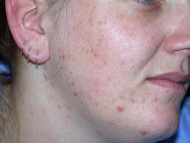
Acne in adults is also called postadolescent acne. It can be persistent, with onset during teenaged years, or late onset beginning after the age of 25 years. Acne affects up to 15% of women, but is usually reported to be less common in men.
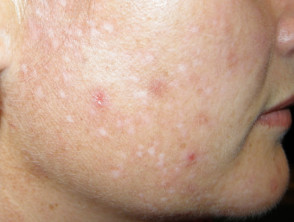
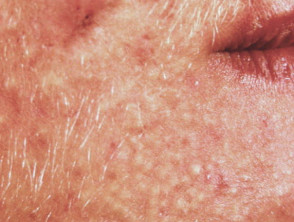
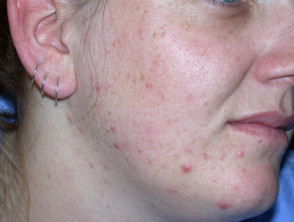
Adult acne can be predominantly inflammatory, with papules and pustules, or predominantly comedonal, often with many large closed comedones (whiteheads). Deep inflammatory lesions and macrocomedones may result in scarring.
How does adult acne differ from acne in adolescents?
Adult acne usually presents as acne vulgaris (common acne). But it often has the following characteristics.
- Acne is very persistent in some people and may continue into the 30s and 40s.
- It tends to be mild to moderate in severity.
- Affected women often complain of enlarged pores.
- Some reports have suggested it is more common in people with olive skin (skin phototype IV).
- Inflammatory lesions are common on the jawline and neck but may be seen anywhere on face, neck, chest or back.
- Premenstrual flares are common.
- Macrocomedones (large whiteheads) are more common than in younger individuals. They are mostly found on chin, cheeks and forehead.
- Environmental factors have been associated with comedonal acne, particularly oily face creams and smoking.
- Dietary factors, particularly refined carbohydrates (sugars), are blamed for increasing prevalence of acne.
- Onset of inflammatory acne is often attributed to stress.
As in younger subjects, hormonal factors may be important including pregnancy, polycystic ovarian disease and medicines (including supplements) with male hormone activity.
Adult acne
How is adult acne treated?
Adult acne treatment is no different from that in younger individuals. However, because of the persistence of the disorder, more aggressive treatments may be recommended for relatively mild symptoms. Many adults consider acne abnormal at their age and demand effective treatment.
Environmental factors should be evaluated, and patients with acne should be encouraged to minimise their intake of high glycaemic index foods. Make-up should be non-occlusive.
Mild acne is treated with topical anti-acne medications. This is suppressive, not curative, and needs to be continued to maintain effects. Some people find blue light treatment has moderate efficacy at reducing the number of inflammatory lesions.
More severe acne may also be treated with anti-inflammatory antibiotics such as tetracyclines. Antiandrogens such as certain oral contraceptives and spironolactone are also widely used as a treatment of persistent acne in women.
Oral isotretinoin can be very effective for adult acne. It is well tolerated in low doses and may result in suppression of the acne for several years or long term. However, it has important side effects and risks. It must not be taken in pregnancy as it may cause birth defects.