Comedones are the skin-coloured, small bumps (papules) frequently found on the forehead and chin of those with acne. A single lesion is a comedo.
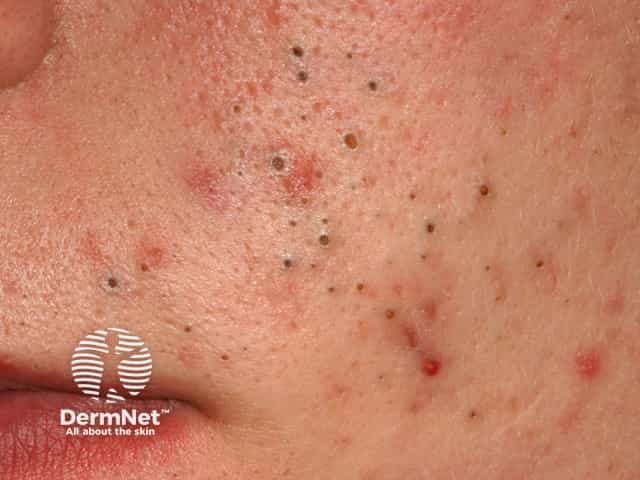
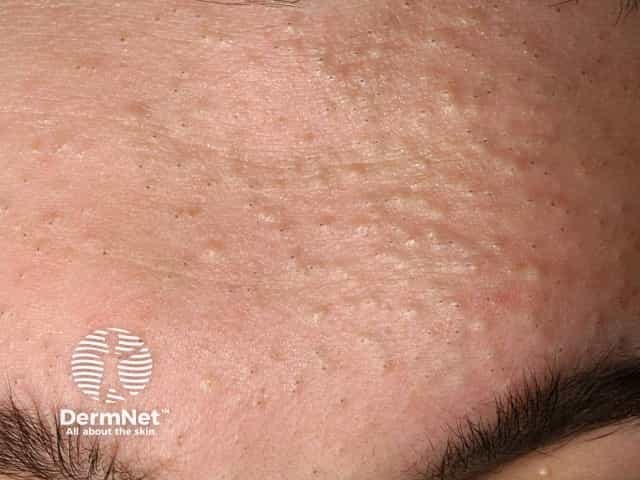

Comedonal acne is a pattern of acne in which most lesions are comedones. Comedonal acne most often affects the forehead and chin.
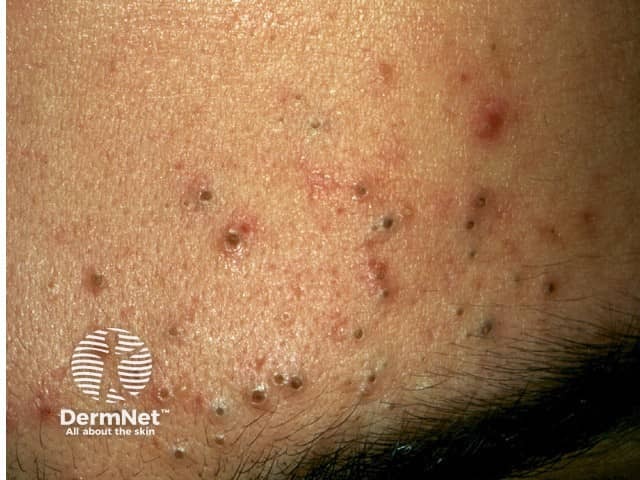

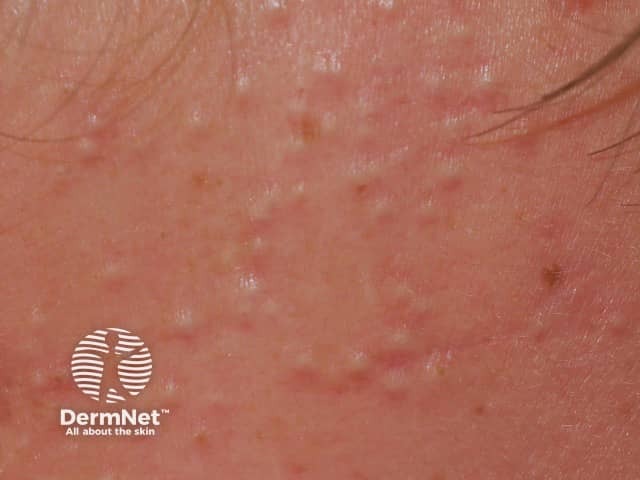
Comedones arise when cells lining the sebaceous duct proliferate (cornification), and there is increased sebum production. A comedo is formed by the debris blocking the sebaceous duct and hair follicle. It is now known that comedones also involve inflammation (see causes of acne).
The development of comedones may involve the following factors:
If you have comedonal acne, choose oil-free cosmetics and wash twice daily with a mild soap and water. It is best to stop smoking and to have a diet that is low in sugar, fat and dairy products.
Choose "comedolytic" topical medications. These should be applied once or twice daily as a thin smear to the entire area affected. It may take several weeks to months before worthwhile improvement occurs. Treatment needs to be continued long-term (sometimes for many years).
Suitable topical agents include:
Prescription oral medications for comedonal acne include:
Antibiotics can also improve comedonal acne but are usually prescribed for inflammatory acne (acne vulgaris).
Surgical treatments are sometimes recommended to remove persistent comedones: