Fibromatosis is a condition where fibrous overgrowths of dermal and subcutaneous connective tissue develop tumours called fibromas. These fibromas are usually benign (non-cancerous).
There appear to be many different ways to classify fibromatosis. One classification system used is based on age (i.e.: juvenile vs adult fibromatoses) and localisation (ie, superficial vs deep fibromatoses).
Juvenile |
Adult |
|---|---|
|
Superficial (fascial) fibromatoses
|
See also elastofibroma pathology.
The following table lists the distinguishing features between superficial and deep fibromatoses.
Superficial fibromatoses |
Deep fibromatoses |
|---|---|
|
|
Whilst most fibromatoses are benign tumours and do not metastasise (spread to other parts of the body), the desmoid tumours although they do not metastasise like malignant cancers can be locally aggressive. They can grow quickly into large tumours that can obstruct vital structures such as major blood vessels, nerves and organs.
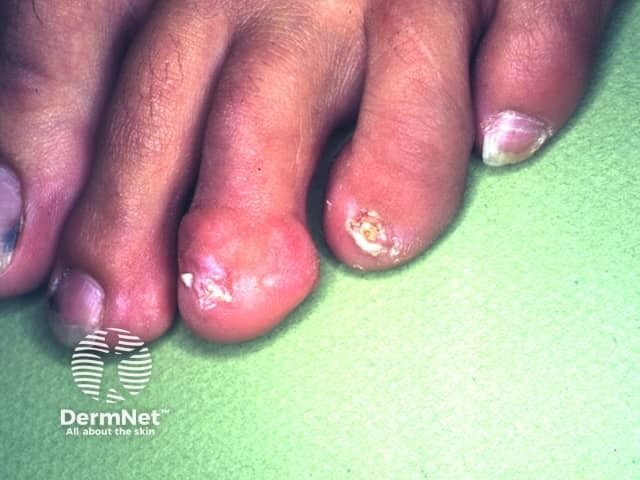
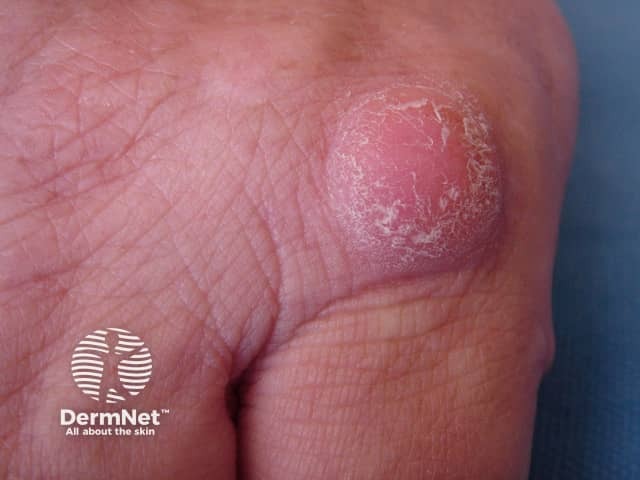
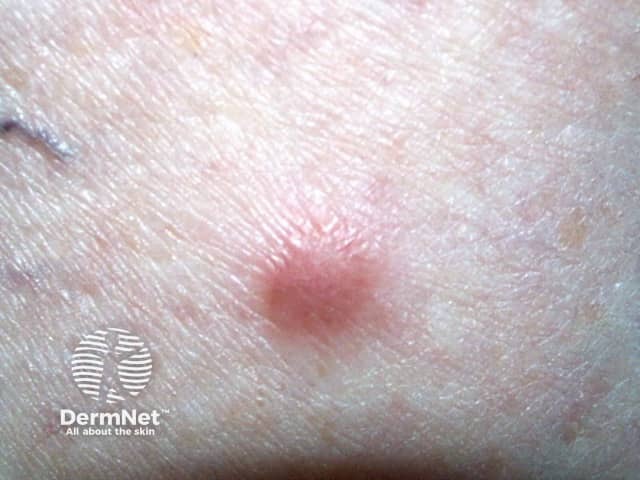
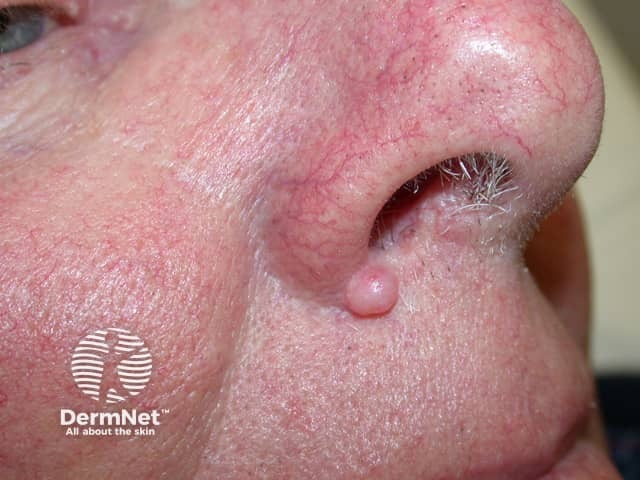

The cause of fibromatosis remains unclear. In some types of fibromatosis such as desmoid tumours, it is thought that the condition may be related to trauma, hormonal factors, or have a genetic association. Superficial fibromatoses such as palmar, plantar and penile fibromatosis have sometimes been linked to certain diseases such as diabetes, liver disease and hypertension.
Management of fibromatosis depends on individual disease. For further information on the different types of fibromatoses select from the list below.