Introduction Causes Demographics Clinical features Diagnosis Treatment
Asteatotic eczema is a common type of dermatitis that occurs as a result of dry skin. It got its French name eczema craquelé from its cracked appearance. It is also known as xerotic (dry) eczema.
The most common site is the shins, but asteatotic eczema may occur elsewhere including upper limbs and trunk.
Asteatotic eczema is mainly due to water loss from the stratum corneum. This occurs because of a breakdown of the skin barrier due to genetic predisposition and injury by environmental factors. These include:
Asteatotic eczema can occur in anyone with very dry skin.
Asteatotic eczema often has a distinctive crazy-paving appearance. Diamond-shaped plates of skin are separated from each other by red bands forming a network. There may also be scratch marks. It may start on one shin but soon spreads to affect the skin around both lower legs.
Severe asteatotic eczema can lead to more severe secondary dermatitis with generalised redness, localised swelling and surface blistering. Like other forms of eczema on the lower leg, it can eventually result in widespread secondary disseminated eczema (autosensitisation).
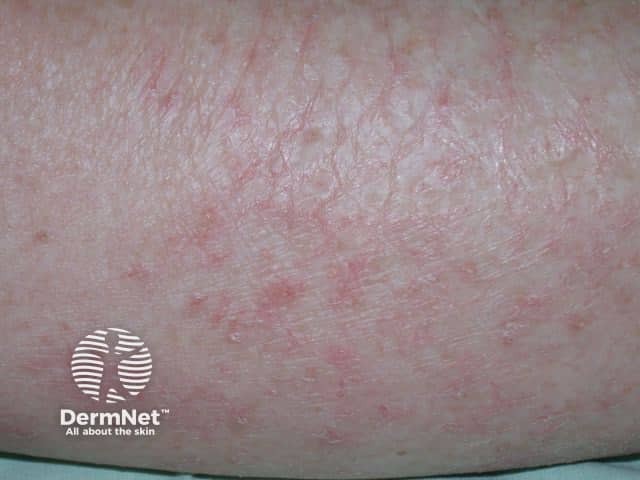

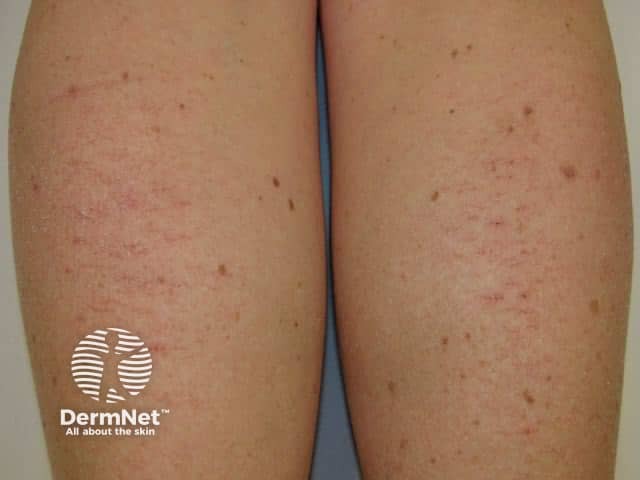


Asteatotic eczema is diagnosed by its appearance and tests are unnecessary in the majority of patients.
Thyroid function tests are appropriate if there are other signs to suggest hypothyroidism, such as dry, thinning hair, weight gain, lethargy and slowness. If asteatotic eczema is of recent onset and accompanied by excessive scaling (acquired ichthyosis), weight loss, fevers or general malaise, the patient should be thoroughly investigated for an internal cause.
Asteatotic eczema usually rapidly responds to treatment.
Ensure the skin is not allowed to dry out again, as asteatotic eczema is very likely to recur.