Created 2008.
Corynebacteria are small gram-positive cocci generally considered to be commensal organisms. However, under certain circumstances, they can cause skin problems.
Pitted keratolysis causes smelly feet. It is associated with hyperhidrosis and occlusive footwear. It is caused by corynebacteria, and possibly Dermatophilus congolensis.
Either the forefoot or the heel or both become white with clusters of punched-out pits, more obvious when the skin is wet.
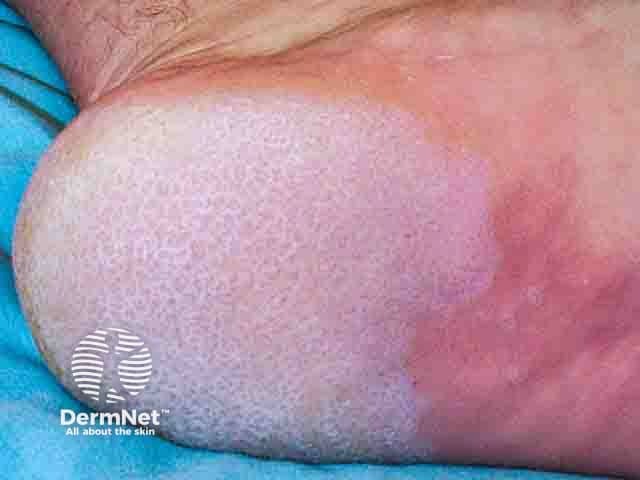
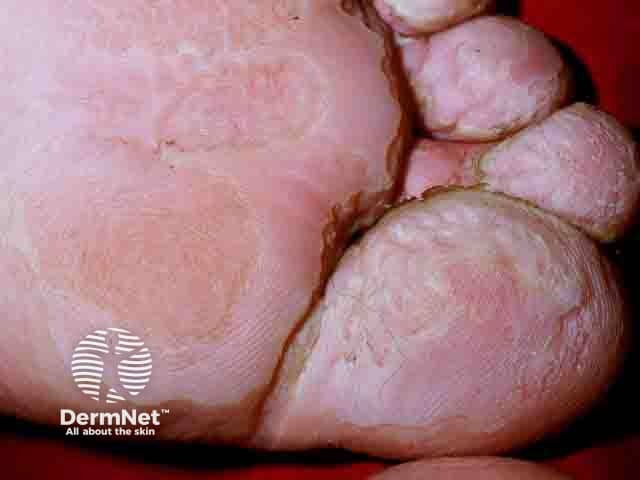


Pitted keratolysis can be successfully treated with topical antibiotics such as fusidic acid cream, or with oral erythromycin.
It will quickly recur unless the feet are kept dry. Advice to the patient should include:
Erythrasma is an asymptomatic infection due to Corynebacterium minutissimum in skin flexures, most often axillae and groins. It is prevalent in diabetics.
It presents as a slowly enlarging area of pink or brown dry skin. Wood's light examination reveals coral-pink fluorescence due to porphyrins released by the bacteria. The diagnosis can be confirmed by a swab or scraping for microscopy and culture.

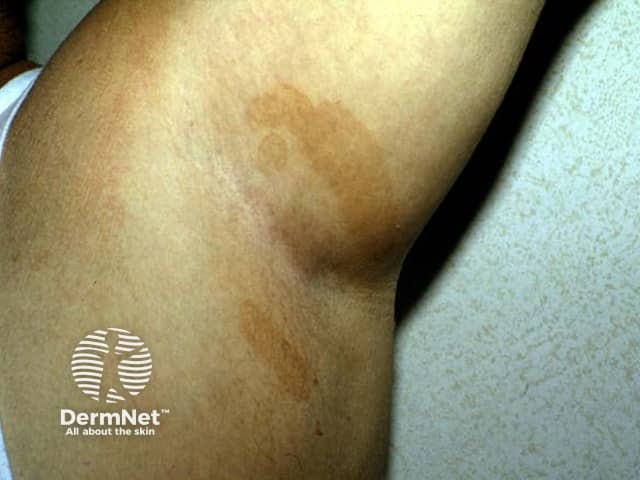

Erythrasma can be treated with an antiseptic such as Whitfield ointment (3% salicylic acid, 6% benzoic acid in petrolatum) or a topical antibiotic such as fusidic acid cream or clindamycin solution.
Extensive infection can be treated with oral erythromycin or tetracycline and usually responds promptly. Antibacterial soap can be used to prevent recurrence.
Trichomycosis axillaris is caused by the proliferation of Corynebacterium (mostly Corynebacterium tenuis) on underarm hair. Pubic hair infection is known as trichomycosis pubis. Yellow, or less often, black or red, granular nodules or concretions envelop the hair shaft. Sweat may be discoloured and clothing stained.


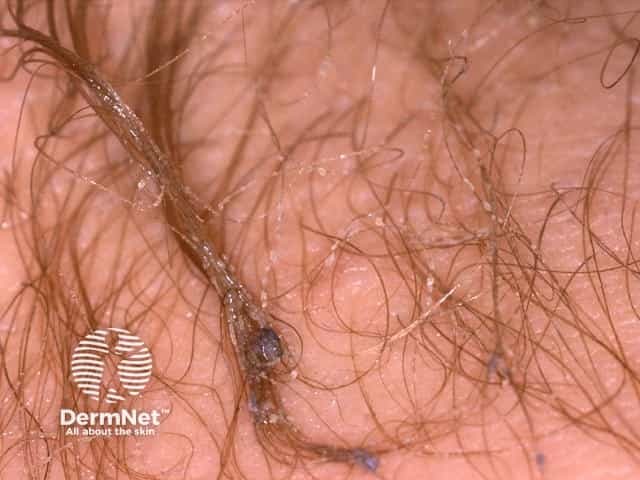
Trichomycosis axillaris is most easily treated by shaving the affected area. Benzoyl peroxide gel, antibacterial washes and antiperspirants may also be helpful.
Describe the microbiology of corynebacteria.
Information for patients
See the DermNet bookstore.





 Previous Chapter