Created 2008.
Necrotising fasciitis (NF) is infection of the subcutis and deep fascia. It is a surgical emergency, most often due to Streptococcus pyogenes producing pyrogenic exotoxins A, B and C (flesh-eating bacteria, Type 2 NF). It is less frequently polymicrobial (Type 1 NF) or due to Staphylococcus aureus, clostridia (gas gangrene, Type 3 NF) and other organisms.
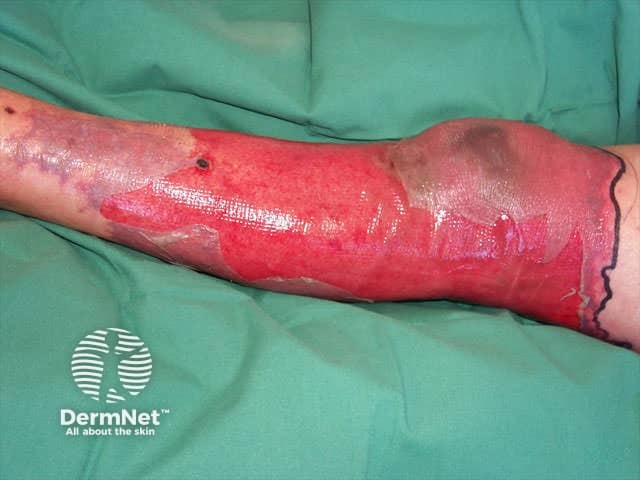


The exudate should be gram stained. Rapid streptococcal diagnostic kit and polymerase chain reaction tests may be helpful for diagnosis. MRI or CT scans can be used to delineate the extent of NF.
Management should include:
Intravenous immunoglobulins may be useful.
Some strains of Streptococci are more pathogenic due to certain extracellular products, toxins and superantigens. These may include cell surface molecules such as the M protein, opacity factor, the hyaluronic acid capsule, C5a peptidase and streptococcal inhibitor of complement (SIC), in addition to secreted proteins, pyrogenic and erythrogenic toxins, exotoxins, cysteine proteinase, streptolysins O and S, hyaluronidase, streptokinase and other enzymes.

Find out why non-steroidal anti-inflammatory drugs are contraindicated in the management of necrotising fasciitis.
Information for patients
See the DermNet bookstore





 Previous Chapter