logo

DermNet NZ

Ad

Facts about skin from the New Zealand Dermatological Society Incorporated. Topic index: A B C D E F G H I J K L M N O P Q R S T U V W X Y Z

Three-point checklist

Learning objectives
Introduction
Symmetry
Network
Blue-white structures
Activity

Learning objectives

Introduction

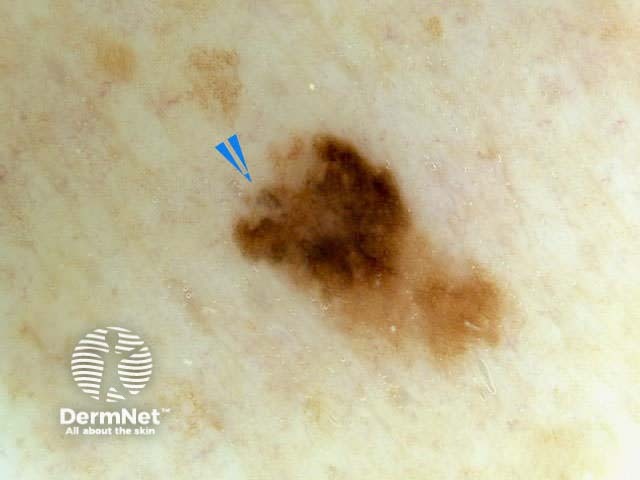
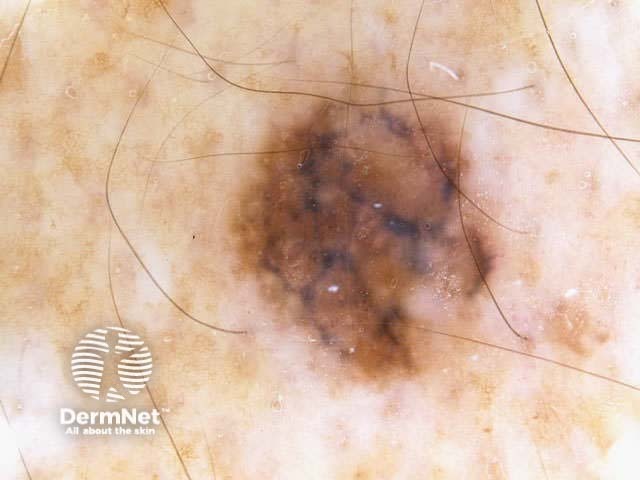
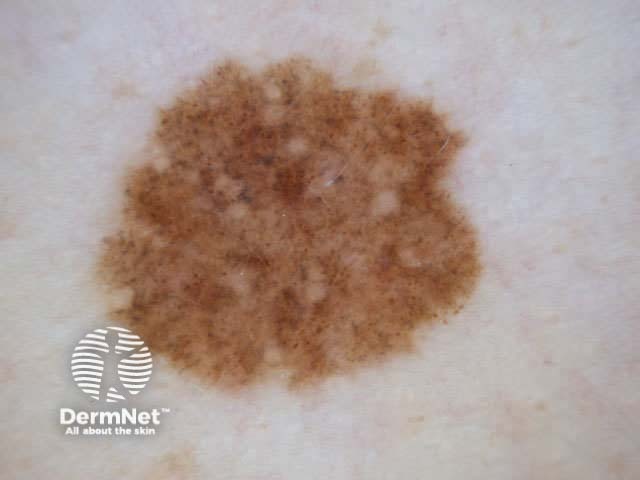
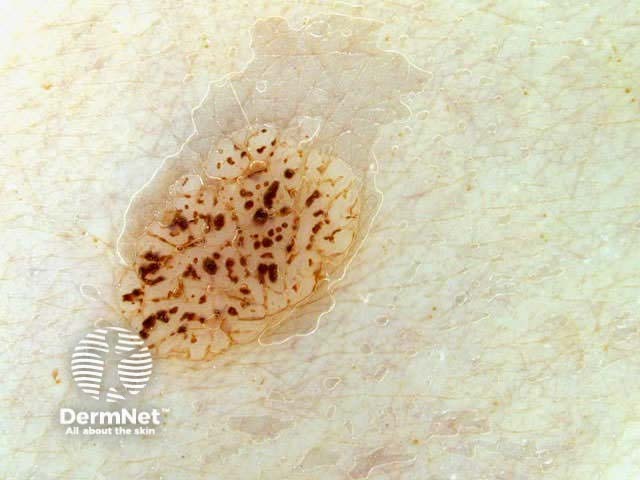
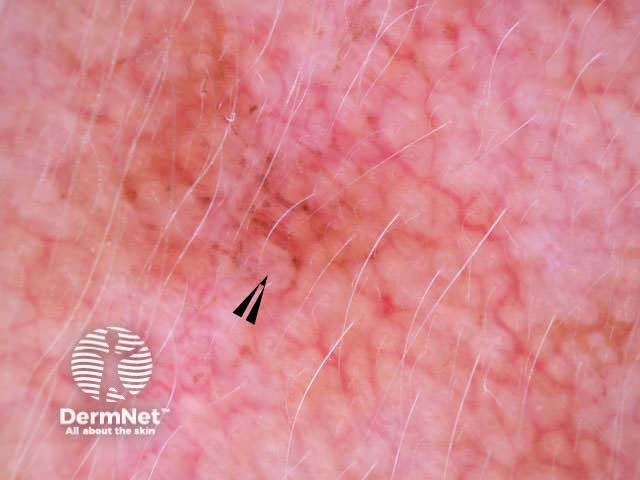
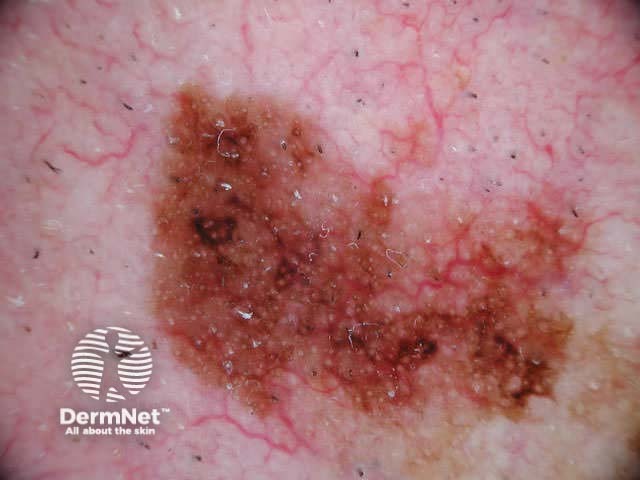
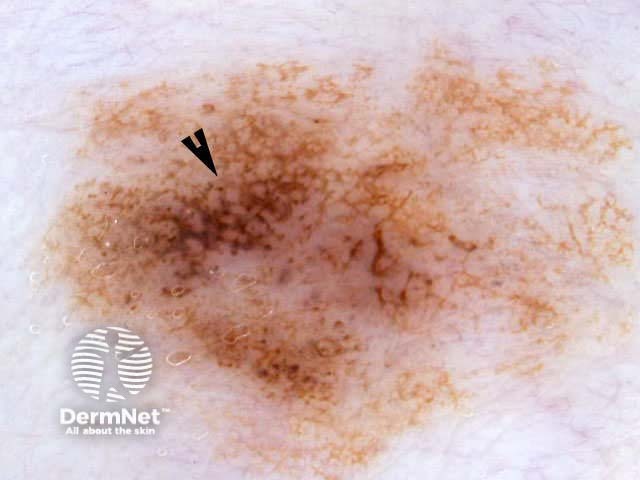
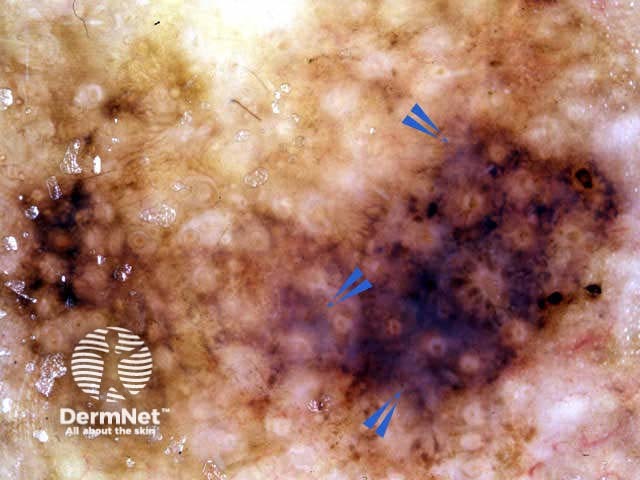
The dermoscopy 3-point checklist for early detection of skin cancer is fairly easy to learn and has a high sensitivity for melanoma. (1) There a high likelihood of malignancy (melanoma or basal cell carcinoma) if a pigmented skin lesion has any two of these criteria. The 3-point checklist has been designed to allow non-experts not to miss detection of melanomas. However, it is not as specific as pattern analysis (described in a later section).

The main aim of the 3-point checklist is to determine whether the lesion being examined should undergo a biopsy. It does not an require accurate diagnosis to be made as the finer features of the lesion are not examined.
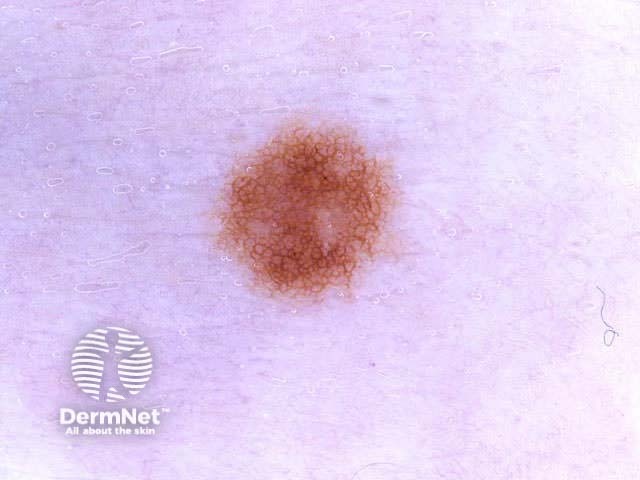
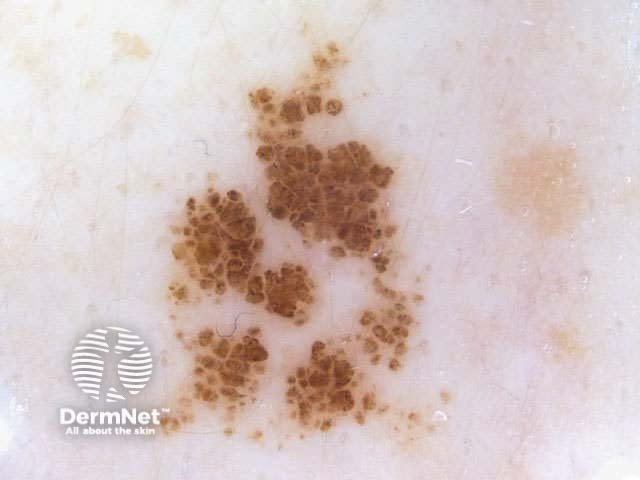
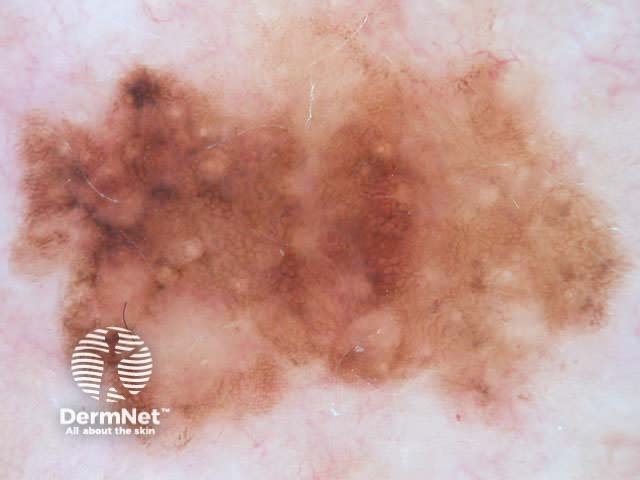
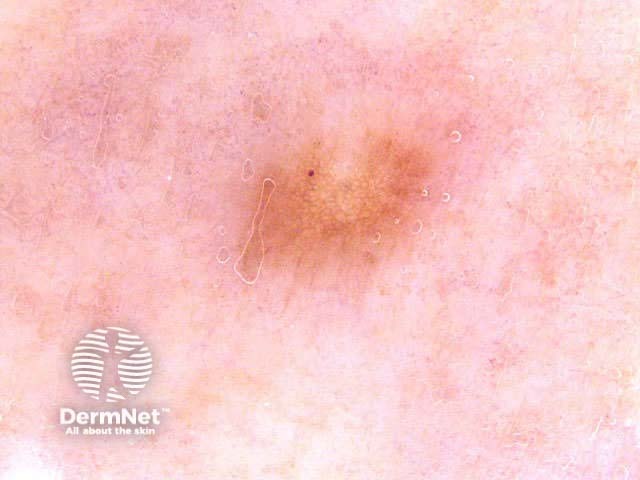
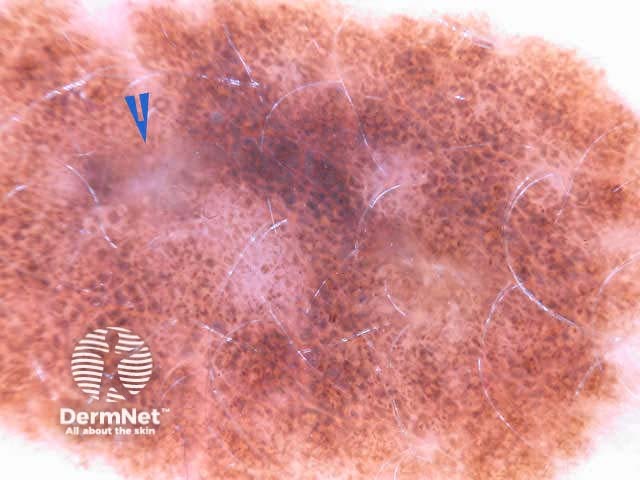
Dermoscopy
Score = 0
Benign
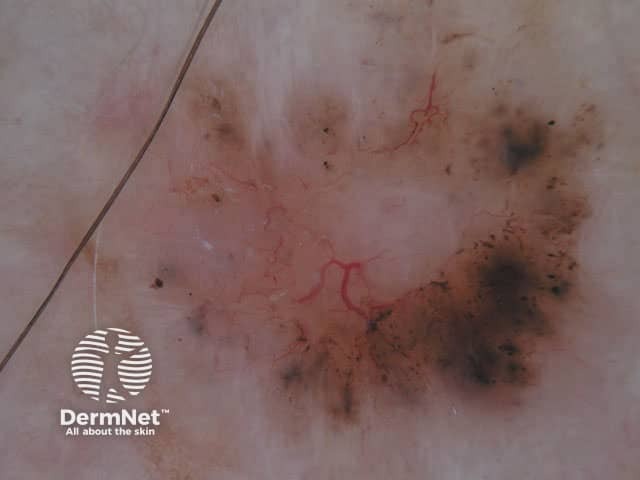
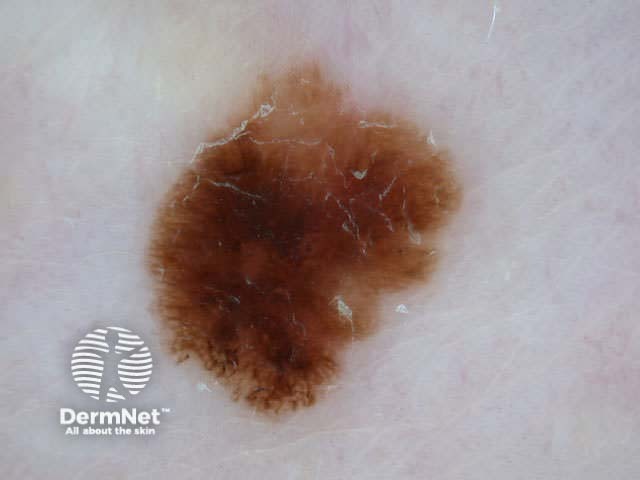
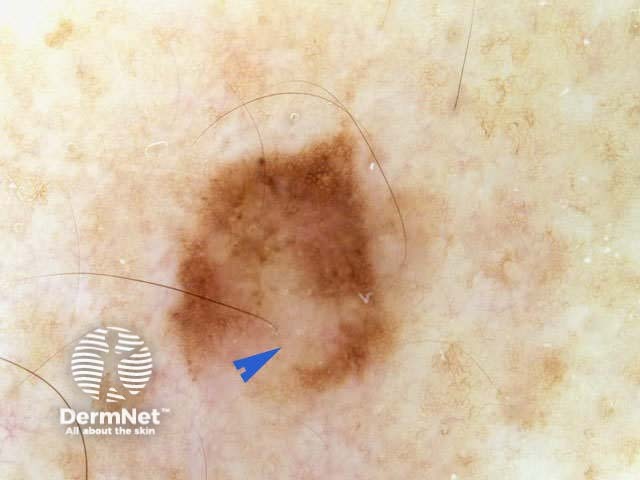
Dermoscopy
Score = 1
Benign
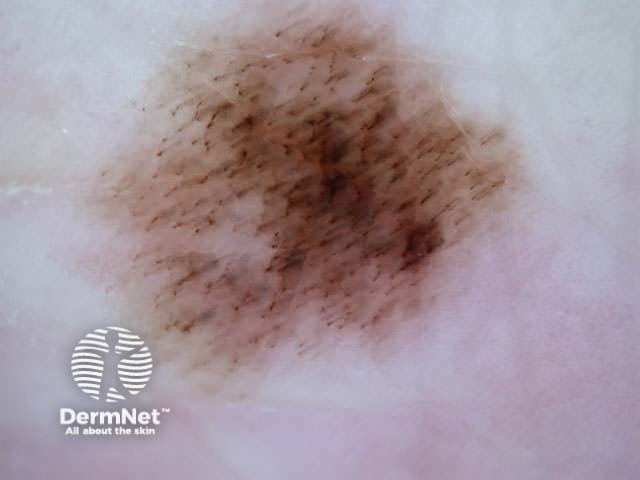
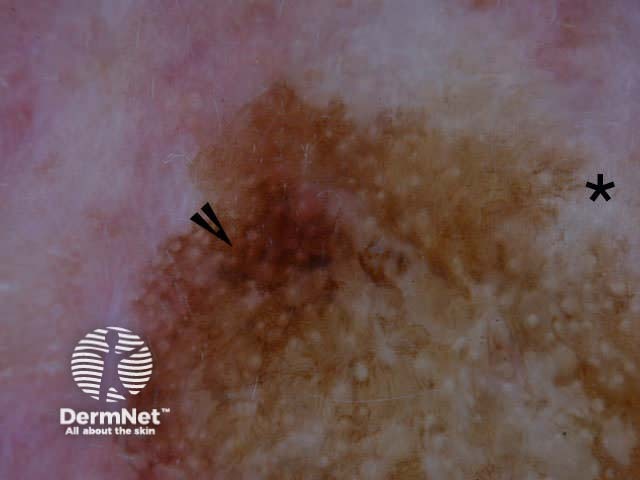
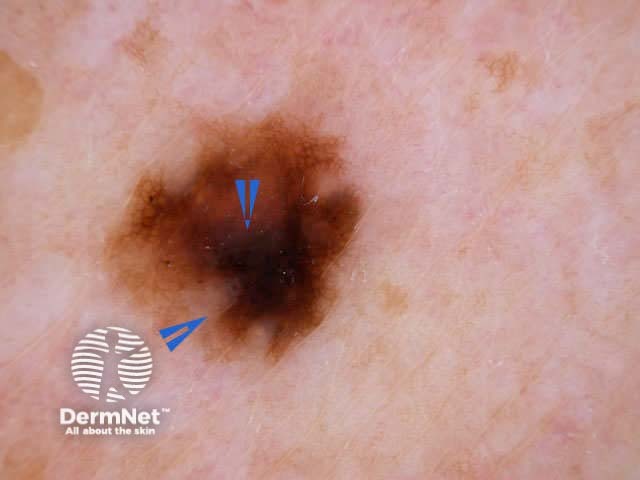
Dermoscopy
Score = 2
Malignant
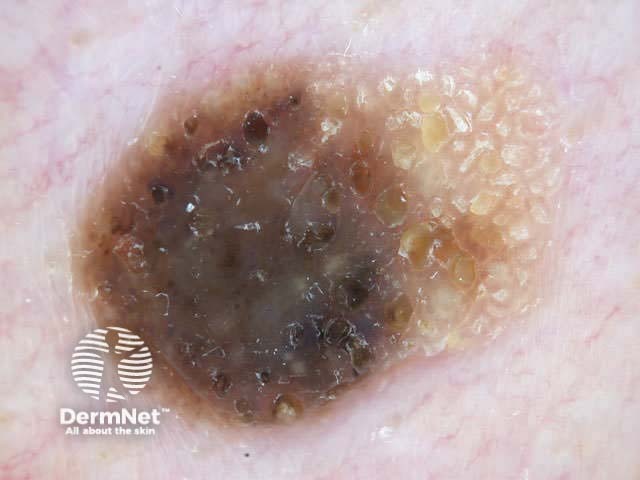
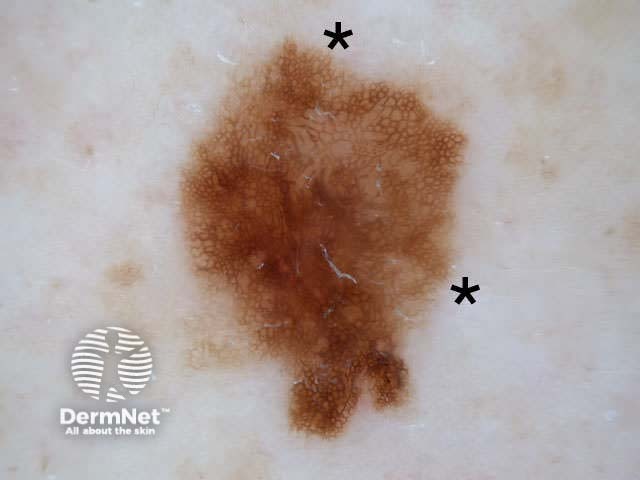
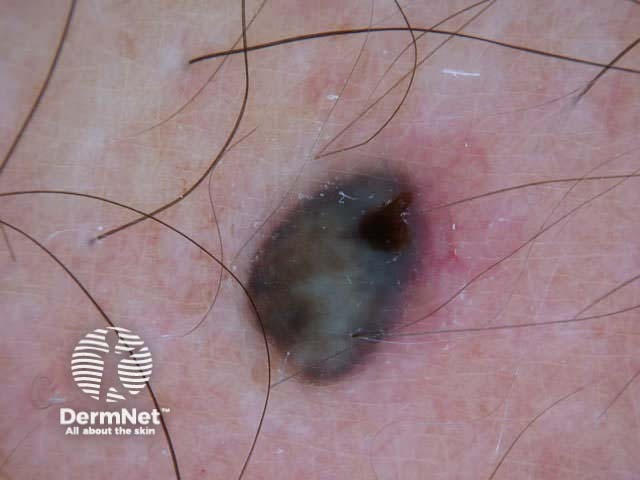
Dermoscopy
Score = 3
Malignant
Symmetrical, uniform network, no blue-white structures. Mild asymmetry of structure, no network, no blue-white structures. Marked asymmetry of structure, network is ok, subtle greyish blue structure (arrow). Mild asymmetry of structure, broad dark grey network which has blue-grey veil.

Symmetry

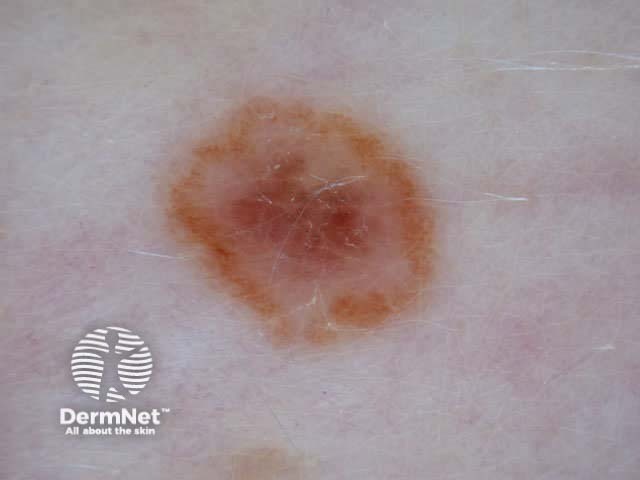
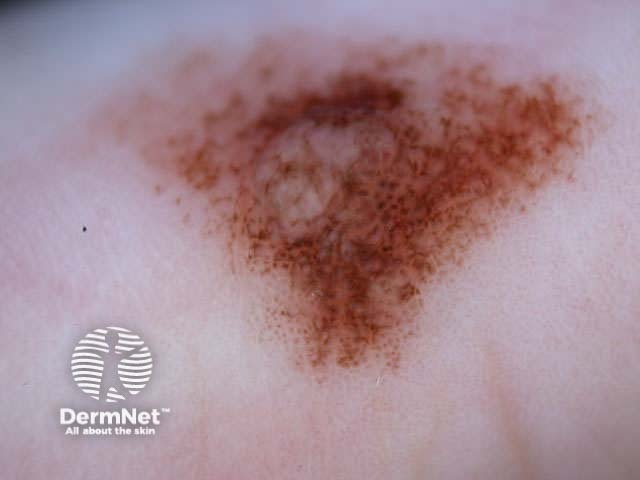
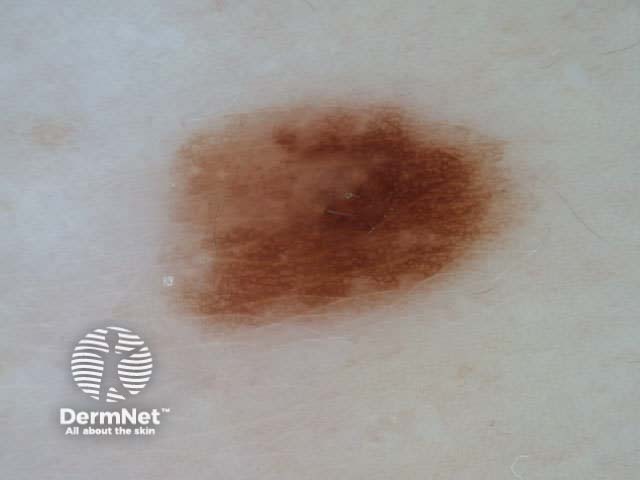
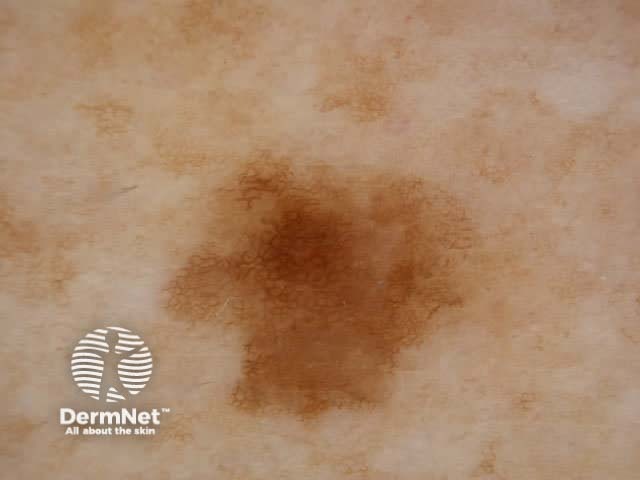
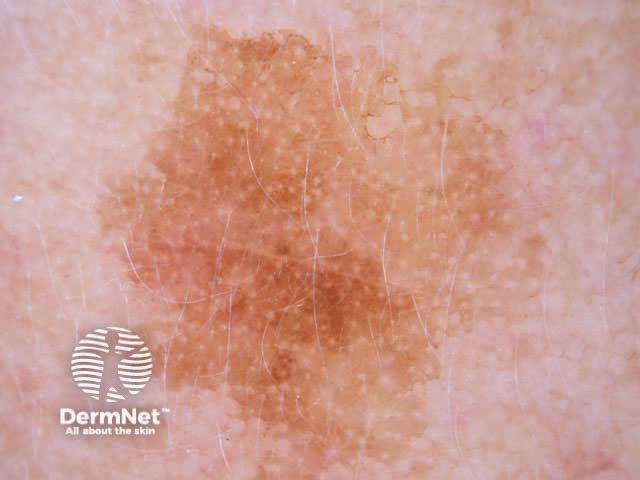
The following lesions demonstrate approximate symmetry of colour and structure. Shape is not considered.
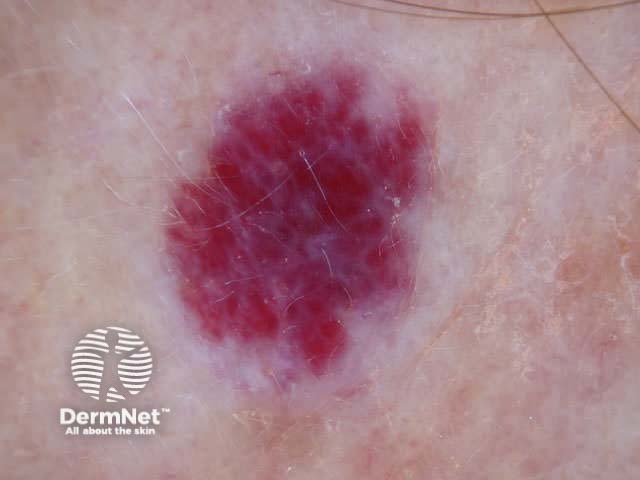
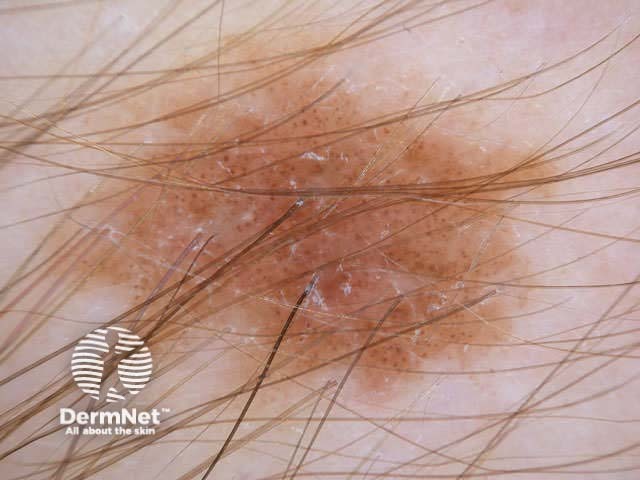
Dermoscopy
Cherry angioma
Dermoscopy
Compound naevus
Dermoscopy
Compound naevus
Dermoscopy
Cellular naevus
Dermoscopy
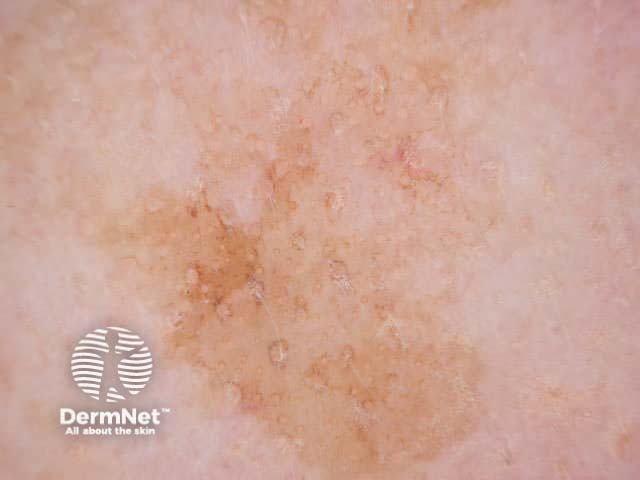
Solar lentigo
Dermoscopy
Plantar naevus
Dermoscopy
Benign naevus
Dermoscopy
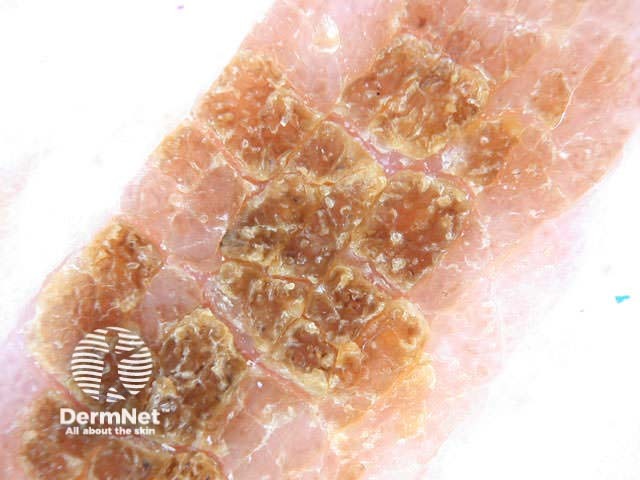
Seborrhoeic keratosis

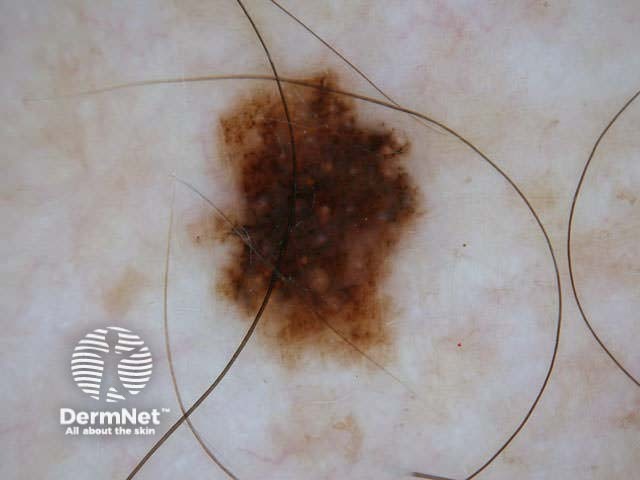
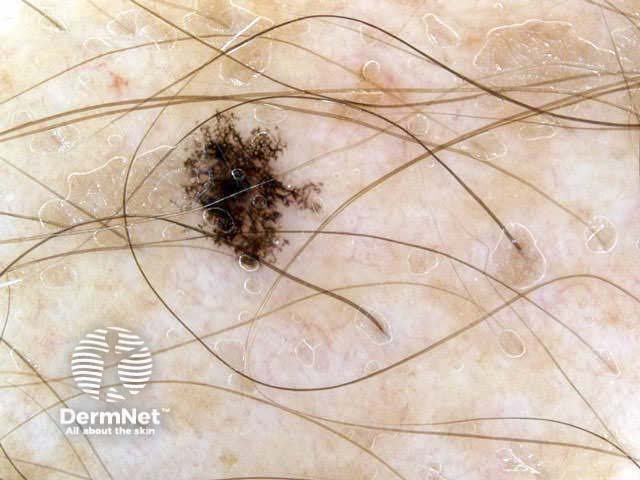
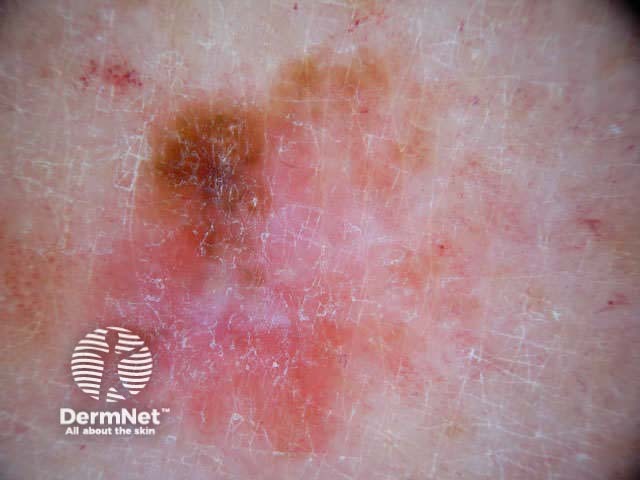
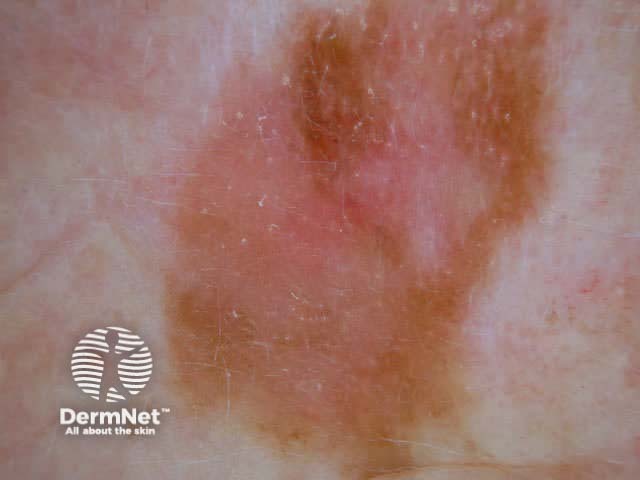
The lesions below demonstrate asymmetry of colour or structure in one or two axes. Not all asymmetrical lesions are malignant.
Dermoscopy
Melanoma in situ
Dermoscopy
Melanoma in situ
Dermoscopy
Invasive melanoma
Dermoscopy
Basal cell carcinoma
Dermoscopy
Plantar naevus
Dermoscopy
Seborrhoeic keratosis
Dermoscopy
Lentigo simplex
Dermoscopy
Congenital naevus

Network

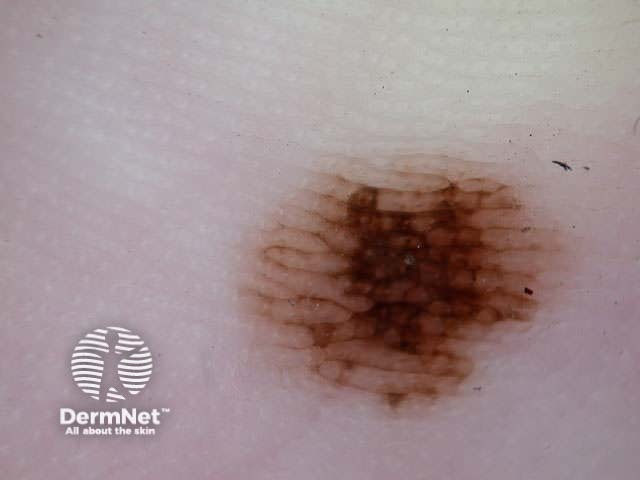
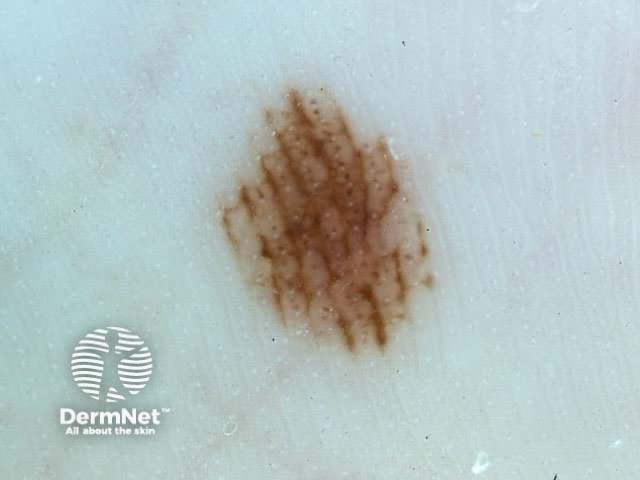
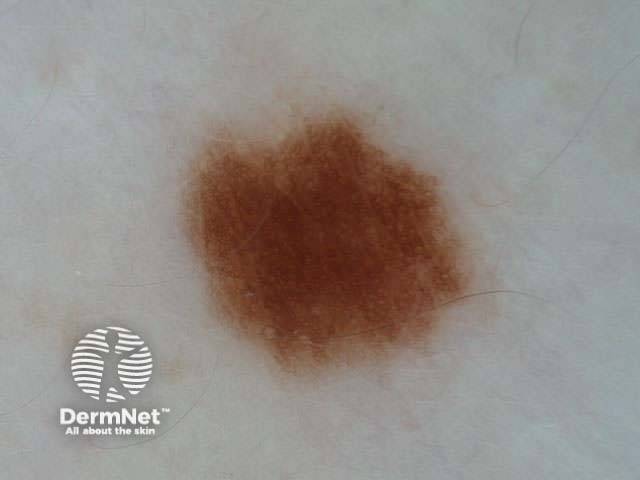
The following lesions are considered to have typical pigment network.
Dermoscopy
Junctional naevus
Dermoscopy
Ephilis
Dermoscopy
Benign naevus
Dermoscopy
Junctional naevus
Dermoscopy
Ink spot naevus
Dermoscopy
Plantar naevus
Dermoscopy
Facial lentigo
Dermoscopy
Dermatofibroma

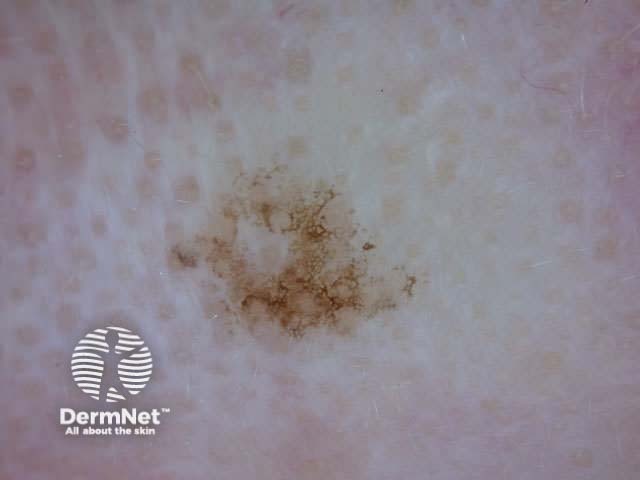
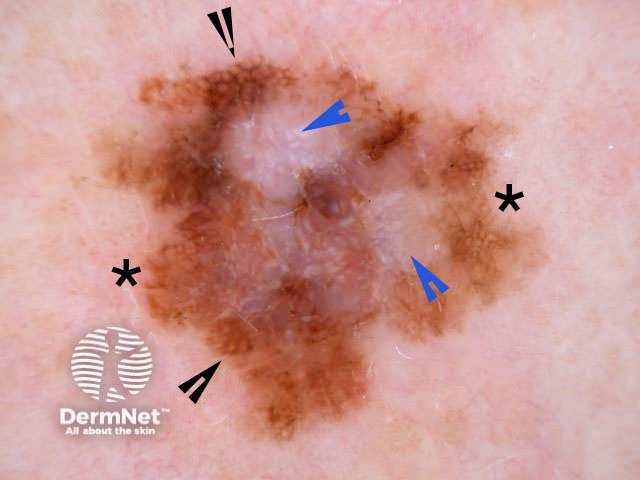
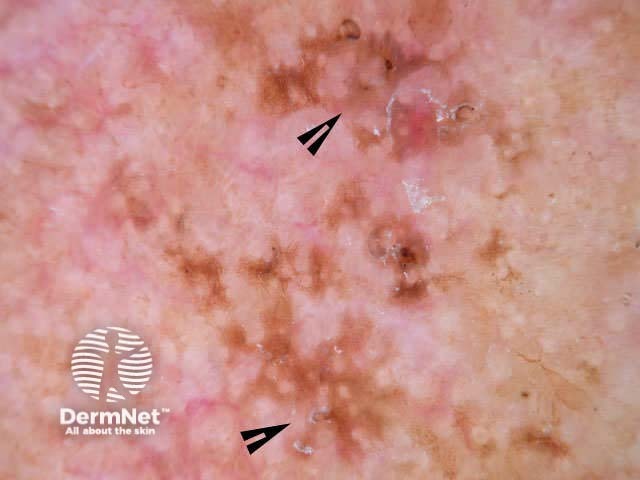
The lesions below have atypical pigment network, with irregular holes and thick lines (broadened network). Streaming or pseudopods would also be considered atypical. Not all lesions with atypical network prove to be malignant.
Dermoscopy
Melanoma
Dermoscopy
Lentigo maligna
Dermoscopy
Melanoma in situ
Dermoscopy
Lentigo maligna
Dermoscopy
Melanoma
Dermoscopy
Lentigo maligna
Dermoscopy
Lentigo maligna
Dermoscopy
Atypical naevus
Irregular pigment network: black arrows to broadened network, asterisk to streaming

Blue-white structures

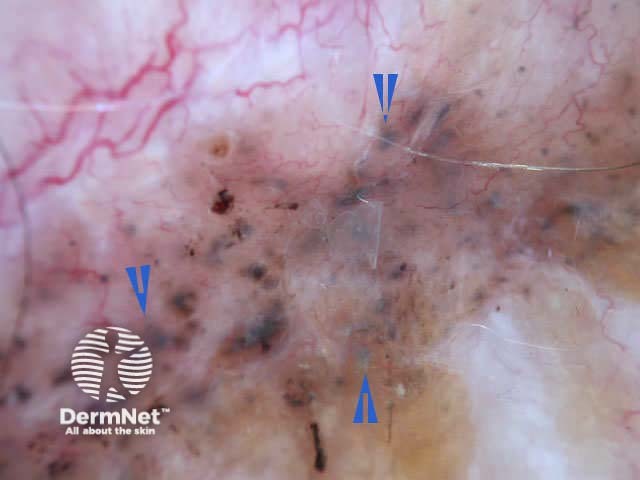
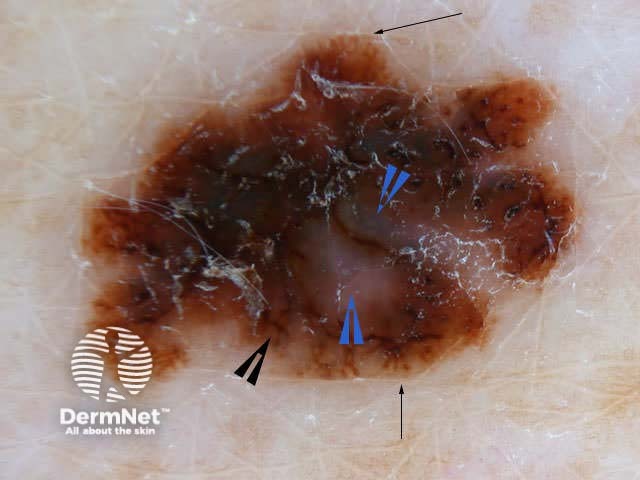
Blue-white structures can refer to any type of blue and/or white colour, i.e. combination of blue-white veil and regression structures, as shown in the following pictures. The colour can be subtle. Not all lesions with blue-white structures are malignant.
Dermoscopy
Melanoma
Dermoscopy
Basal cell carcinoma
Dermoscopy
Melanoma
Dermoscopy
Lentigo maligna
Dermoscopy
Congenital naevus
Dermoscopy
Blue naevus
Dermoscopy
Dysplastic naevus
Dermoscopy
Dysplastic naevus

Activity

Practice dermoscopy, evaluating skin lesions using the 3-point checklist.


Page 3 of 15. Next topic: Dermoscopy of benign melanocytic lesions. Back to: Dermoscopy course contents.

Related information

References:

On DermNet NZ:

Information for patients

Other websites:

Books about skin diseases:

See the DermNet NZ bookstore

Author: Clin Assoc Prof Amanda Oakley

DermNet does not provide an on-line consultation service.
If you have any concerns with your skin or its treatment, see a dermatologist for advice.