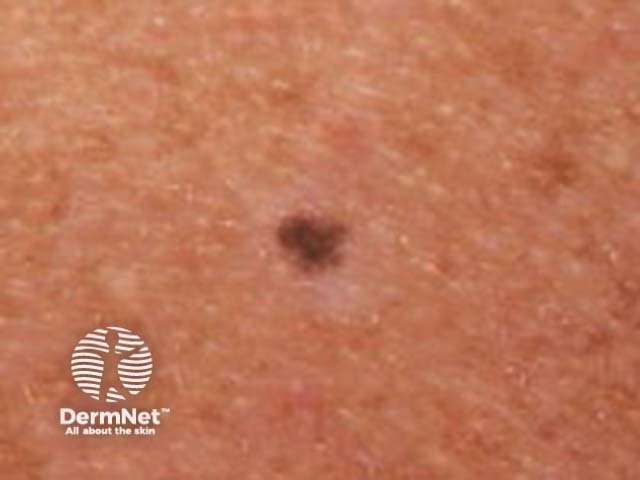
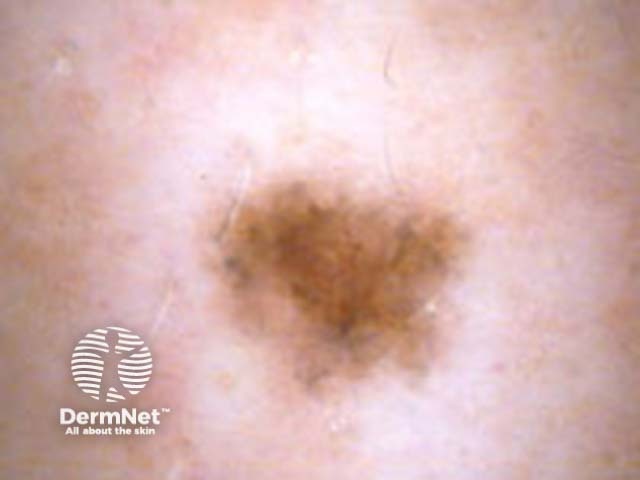
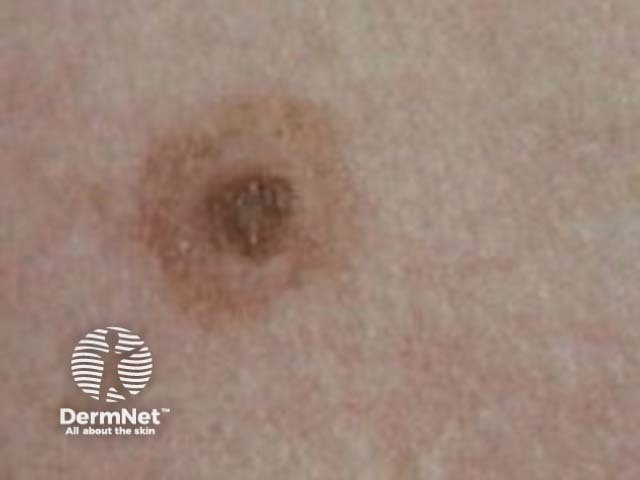
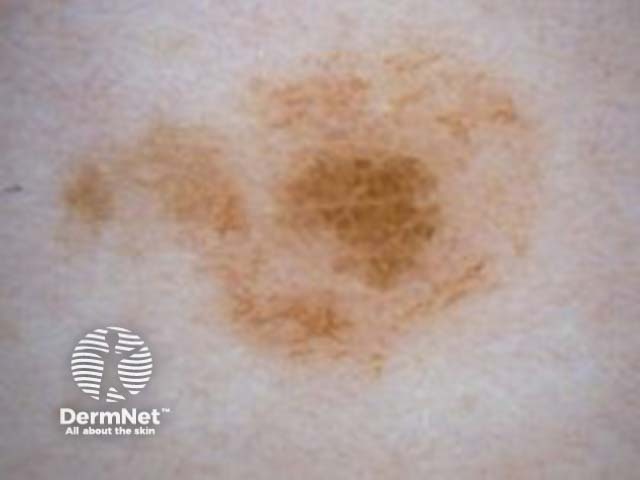
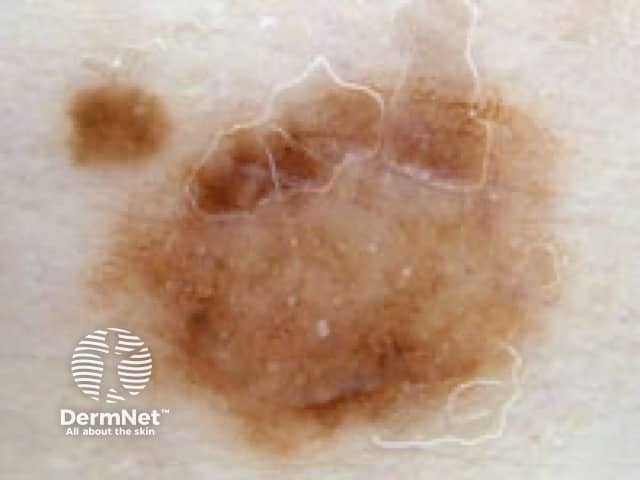
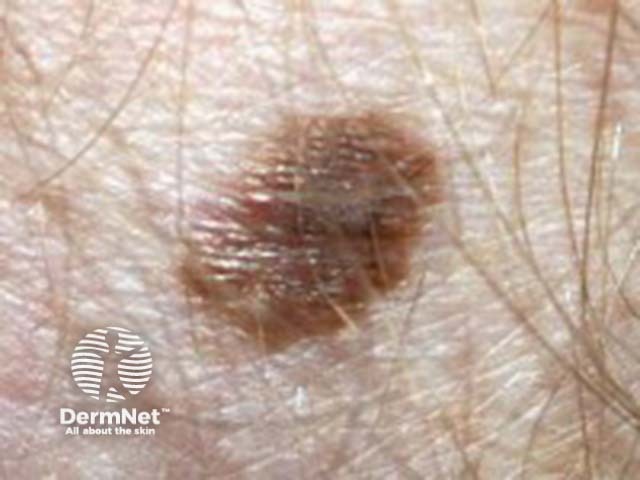
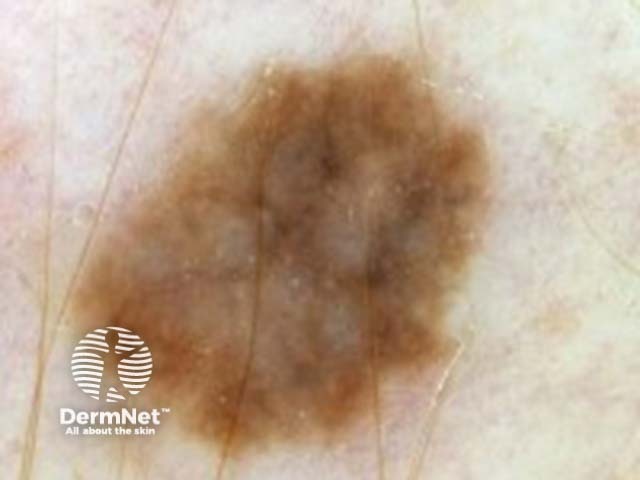
Melanocytic naevi: new classification
Why have a new classification?
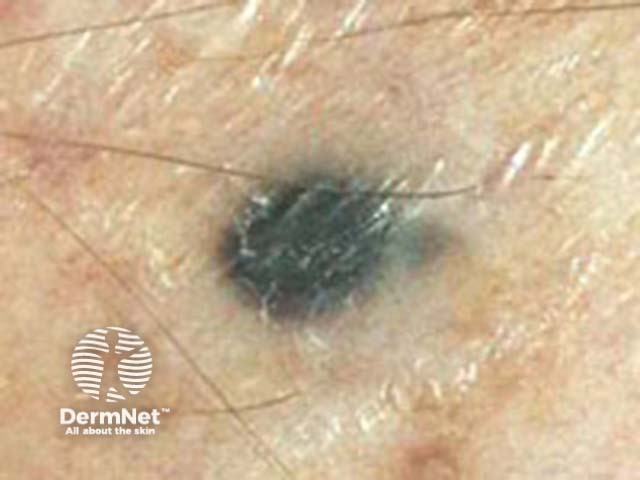
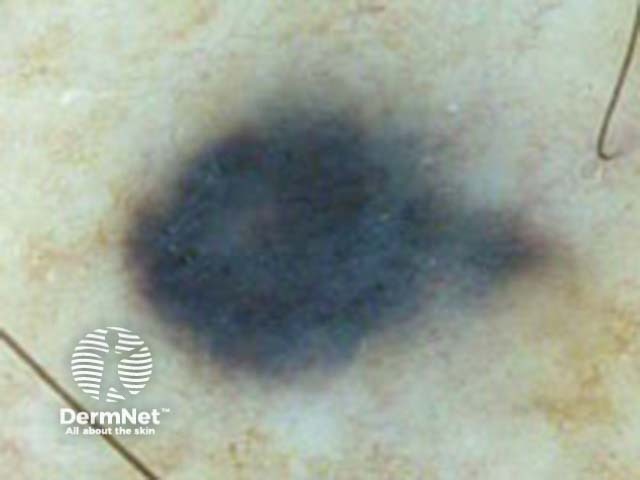
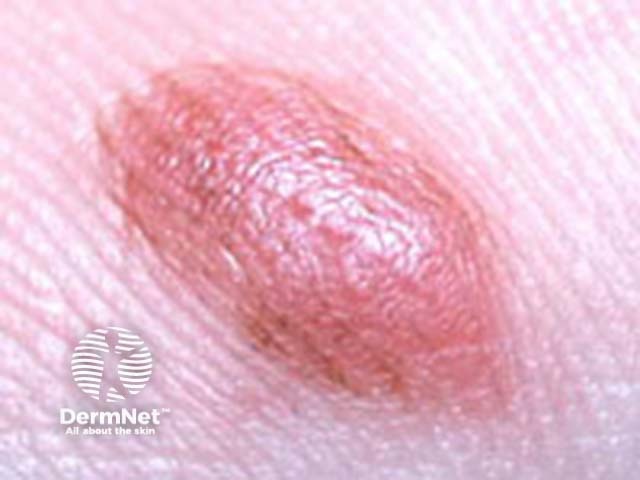
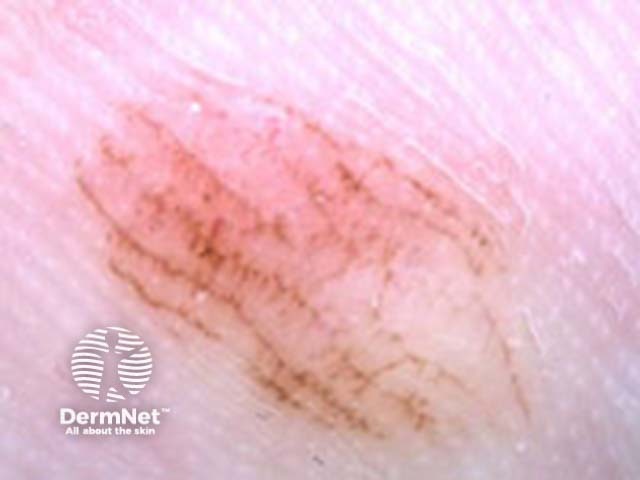
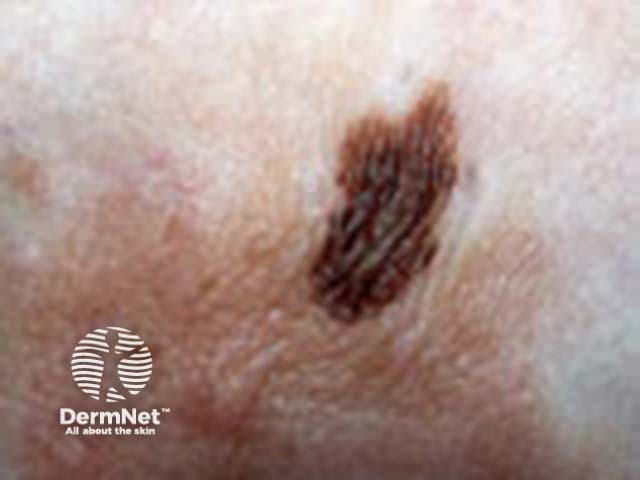
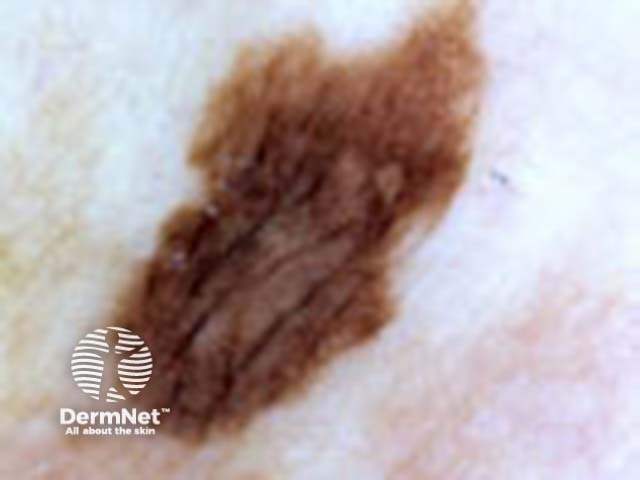
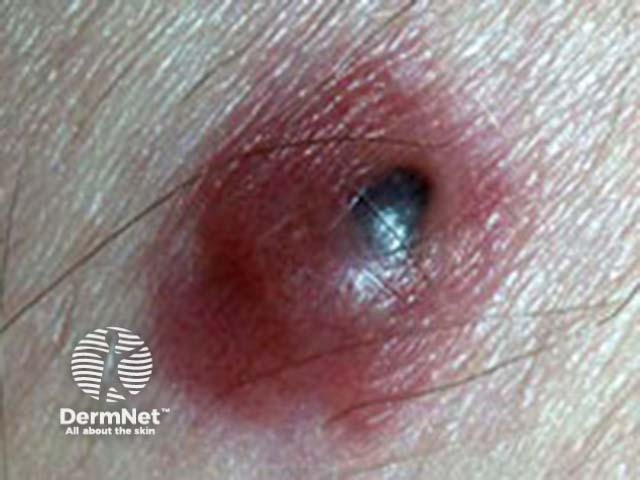
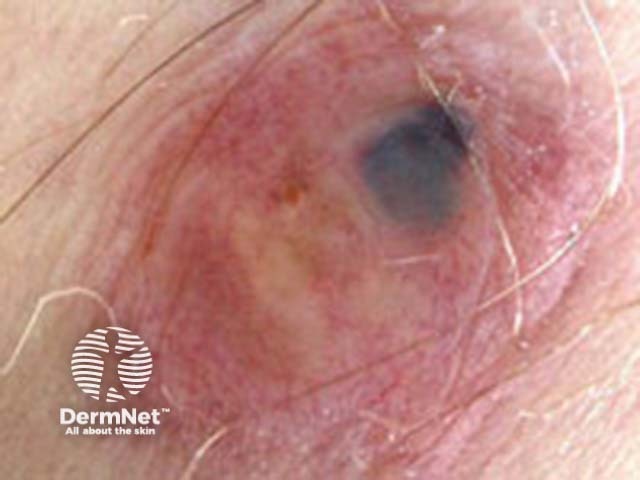
A new classification system for melanocytic naevi has been proposed by Argenziano et al to account for dermoscopic features of these lesions.[1,2] Common use will tell whether the classification is useful, and no doubt it will evolve in time.
The conventional system has divided melanocytic naevi according to history (congenital or acquired) and histopathology (junctional, compound and dermal location of melanocytes). However clinical diagnosis is often imprecise. Historically, naevi were thought to start as junctional melanocytic nests, and progress to become compound then dermal in time. Careful dermoscopic observation of numerous naevi has shown this theory to be implausible.
Dermoscopy often allows precise diagnosis of different types of melanocytic naevi based on the amount and distribution of pigmentation. Often an individual has many benign naevi that look similar to one another, allowing the ugly duckling
that looks different from the others to be recognised as a melanoma.
The new classification has seven groups. Clinicians may wish to use it when describing dermoscopic features of melanocytic naevi.
-
Globular (congenital) naevus
-
Reticular (acquired) naevus
-
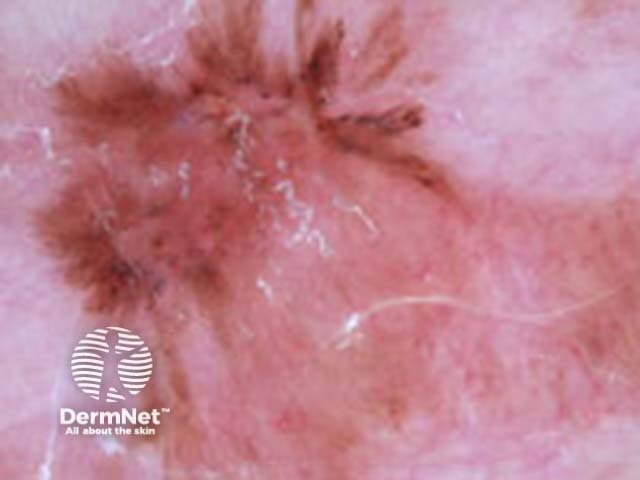
Starburst (Spitz/Reed) naevus
-
Blue (homogeneous) naevus
-
Site-related naevi
-
Naevi with special features
-
Unclassifiable melanocytic lesions
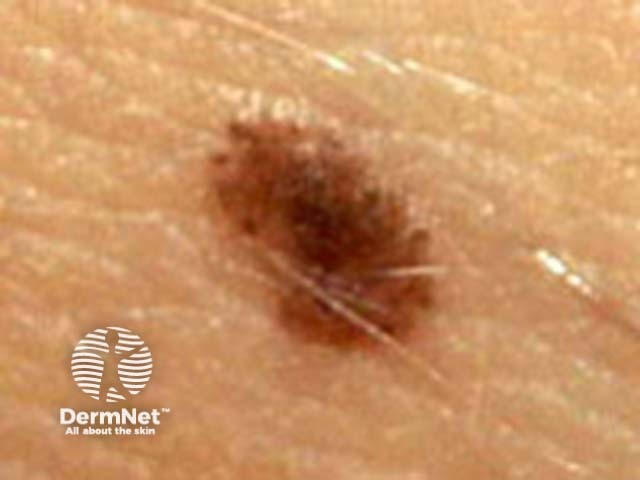
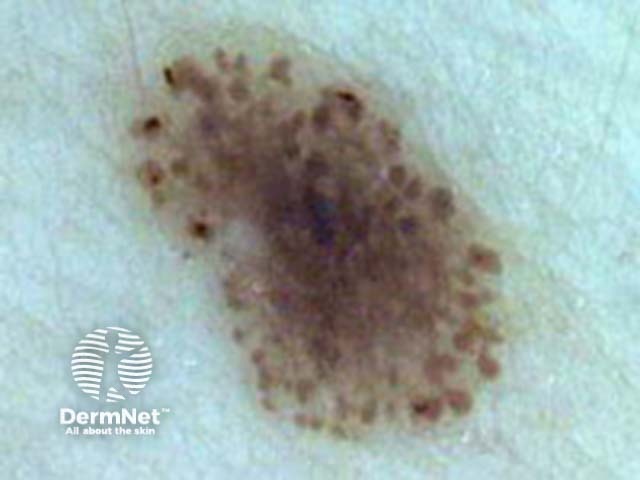
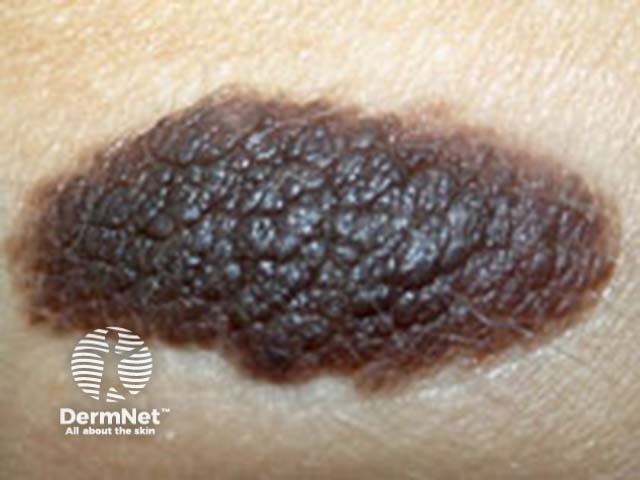
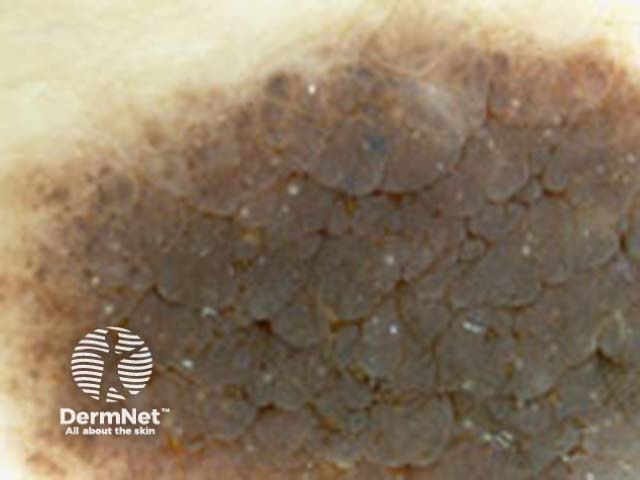
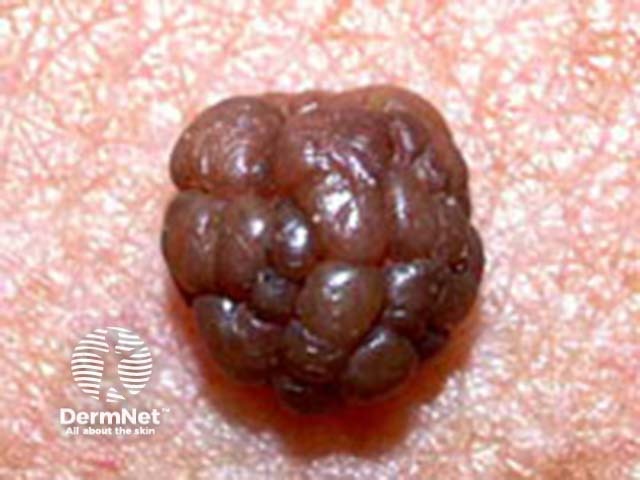
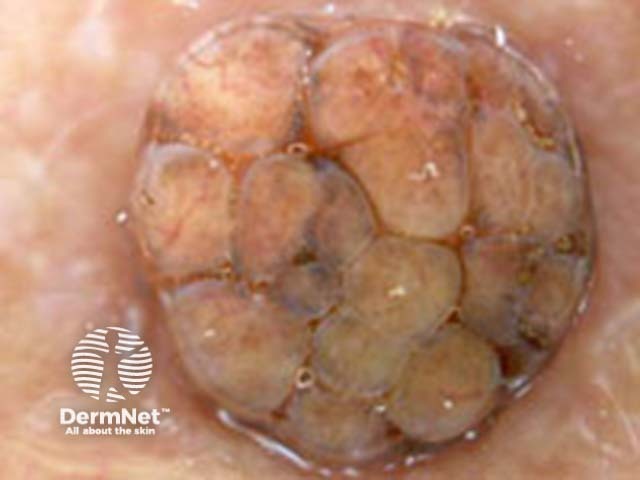
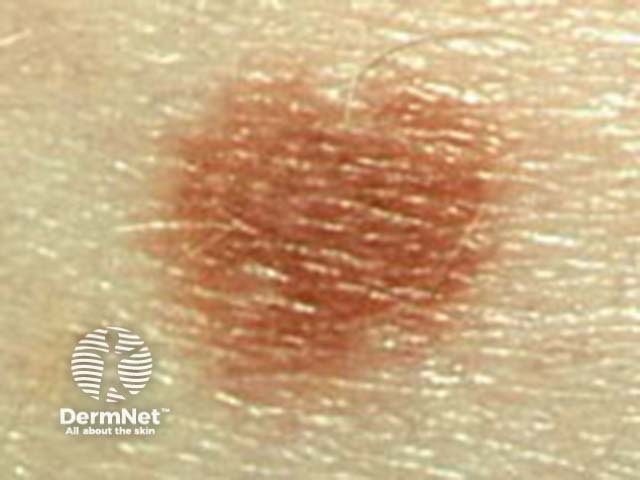
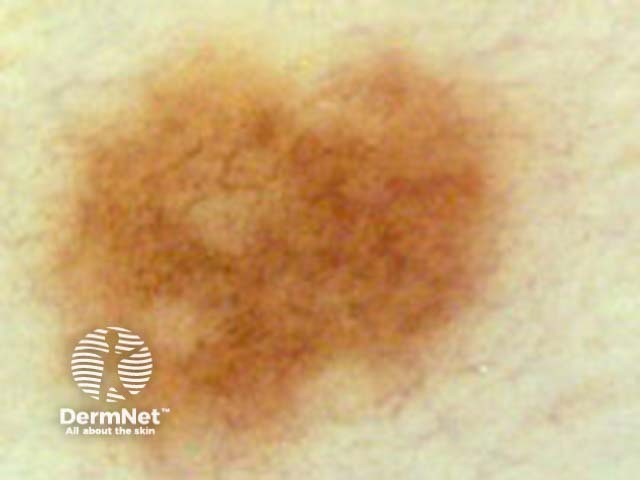
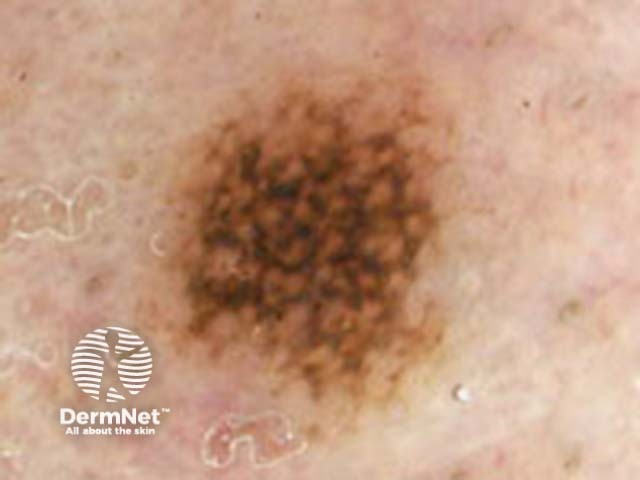
The globular naevus is characterised dermoscopically by a globular pattern. These lesions are present at birth or arise in childhood, and are likely to be constitutionally predetermined. They persist lifelong.
|
Age
|
Clinical features
|
Dermoscopic features
|
Histopathology
|
|
Childhood
|
Small: brown, flat, symmetrical, <15 mm.
|
-
Brown globules throughout lesion, especially peripheral
-
Areas of hypopigmentation
-
Structureless brown pigmentation obscuring globules
|
-
Compound naevus
-
Globules correspond with junctional nests
-
Variable congenital-like features
|
|
|
|
|
|
Large: flat to elevated with verrucous/hairy surface, >15 mm. True congenital naevi.
|
-
Reticular
-
Globular/cobblestone
-
Homogeneous
-
Mixed
-
Perifollicular hypopigmentation
|
|
|
|
|
|
Adult
|
Elevated, papillomatous
Congenital
Unna naevus
|
-
Cobblestone pattern
-
Fried-egg pattern: globules or structureless centre; peripheral network
|
-
Dermal naevus
-
Papillated epidermal hyperplasia
-
Variable congenital-like features
|
|
|
|
|
|
|
|
|
More images of globular (congenital) naevus ...
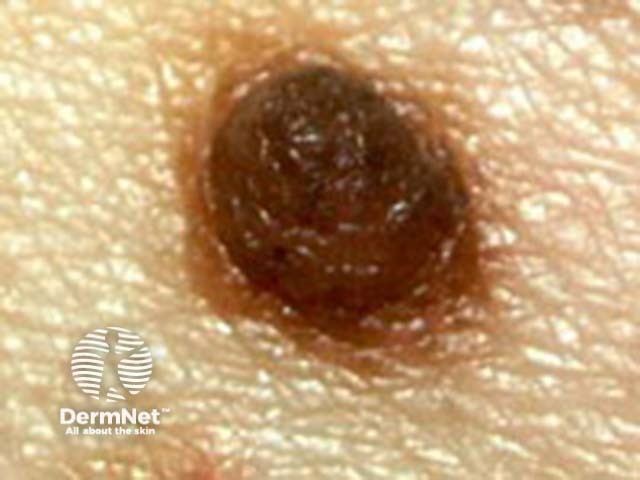
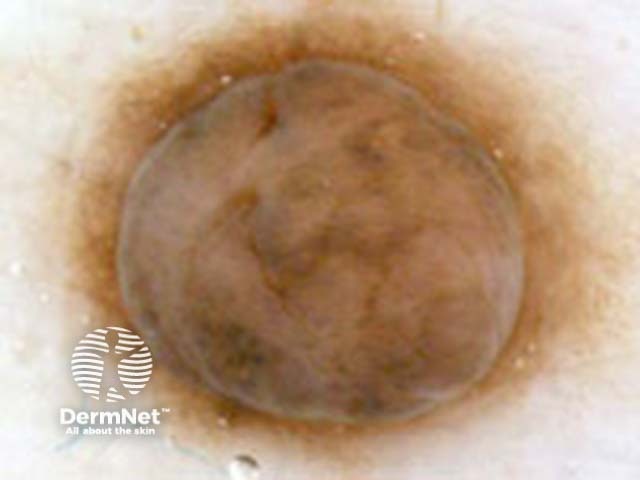
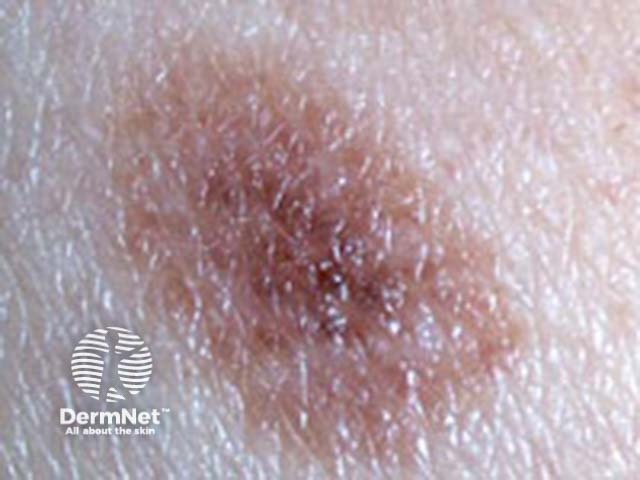
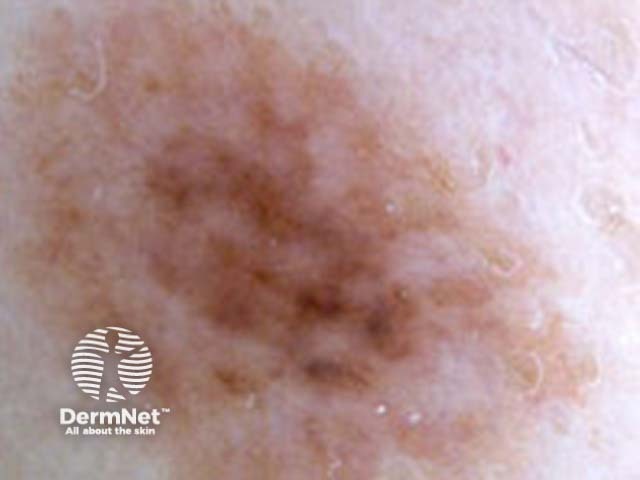
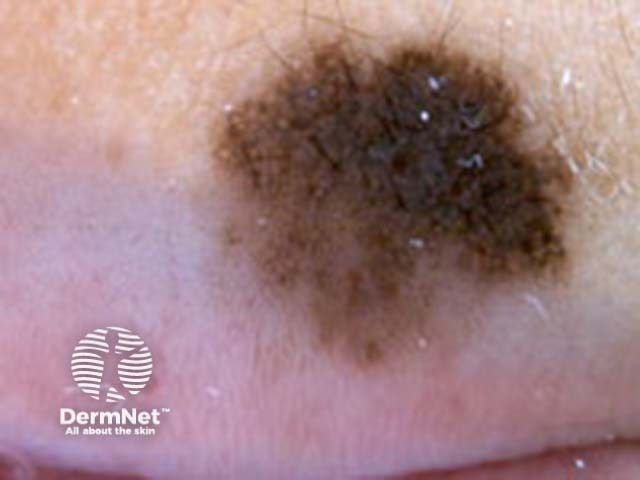
The reticular naevus is characterised dermoscopically by a reticular or network pattern of pigmentation. They arise during childhood and adult life, most likely triggered by sun exposure or other factors. They have a tendency to regress in later life and may disappear.
|
Size
|
Clinical features
|
Dermoscopic features
|
Histopathology
|
|
Small
|
-
Brown, flat, <15 mm
-
Symmetrical, monomorphous
|
-
Regular pigment network
-
Structureless areas (brown or pale)
|
-
Junctional or compound
-
Thin, elonged retes ridges
-
Sometimes with dysplastic features
|
|
|
|
|
|
Large
|
-
Brown, flat, >15 mm
-
Variable
|
-
Multifocal hypo/hyperpigmented areas
-
Sometimes with atypical features, e.g., irregular network
|
|
|
|
|
More images of reticular (acquired) naevus ...
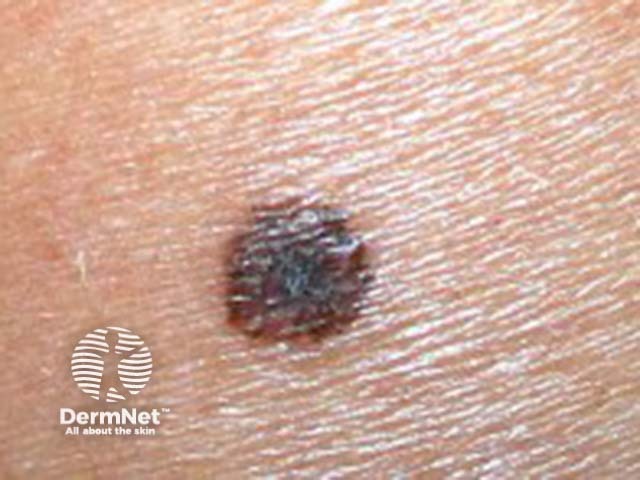
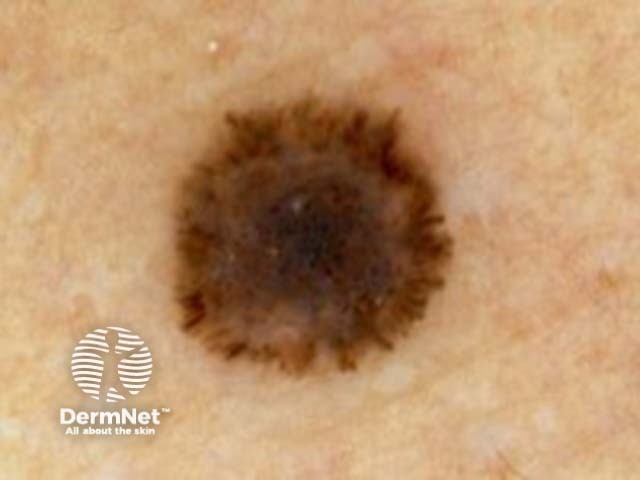
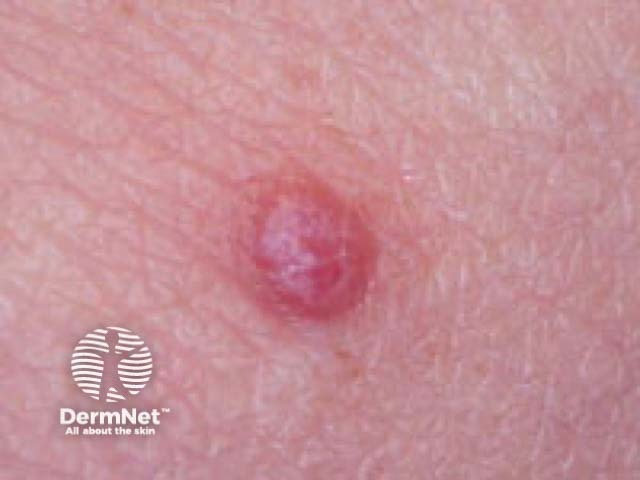
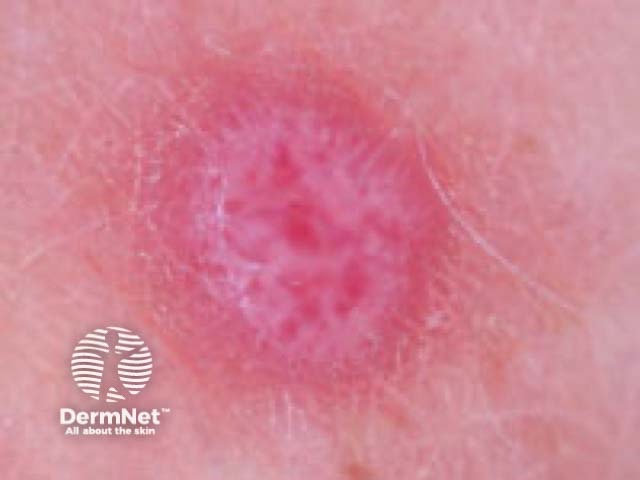
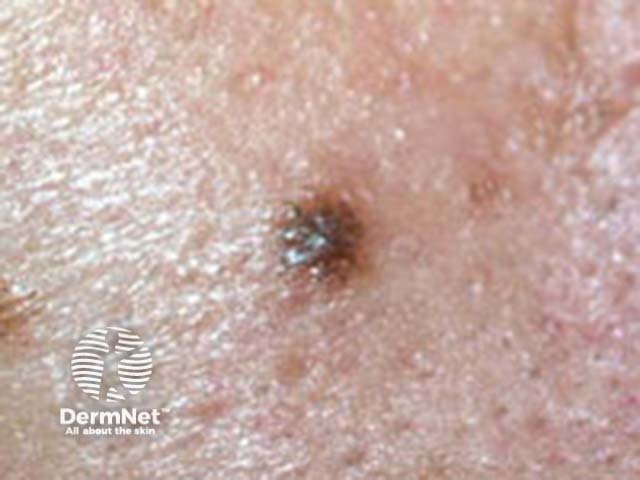
The starburst (Spitz/Reed) naevus has two distinct dermoscopic patterns. These lesions are uncommon, and may arise in children or young adults. Changing lesions may be difficult to distinguish from melanoma, and should be excised.
|
Type
|
Clinical features
|
Dermoscopic features
|
Histopathology
|
|
Pigmented
|
-
Brown to black, flat to elevated, symmetrical
-
Most often face, limbs, buttocks
|
-
Starburst pattern
-
Streaks of pigmentation or large globules symmetrically at periphery in radiating pattern
|
-
Junctional or compound
-
Heavily pigmented, cohesive, spindle/epithelioid melanocytes
-
Variable epidermal hyperplasia
-
Dermal melanophages
|
|
|
|
|
|
Nonpigmented
|
-
Pink to red, dome-shaped, symmetrical
|
-
Dotted vessels
-
Reticular depigmentation
|
-
Nests of large spindle/epithelioid melanocytes
-
Variable desmoplasia
|
|
|
|
|
The blue naevus is dermoscopically characterised by homogenous steel blue colour. Blue naevi may be congenital or acquired and are persistent.
|
Clinical features
|
Dermoscopic features
|
Histopathology
|
|
Flat to elevated, blue to black
|
-
Homogeneous structureless steel-blue colour
-
Variable central or peripheral brown pigment
-
Variable white areas
|
-
Heavily pigmented dermal melanocytes
-
Long dentritic processes
-
Thick collagen bundles
-
Several variants
|
|
|
|
|
More images of blue naevus ...
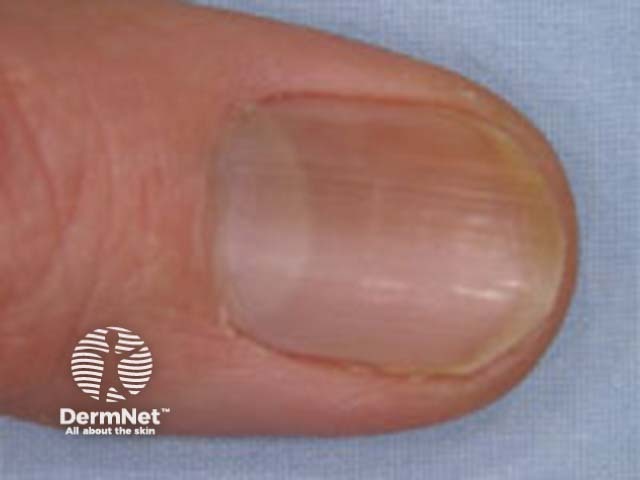
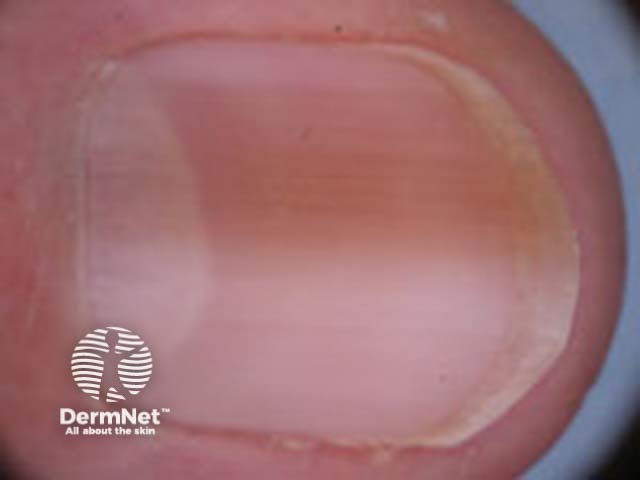
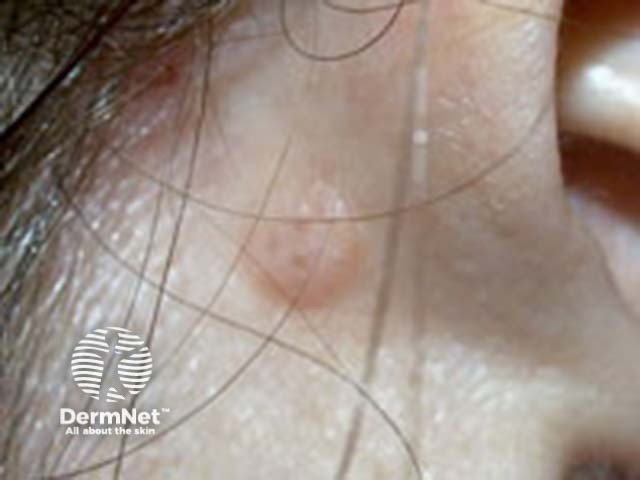
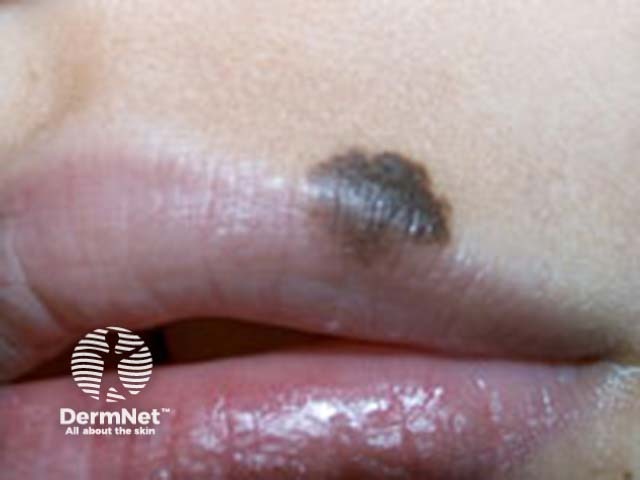
Naevi on palms and soles/nails, and naevi on the face, genitals and nipples have particular dermoscopic features.
|
Site
|
Clinical features
|
Dermoscopic features
|
Histopathology
|
|
Acral
|
-
Congenital or acquired
-
Flat to elevated, brown
|
-
Parallel pattern
-
Pigment in furrows or lattice-like or fibrillar
|
|
|
|
|
|
|
Subungual (nails)
|
-
Congenital or acquired
-
Uniform pigmented band
|
-
Homogeneous brown pigment
|
|
|
|
|
|
|
Facial
|
-
Child: brown, flat, symmetrical
-
Adult: nonpigmented, elevated
|
-
Child: pseudonetwork around follicular orifices
-
Adult: comma blood vessels
|
|
|
|
|
|
|
|
|
|
Lips
|
Congenital or prepubertal
|
|
|
|
|
|
|
Nipple
|
Congenital or prepubertal
|
|
|
|
|
|
|
More images of site-related naevi ...
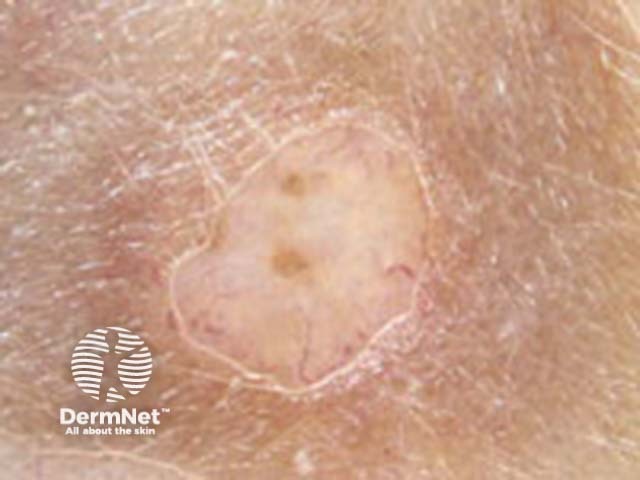
This group includes:
-
Combined naevi (two types of naevi juxtaposed or merged)
-
Halo naevi (uniform lymphocytic reaction)
-
Irritated naevi (patchy lymphocytic reaction)
-
Cockade naevus
-
Naevi with eczematous halo (Meyerson type)
-
Recurrent naevi following surgery
|
Type
|
Clinical features
|
Dermoscopic features
|
|
Combined naevi
|
-
Congenital or acquired
-
Two areas of different colour or size
|
-
Two patterns
-
Reticular and globular
-
Reticular and homogeneous
-
Globular and homogeneous
-
Reticular/globular/homogeneous and reticular
|
|
|
|
|
|
Halo naevi
|
-
Congenital or acquired
-
Depigmentation in a rim around monomorphous naevus
|
-
Globular pattern naevus
-
Variable blue/grey granules
-
White scar-like areas
|
|
|
|
|
|
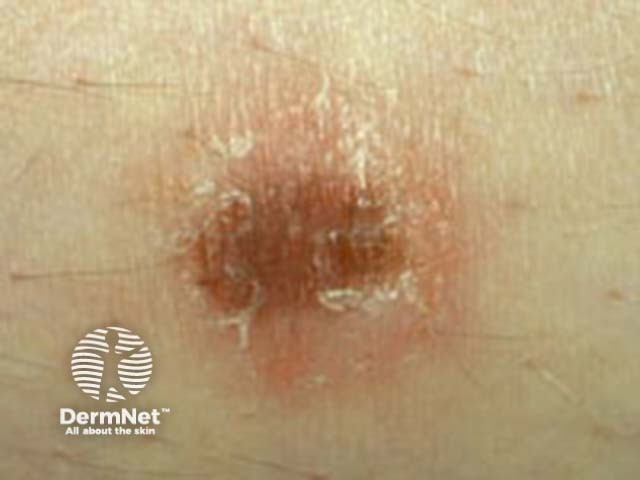
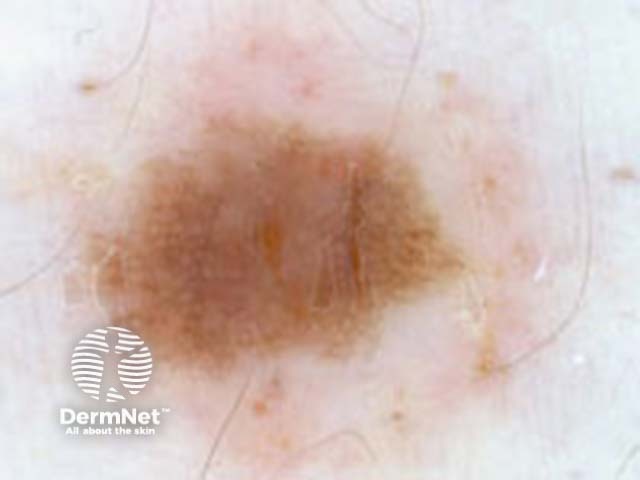
Irritated naevi
|
-
Congenital or acquired
-
Flat to elevated; any colour
-
Peripheral erythema
|
-
Reticular/globular/homogeneous
-
Variable blue/grey granules
-
Variable red areas
|
|
Cockade naevus
|
-
Flat to elevated; at least two colours
-
Central pigmented papule surrounded by inner depigmented and outer pigmented rim
|
-
Asymmetric central blue-grey area
-
Surrounded by whitish or erythematous scaly rim
-
Outer rim irregular brown globules
|
|
|
|
|
|
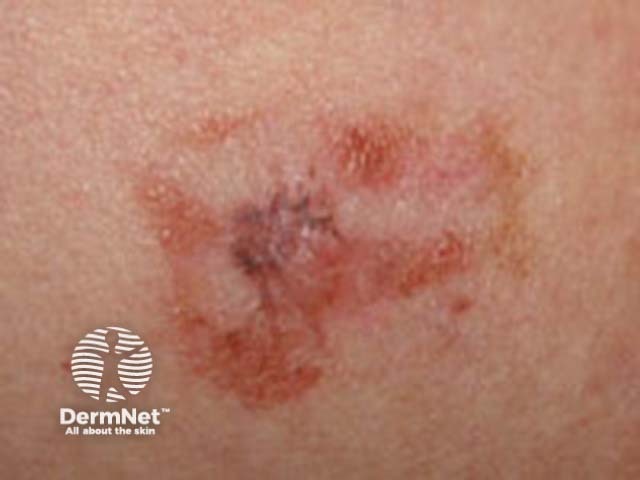
Naevi with eczematous halo (Meyerson type)
|
-
Congenital or acquired
-
Flat to elevated; any colour
-
Peripheral eczema
|
-
Reticular/globular/homogeneous
-
Variable yellow areas
|
|
|
|
|
|
Recurrent naevi
|
-
Congenital or acquired
-
Atypical features
-
Follows incomplete excision or trauma
|
-
Atypical pattern of pigmentation
-
Scar-like structures
|
|
|
|
|
More images of naevi with special features ...
Unclassifiable melanocytic lesions
This category comprises atypical or non-diagnostic lesions, which are often clinically or dermoscopically suspicious of melanoma but are not malignant on histology. They may be superficial or nodular.
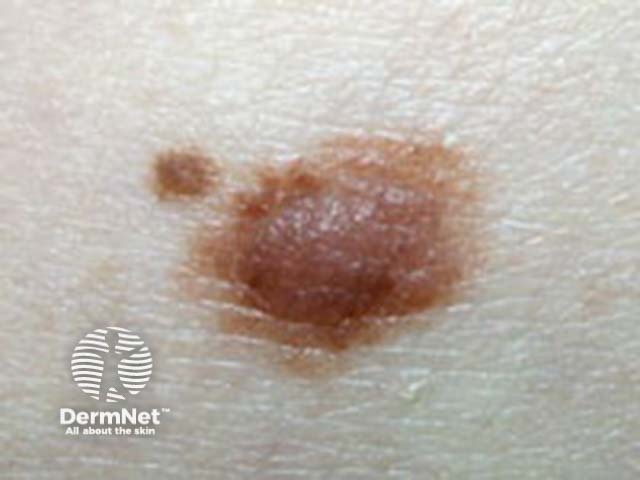
More images of unclassifiable naevi ...
Draft 16 November 2008
Related information
References:
-
Argenziano G, Zalaudek I, Ferrara, G, Hofmann-Wellenhof R, Soyer HP. Proposal of a new classification system for melanocytic naevi. British Journal of Dermatology 2007;157:217-227. Medline.
-
New Classification of Melanocytic Nevi Based on Dermoscopy – Medscape article January 2008
On DermNet NZ:
Other websites:
Books about skin diseases:
See the DermNet NZ bookstore
Author: Dr Amanda Oakley, Dermatologist, Waikato Hospital, Hamilton.