Created 2007.
The term photosensitivity describes an abnormal response of the skin to light, occurring within minutes to weeks of exposure and lasting for minutes to months.
Photosensitivity may result in phototoxic sunburn-type response or a variety of idiopathic or photoallergic rashes.
Distribution involves areas exposed to the light, predominantly face, neck, V of neck, backs of hands, lower legs and tops of feet. Unaffected areas include:
Precise diagnosis can be difficult and requires a careful history.


Sunburn is maximal about eight hours after exposure to ultraviolet radiation from sunlight or artificial sources (predominantly UVB). Features include:
Sunburn arises with less exposure to sunlight when the patient is taking phototoxic drugs (sulphonamides, thiazides, tetracyclines, phenothiazines, nalidixic acid, amiodarone, naproxen and psoralens). Consider systemic lupus erythematosus in the differential diagnosis.
The histology is characterised by “sunburn” cells (apoptotic keratinocytes), lymphocytic exocytosis, vacuolisation of melanocytes and endothelial swelling of blood vessels.
Prevention of sunburn requires the use of covering clothing, sunscreens and perhaps oral antioxidants such as Polypodium leucotomas. Treatment may consist of rest, fluid replacement, cooling wet dressings, topical steroids and NSAIDs.


Photocontact dermatitis (eczema) refers to dermatitis arising from contact with a photoactive chemical when exposed to light.


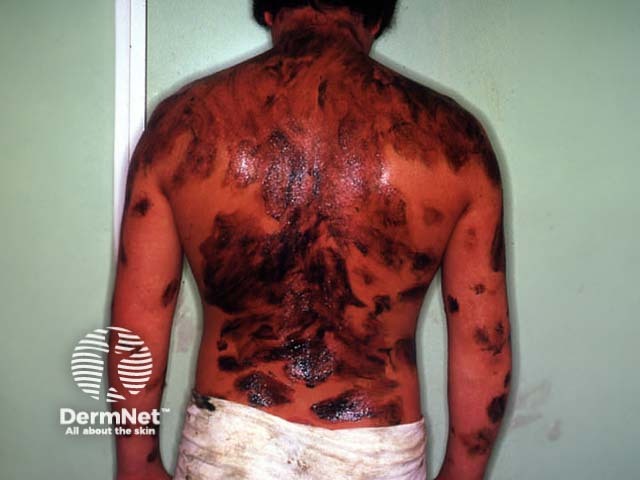
Plant photocontact dermatitis, or phytophotodermatitis, is due to photoactive psoralens (as used for PUVA treatment), found in limes, perfumes containing oil of bergamot and celery.


Drug-induced systemic photoallergy may have various patterns, most often an eczematous dermatitis or a lichenoid eruption (i.e. having histological features similar to lichen planus). Photosensitivity affecting the nails results in lifting of the nail plate off the nail bed (photo-onycholysis) and may take many months to recover.


Photo-aggravated dermatoses include:
Management involves treating the underlying disease and photoprotection.


Polymorphous light eruption (PMLE) is a common idiopathic photosensitivity eruption affecting young adult women. Features include:
PMLE should be managed by sun protection, with a gradual increase in exposure. Some patients find antioxidants such as beta carotene or Polypodium leucotomas of benefit. Severe cases may be referred to a dermatologist. Treatment options include:


Actinic prurigo affects atopic children causing cheilitis and itchy papules predominantly on exposed sites.
Actinic prurigo affects atopic children causing cheilitis and itchy papules predominantly on exposed sites.
Hydroa vacciniforme causes clear vesicles on the cheeks of children.
Chronic photosensitivity dermatitis (CPD) mainly affects elderly men and may result in extreme photosensitivity (30 seconds exposure outdoors in winter may be enough). Severe CPD results in lymphoma-like thickened plaques and is known as actinic reticuloid.
Solar urticaria is a physical urticaria provoked by a few minutes exposure to responsible wavelengths.
Hydroa vacciniforme causes clear vesicles on the cheeks of children.
Chronic photosensitivity dermatitis (CPD) mainly affects elderly men and may result in extreme photosensitivity (30 seconds exposure outdoors in winter may be enough). Severe CPD results in lymphoma-like thickened plaques and is known as actinic reticuloid.
Solar urticaria is a physical urticaria provoked by a few minutes exposure to responsible wavelengths.


Patient education is important to explain that photosensitivity may occur throughout the year, behind glass and provoked by natural and artificial sources of light. The best protection is to stay indoors, especially during the middle part of the day. Additional measures outdoors may include:
Severely photosensitive patients may require immunosuppressive medication, window screening, gloves and masks.

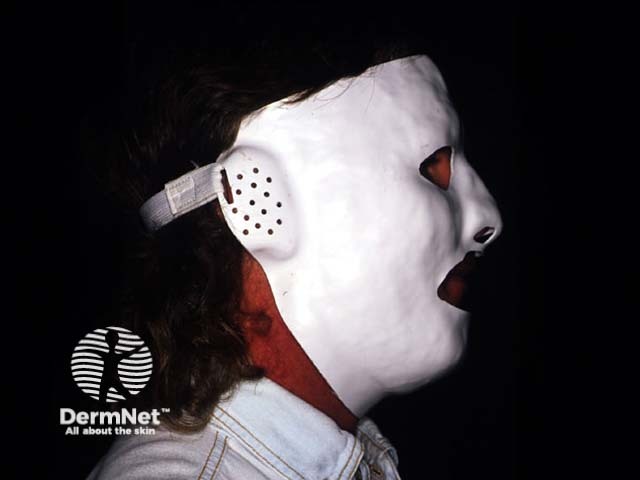
Compile a list of high sun protection factor, water resistant sunscreens available in your local pharmacy that are suitable for patients with photosensitivity.
Information for patients
See the DermNet bookstore





 Previous Chapter