Introduction
Demographics
Causes
Clinical features
Complications
Diagnosis
Differential diagnoses
Treatment
Outcome
Tinea cruris, also known as ‘jock itch’, is a specific form of tinea due to a dermatophyte fungus affecting the groin, pubic region, and adjacent thigh. It presents as an acute or chronic asymmetrical rash.
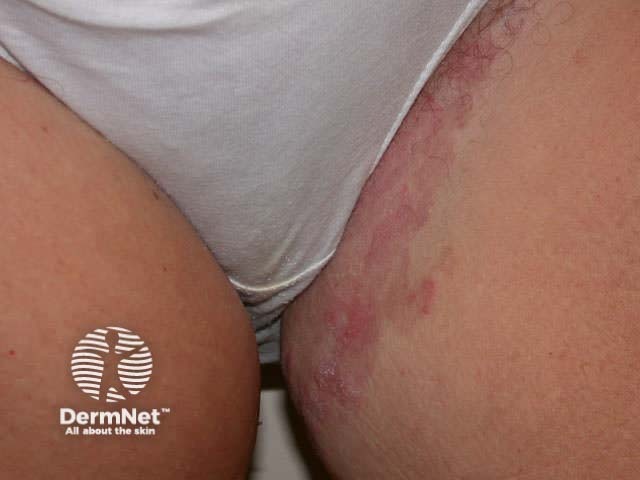
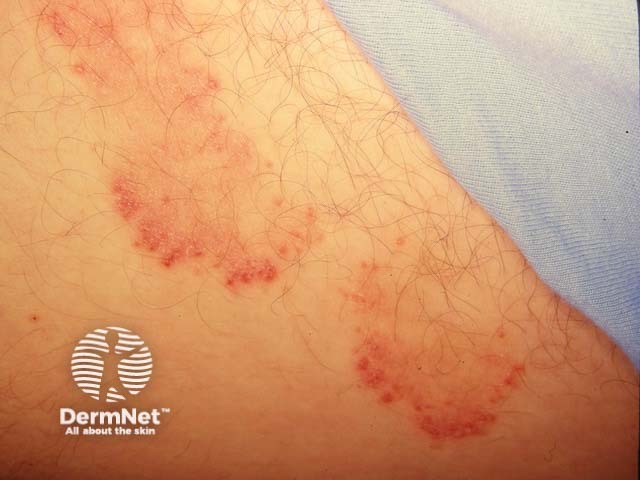
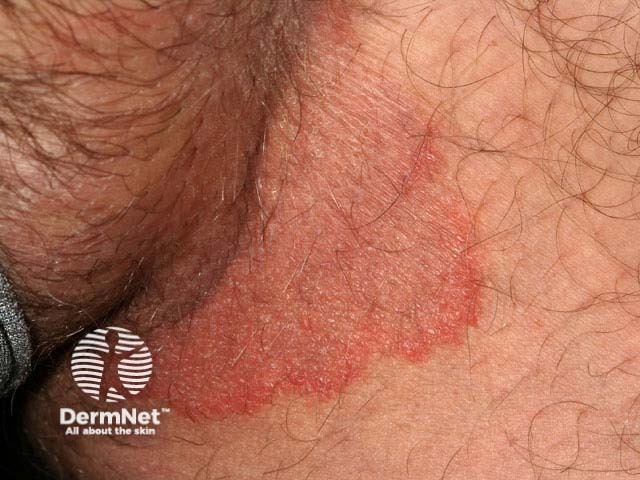
Tinea cruris affects both sexes, with a male predominance (3:1). All ages can develop tinea cruris, adolescents and adults more commonly than children and the elderly. Tinea cruris can affect all races, being particularly common in hot humid tropical climates.
Predisposing factors for tinea cruris include:
Tinea cruris is caused by a dermatophyte fungus, most commonly Trichophyton rubrum and Epidermophyton floccosum.
Spread of the infection to the groin is commonly from the feet (tinea pedis) or nails (tinea unguium) by scratching or use of contaminated towels or bed sheets.
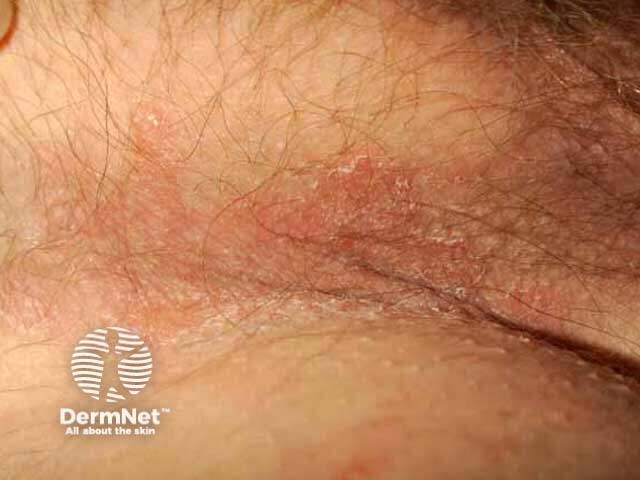
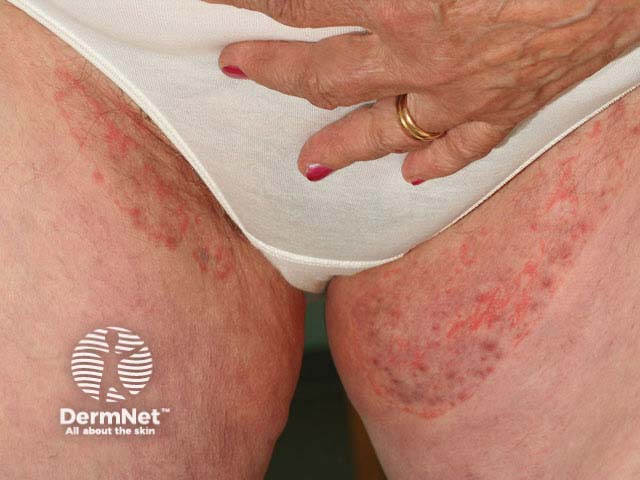
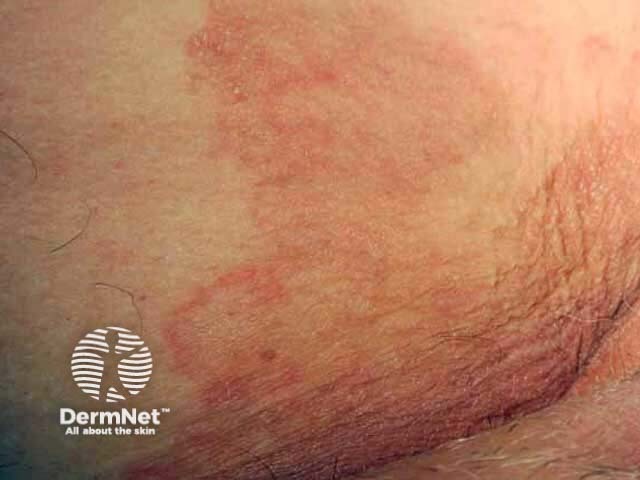
Tinea cruris often causes marked hyperpigmentation in skin of colour.
Tinea cruris should be considered in the clinical setting of an asymmetrical scaly rash in the groin and confirmed on a skin scraping for mycology [see Laboratory tests for fungal infections].
Skin biopsy may be performed, usually to exclude other flexural skin conditions [see Skin diseases and conditions affecting body folds]. Histology demonstrates branching septate hyphae on special stains [see Tinea corporis pathology].
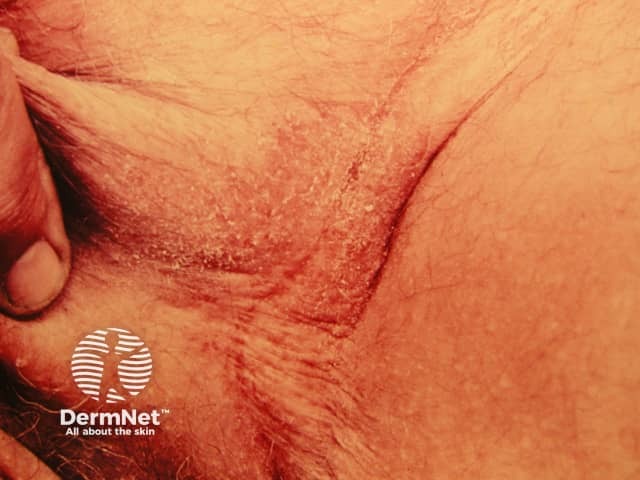
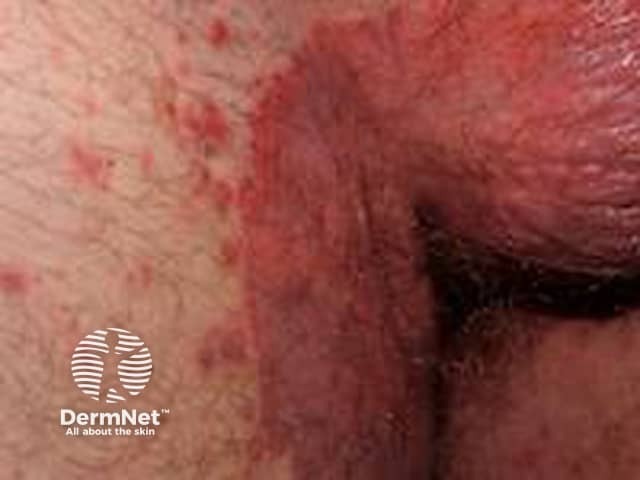
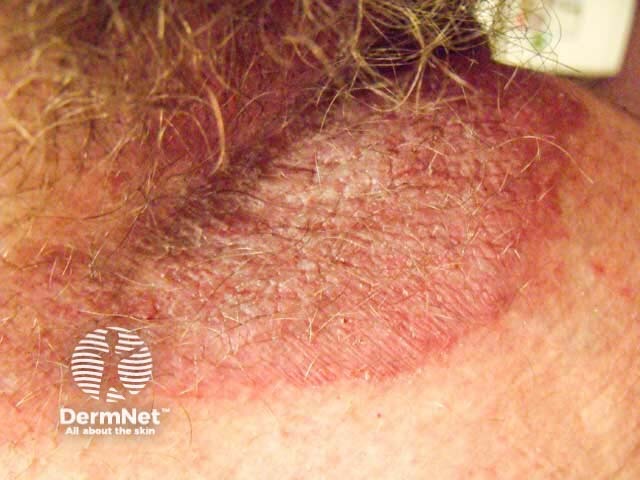
Tinea cruris clears with appropriate treatment in 80–90% of cases. However, recurrence is common, especially if predisposing factors are not addressed or antifungal treatment is stopped before mycological cure. Residual hyperpigmentation may persist in skin of colour.