Introduction
Demographics
Causes
Clinical features
Variation in skin types
Complications
Diagnosis
Differential diagnoses
Treatment
Prevention
Outcome
The term Morgellons was coined in 1674 by Sir Thomas Browne in his monograph entitled “De vermiculis capillaribus infantium". The affected child had critical breakouts of hair-like extrusions from the back which upon occurring; relieved the child from “coughs and convulsions”.
Morgellons disease (MD) is not a unique disease in and of itself, but rather, it is a subtype of delusional infestation (DI). Individuals with perceived MD present with a fixed, false belief (delusion) that they are infested by non-living organisms. They describe mysterious non-organic fibres or filaments emerging from the skin, in addition to cutaneous sensations such as pruritus and biting or crawling sensations.
Morgellons disease is often incorrectly used synonymously with delusional infestation (previously also known in the literature as delusions of parasitosis) or Ekbom’s Syndrome.
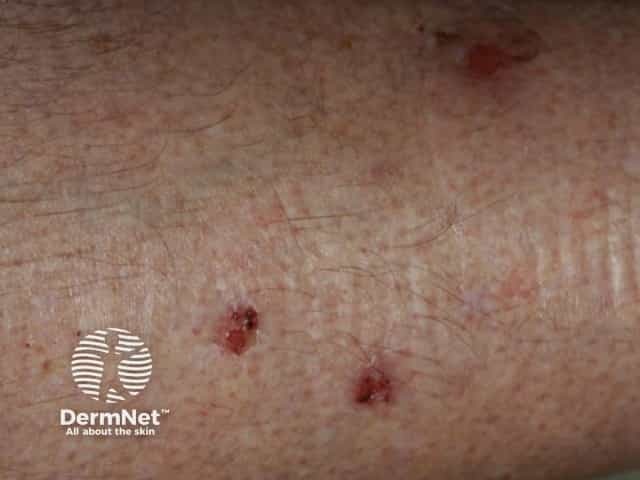
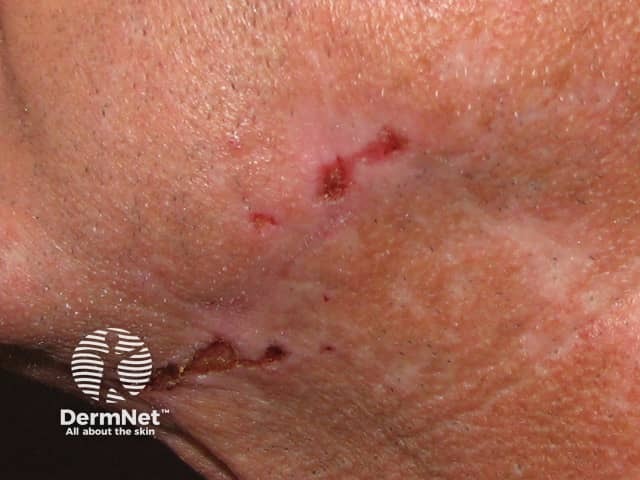
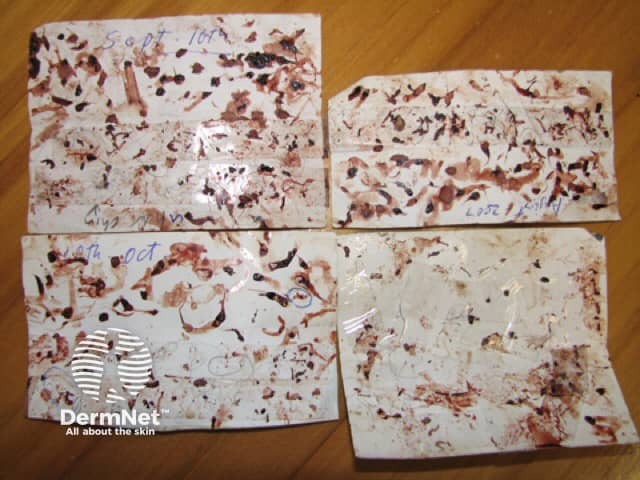
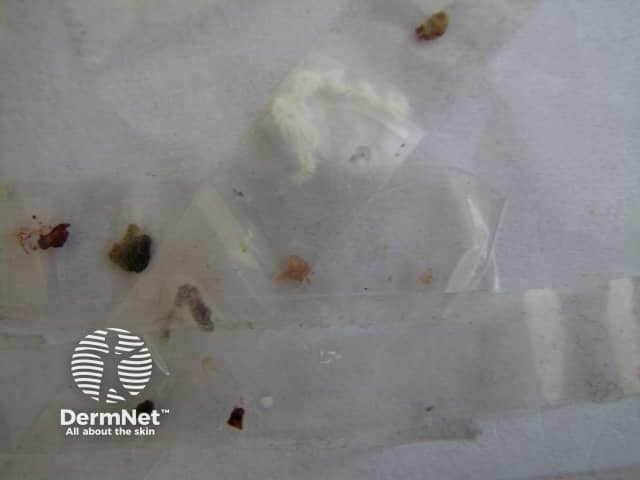
Morgellons disease represents approximately 1/4 of patients with delusional Infestation. MD is a rare disorder that is more commonly seen in middle-aged, caucasian women (female:male ratio of 3:1) with a mean age of 57 years. Perceived Morgellons disease is often seen in association with current or past psychiatric illness (eg, schizophrenia, dementia, and depression) or substance use disorders (eg, amphetamine or stimulant misuse). Prevalence is approximately 3.65 per 100,000 individuals.
In 2008, The Centres for Disease Control (CDC) performed a large-scale population-based study to investigate the underlying etiology of Morgellons disease by examining 113 patient cases of self-declared MD. Morgellons was concluded to be a subtype of delusional Infestation (a psychiatric illness), and not due to infectious etiology or endogenous fibre protrusion.
In the past, Morgellons disease was believed to be associated with an infectious link (eg, spirochete infection, especially Borrelia burgdorferi, Chlamydophila pneumonia, and Babesia species), however, there is no evidence supporting these claims.
In keeping with delusional Infestation, patients presenting with perceived Morgellons disease often present with multiple non-healing lesions, which may be superficially infected or ulcerated, and excoriations which spare difficult-to-reach areas. Patients may report cutaneous sensations (eg, formication, burning, stinging), pruritus, rashes, and specific to MD, the protrusion of fibres or filaments from their skin, which are often presented to the assessing physician (“matchbox sign” or “specimen sign”).
In addition to cutaneous symptoms, other symptoms include:
It is unknown how Morgellons disease manifests among different skin types and ethnic groups. Patients who believe they have MD are predominantly Caucasian in studies, but no real prevalence data exists.
In keeping with delusional Infestation, complications include:
Given that Morgellons disease is a subset of delusional Infestation, the ICD11 criteria for delusional disorder or the DSM-5 criteria for somatic-type delusional disorder is used to diagnose Morgellons disease.
Morgellons disease is diagnosed as delusional Infestation based on the pathognomonic fixed belief of the protrusion of fibres or filaments from the skin, which is held with delusional intensity and is associated with symptoms of pruritus, painful skin sores and erosions, or crawling sensations under the skin. Usually, there is some impact on the patient’s function and quality of life. Diagnosis is based on the exclusion of other causes such as prurigo or chronic pruritus, true infestations, or drug-induced compulsive skin picking. If the diagnosis is uncertain, skin scrapings, skin biopsies, or blood work to rule out underlying causes of pruritus can be performed, including a urine toxicology screen.
Morgellons disease treatment is challenging. On review of the limited existing evidence-based literature, low-dose 2nd generation antipsychotic agents have been determined to be most effective (eg, amisulpride, risperidone), often combined with adjunct therapeutics such as antipruritic agents (eg, topical corticosteroids), emollients, oral antibiotics (for secondary infection), and phototherapy (for itch). There is currently no evidence with regards to psychotherapy.
It is important to reassure the individual that there is no true infection or infestation, and to listen and understand their distress, with a shared goal focused on symptom management. Antipsychotic doses used are usually much lower than those used for schizophrenia.
Optimal therapeutic effect is achieved with a multidisciplinary approach to care.
Morgellons disease has no known preventative strategies, as the medical condition often arises idiopathically (de novo) or in patients with a known history of mental health illness.
As a subtype of DI, Morgellons disease prognosis is dependent on the patient’s willingness to participate in appropriate pharmacotherapy. Prognosis is very good with the use of antipsychotics. A longer duration of untreated psychosis negatively affects treatment outcome. In the absence of treatment, patients who believe they have Morgellons Disease become heavy utilizers of the healthcare system, and experience significant decline in quality of life, negative impacts on social relationships, isolation, decreased work performance, unemployment, homelessness, and in some cases, total disability.
A multidisciplinary approach involving empathetic healthcare professionals who create a strong provider-patient therapeutic alliance is optimal. Once pharmacotherapy is initiated and mental health co-morbidities are addressed, patients can achieve a rapid improvement in quality of life and resolution of any fixed delusions.