Introduction Uses Types Precautions Benefits and disadvantages Side effects and risks
An antiseptic is a chemical agent that slows or stops the growth of microorganisms on external surfaces of the body and helps to prevent infection.
Antiseptics should be distinguished from antibiotics, which destroy microorganisms inside the body; and from disinfectants, which destroy microorganisms found on inanimate (non-living) objects. Antiseptics can be referred to as skin disinfectants.
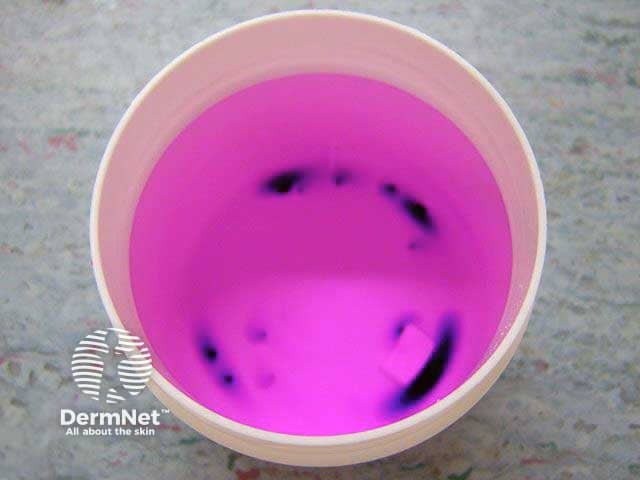
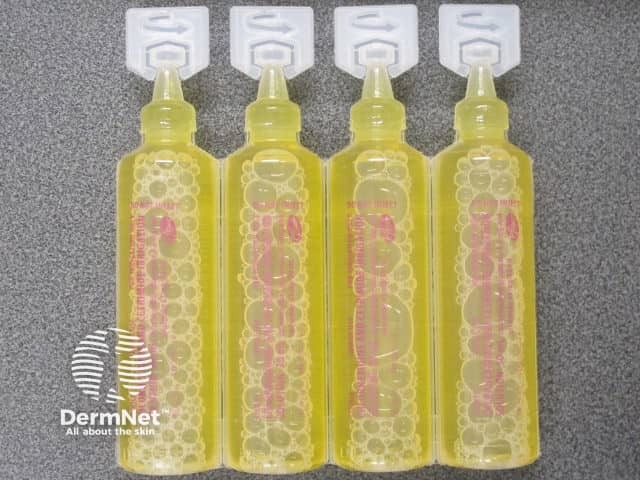
When the skin or mucous membranes are damaged or breached, an antiseptic can be used to cleanse the area and reduce the chance of infection by normally occurring microorganisms. Antiseptics kill, inhibit, or reduce the number of microorganisms by mechanical removal or chemical activity.
Antiseptics are commonly used for:
Many agents can be used as both an antiseptic and a disinfectant, depending on the concentration. For example, hydrogen peroxide 6% solution is used for cleansing wounds, while stronger solutions (>30%) are used in industry as bleach and oxidising agents.
Antiseptics can be classified according to their chemical structure. The following table lists commonly used antiseptic groups and some examples.
| #### **Antiseptic groups** | #### **Uses** | #### **Examples** |
| Alcohols | - Skin disinfectant | - Ethyl alcohol - Isopropyl alcohol |
| Quaternary ammonium compounds | - Skin disinfectant - Irrigation - Eye drop preservative | - Benzalkonium chloride - Cetrimide - Methylbenzethonium chloride - Cetalkonium chloride - Cetylpyridinium chloride - Dofanium chloride - Demiphen bromide |
| Chlorhexidine and other diguanides | - Pre-operative skin disinfectant - Wound treatment - Bladder irritation - Dental antiseptic at lower concentrations | - Chlorhexidine gluconate - Chlorhexidine acetate |
| Antibacterial dyes | - Skin disinfectant - Wound treatment - Burn treatment | - Proflavine hemisulphate - Triphenylmethane - Brilliant green - Crystal violet - [Gentian violet](/topics/gentian-violet) |
| Chlorine and hypochlorites | - Skin disinfectant | - Sodium hypochlorite (bleach) eg, [bleach baths](/topics/bleach-baths-in-patients-with-skin-infections) |
| Iodine compounds | - Skin disinfectant (including pre-operative) - Wound treatment | - Povidone - [iodine](/topics/iodine) |
| Peroxide and permanganates | - [Wound cleanser](/topics/wound-cleansers) - Gargle and [mouthwash](/topics/mouthwash) - Irrigation - Skin disinfectant | - [Hydrogen peroxide](/topics/hydrogen-peroxide) solution - [Potassium permanganate solution](/topics/potassium-permanganate) - [Benzoyl peroxide](/topics/benzoyl-peroxide) |
| Halogenated phenol derivatives | - Skin disinfectant - Medicated soap and solution | - Chlorocresol - Chloroxylenol - Chlorophene - Hexachlorophane / hexachloropene (no longer available) - Triclosan (no longer available in over-the-counter antiseptics in the US as of 2016) |
| Quinolone derivatives | - Wound treatment - In throat lozenges - Skin disinfectant | - Hydroxyquinoline sulphate - Potassium hydroxyquinoline sulphate - Chlorquinaldol - Dequalinium chloride - Diiodohydroxyquinoline |
| Other | - Various uses eg, skin disinfectant, wound or bite treatment | - Burow's solution (aqueous solution of aluminium acetate) - [Silver](/topics/topical-silver-therapy) |
| #### **Antiseptic** | #### **Contraindications** | #### **Precautions** |
| Ethyl alcohol | - Hypersensitivity | - Cover cuts or broken skin with waterproof plasters before using alcohol-based hand rub to prevent stinging - Do not ingest - Keep away from potential sources of ignition such as electrical outlets or electrocautery due to flammability |
| Chlorhexidine gluconate | - Hypersensitivity (both immediate type 1 reactions and allergic contact dermatitis) | - Infants <2 months (risk of dermal irritation or [chemical burns](/topics/chemical-burn)) - Avoid contact with eyes and ears - Do not swallow - Wait 30 minutes after brushing teeth before using mouthwash |
| Povidone - iodine | - Pregnancy (esp. vaginal products) - Lactation - Infants <6 months - Deep puncture wounds - Serious burns - Iodine/povidone sensitivity - Thyroid disease | - Avoid regular use in patients taking lithium - Do not ingest topical formulations or apply to eyes (ophthalmic preparations are also available) |
| Hydrogen peroxide | - Hypersensitivity - Children <2 years - Use in the eyes or over large areas of the body - Use during surgery or in closed body cavities - Prolonged use (longer than a week) | - Deep puncture wounds - Animal bites - Burns - Avoid use in the eyes - Avoid use on healthy skin - Can bleach fabric - Avoid concomitant use with iodine or potassium permanganate |
| Benzoyl peroxide | - Hypersensitivity | - Use in neonates - Breastfeeding: avoid application to breasts - Avoid contact of acne treatments with eyes, mouth, and mucous membranes - Avoid excessive exposure to sunlight - Can bleach fabrics or hair - Pregnancy |
Antiseptics reduce the number of microorganisms living on the skin, in wounds, and in mucous membranes. They can be particularly useful when an individual needs to cleanse the skin quickly. Many antiseptics are available to buy over-the-counter at pharmacies, making them convenient and easily accessible.
Antiseptics can cause severe skin irritation or chemical burns. Skin reactions may include erosions, ulcers, vesicles, and scarring. Allergic reaction such as immediate type 1 reactions, anaphylaxis, and allergic contact dermatitis may occur.
There is also the risk of product contamination from repeated use of topical antiseptics. This can lead to further problems such as localised or systemic infections when the contaminated product is reapplied to open skin, a wound, or a burn.
Alcohol-containing products are flammable and need to be kept away from fire at all times.
The effectiveness and complete safety of antiseptics have proven difficult to establish.
In September 2016, the US Food and Drug Administration (FDA) issued a final rule establishing that over-the-counter consumer antiseptic wash products containing any of the nineteen ingredients listed could not be marketed. This included triclosan and triclocarban. The rationale cited being:
In December 2017, the FDA further ruled that 24 ingredients found in antiseptic products (including triclosan) were generally not recognised as safe and effective (often due to inadequate data). These required regulatory approval for marketing from December 2018 as new drugs. A decision was deferred on a further six ingredients (benzalkonium chloride, benzethonium chloride, chloroxylenol, ethyl alcohol, isopropyl alcohol, and povidone-iodine).
It is important to note that antiseptics may impair wound healing if they kill skin cells that are involved in the healing process, such as fibroblasts. Routine use of antiseptics for cleansing clean wounds is no longer recommended. Pus and necrotic tissue can also inactivate some antiseptics, reducing their efficacy.
Antiseptics should also be differentiated from antibiotics. Antiseptics only reduce microorganisms on the surface of the tissue whereas antibiotics may be needed if infection exists within the tissues.
Individuals using antiseptics need to do so correctly. Strong antiseptics should be appropriately diluted before being applied to the skin, as concentrated products may cause chemical burns or severe irritant contact dermatitis. Prolonged contact with dilute antiseptics can also cause erosive contact dermatitis, as described with chlorhexidine-impregnated dressings.
Antiseptic products should not be used for more than one week on acute wounds. Chronic wounds with no improvement after 10 to 14 days should be also referred for medical review.
Additional reasons to stop using an antiseptic and to seek medical attention include:
People with allergies of any kind should check with a doctor or pharmacist before using an over-the-counter antiseptic product. Some antiseptics can irritate the skin and cause allergic contact dermatitis.
Side effects of common antiseptics are listed in the table below. Emollients and moisturisers are recommended after use if the hands are dry or develop contact dermatitis due to antiseptic use.
| #### **Antiseptic** | #### **Side effects** |
| Ethyl alcohol | - Skin irritation - [Allergic contact dermatitis](/topics/allergic-contact-dermatitis) - [Contact urticaria](/topics/contact-urticaria) syndrome - Hypersensitivity (rare) |
| Povidone-iodine | - Skin irritation - Redness - Swelling - [Irritant](/topics/irritant-contact-dermatitis) or allergic contact dermatitis - Can stain skin, hair, and clothing - Can potentially interfere with thyroid function test results - Chronic use in pregnancy may be associated with neonatal hypothyroidism - Rare case reports of iododerma associated with prolonged use of iodine-containing antiseptics to large areas of broken skin (see: [Halogenoderma](/topics/halogenoderma)) - Hypersensitivity (rare) |
| Chlorhexidine gluconate | - Mucosal irritation or reversible discolouration of teeth and tongue can occur with [mouthwash](/topics/mouthwash) - Skin sensitivity - Irritant and allergic contact dermatitis can be associated with chronic use - Keratitis - Conjunctivitis - Exposure to the middle ear can cause sensorineural deafness - [Anaphylaxis](/topics/anaphylaxis) (rare), particularly from mucosal exposure |
| Hydrogen peroxide | - Redness - Stinging/mild burning sensation - Oedema - Scaling - Crusting - [Pruritus](/topics/pruritus) - Can bleach skin, hair, nails, and clothes - Cytotoxic to keratinocytes; may impair wound healing - Hypersensitivity (rare) |
| Burow’s solution (aluminium acetate) | - Local irritation - Skin dryness - Hypersensitivity (rare) |
Approved datasheets are the official source of information for medicines, including approved uses, doses, and safety information. Check the individual datasheet in your country for information about medicines.
We suggest you refer to your national drug approval agency such as the Australian Therapeutic Goods Administration (TGA), US Food and Drug Administration (FDA), UK Medicines and Healthcare products regulatory agency (MHRA) / emc, and NZ Medsafe, or a national or state-approved formulary eg, the New Zealand Formulary (NZF) and New Zealand Formulary for Children (NZFC) and the British National Formulary (BNF) and British National Formulary for Children (BNFC).