Introduction
Demographics
Clinical features
Complications
Diagnosis
Treatment
Prevention
Outlook
Erythroderma is the term used to describe intense and usually widespread reddening of the skin due to inflammatory skin disease. It often precedes or is associated with exfoliation (skin peeling off in scales or layers), when it may also be known as exfoliative dermatitis (ED).
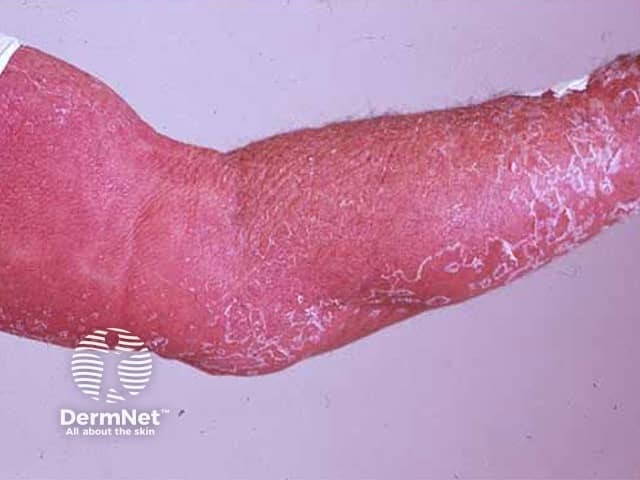
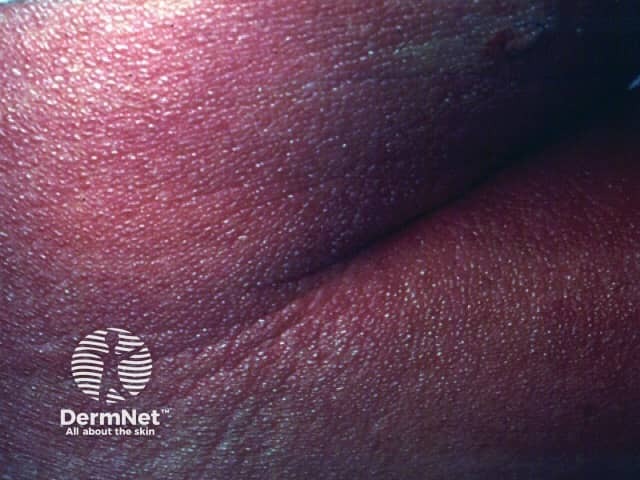
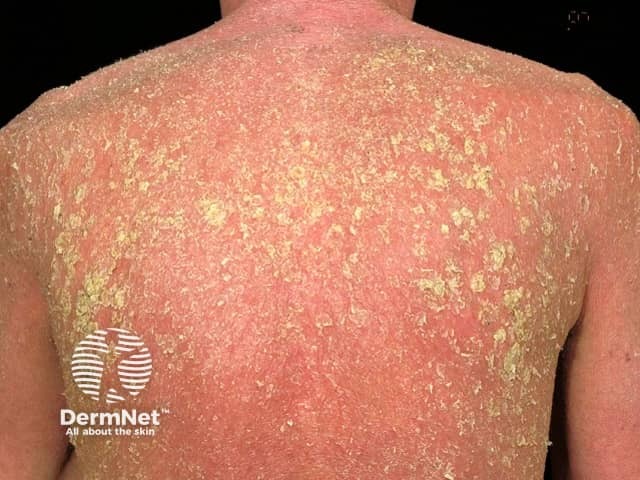
See more images of erythroderma.
Erythroderma is rare. It can arise at any age and in people of all races. It is about 3 times more common in males than in females. Most have a pre-existing skin disease or a systemic condition known to be associated with erythroderma. About 30% of cases of erythroderma are idiopathic.
Erythrodermic atopic dermatitis most often affects children and young adults, but other forms of erythroderma are more common in middle-aged and elderly people.
The most common skin conditions to cause erythroderma are:
Other skin diseases that less frequently cause erythroderma may include:
Erythroderma may also be a symptom or sign of systemic disease. These may include:
It is not known why some skin diseases in some people progress to erythroderma. The pathogenesis is complicated, involving keratinocytes and lymphocytes, and their interaction with adhesion molecules and cytokines. The result is a dramatic increase in turnover of epidermal cells.
Erythroderma is often preceded by a morbilliform (measles-like) eruption, dermatitis, or plaque psoriasis. Generalised erythema can develop quite rapidly in acute erythroderma, or more gradually over weeks to months in chronic erythroderma.
By definition, generalised erythema and oedema or papulation affect 90% or more of the skin surface.
Clues may be present as to the underlying cause.
Systemic symptoms may be due to the erythroderma or to its cause.
Erythroderma often results in acute and chronic local and systemic complications. The patient is unwell with temperature dysregulation and losing a great deal of fluid by transpiration through the skin.
The blood count may show anaemia, white cell count abnormalities, and eosinophilia. Marked eosinophilia should raise suspicions for lymphoma.
Skin biopsies from several sites may be taken if the cause is unknown. They tend to show nonspecific inflammation on histopathology. Diagnostic features may also be present.
Direct immunofluorescence is of benefit if an autoimmune blistering disease or connective tissue disease is considered.
Erythroderma is potentially serious, even life-threatening, and the patient may require hospitalisation for monitoring and to restore fluid and electrolyte balance, circulatory status, and body temperature.
The following general measures apply:
If a cause can be identified then specific treatment should be started, such as topical and systemic steroids for atopic dermatitis; acitretin or methotrexate for psoriasis.
In most cases, erythroderma cannot be prevented.
People with known drug allergy should be made aware that they should avoid the drug forever, and if their reaction was severe, wear a drug alert bracelet. All medical records should be updated if there is an adverse reaction to a medication and referred to whenever starting a new drug.
Patients with severe skin diseases should be informed if they are at known risk of erythroderma. They should be educated about the risks of recurrence should they discontinue their medication.
Prognosis of erythroderma depends on the underlying disease process. If the cause can be removed or corrected, the prognosis is generally good.
If erythroderma is the result of a generalised spread of a primary skin disorder such as psoriasis or dermatitis, it usually clears with appropriate treatment of the skin disease but may recur at any time.
The course of idiopathic erythroderma is unpredictable. It may persist for a long time with periods of acute exacerbation.