Introduction
Demographics
Causes
Clinical features
Complications
Diagnosis
Differential diagnosis
Treatment
Prevention
Outcome
A Beau line is a transverse depression affecting nail plates. Beau lines are a consequence of proximal nail matrix disruption, which is usually responsible for nail growth.
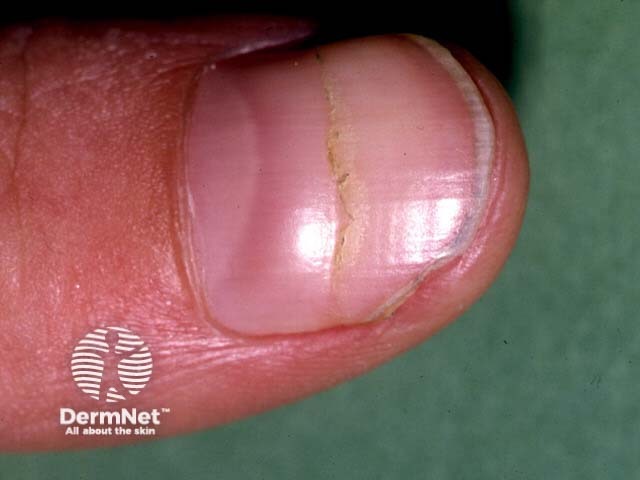
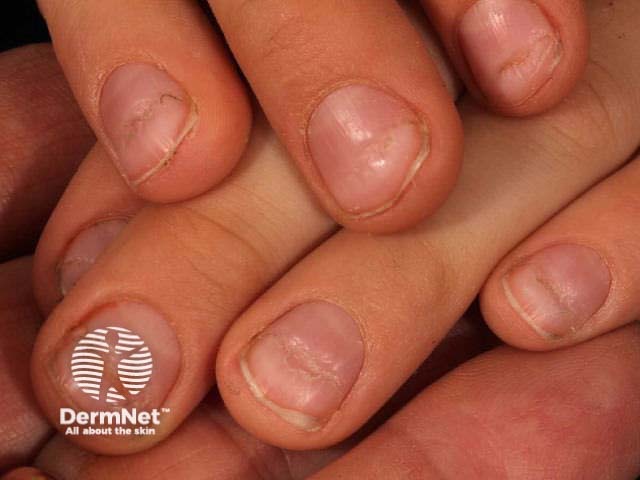
People of all ages and racial/ethnic backgrounds can have Beau lines.
When only a single digit is affected, the Beau line is often secondary to trauma on the proximal nail plate. The involvement of multiple nails may suggest a systemic disease or medication side effect as the cause.
Drugs, particularly chemotherapeutic agents, are the most common cause of Beau lines followed by non-autoimmune systemic diseases, trauma, and infections. Beau’s lines are also seen in uncontrolled diabetes, peripheral vascular diseases, high fever, malnutrition and zinc deficiency.
When Beau lines and onychomadesis (complete separation of nail plate) coexist, infections (especially hand, foot and mouth disease), drugs, and non-autoimmune systemic diseases are the commonest causes.
Transverse grooves/depressions in the nail plate often span across the entire width of the affected nail. This can occur on both fingernails or toenails.
Beau lines can present concurrently with onychomadesis in some cases. Infection is the commonest cause of onychomadesis, followed by drugs (especially anti-epileptics), and non-autoimmune systemic diseases. Idiopathic onychomadesis has been reported in sporadic, seasonal or familial form. In advanced cases of onychomadesis, inflammation and granulation tissue may develop in the lateral or proximal nail folds causing pain and secondary infection. Nail removal may be needed in those cases.
Beau lines are usually diagnosed clinically.
For more information including images, see Nail terminology.
Typically, Beau lines do not require specific treatment. Management generally involves observation until self-resolution. which may take up to 6 months for finger nails and 12 months for toes.
Treatment options such as topical keratolytics, antibacterial ointment, and fibroblast growth factor are usually unnecessary. Further validation of treatment efficacy in large studies are warranted.
In cases where Beau lines are precipitated by underlying medication or disease, discontinuing the causative drug or managing the disease is needed to prevent further damage to the nail matrix and recurrence.
Beau lines are usually self-limiting and have excellent prognosis.