

















DermNet provides Google Translate, a free machine translation service. Note that this may not provide an exact translation in all languages

Translate

DermNet™

The world’s leading free dermatology resource. We help thousands of people make informed, evidence-based decisions on how to care for skin conditions, by providing reliable information at the click of a button.

Recently added pages

Nevus sebaceous

A nevus sebaceous (sebaceous naevus) is a common type of birthmark affecting 0.3% of live births.

Subepidermal calcified nodule

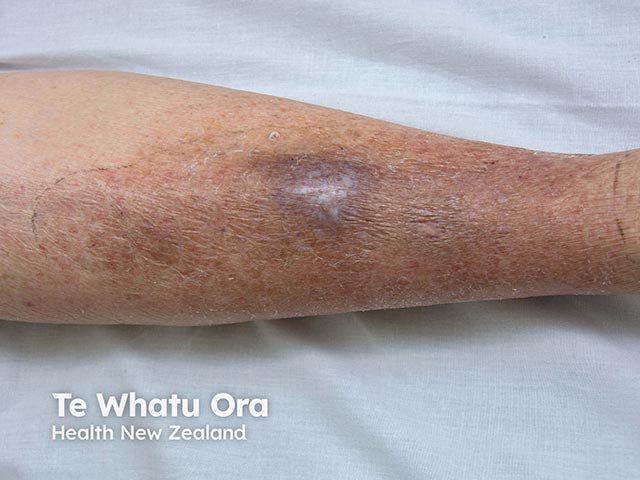
Subepidermal calcified nodules are deposits of insoluble calcium or phosphorus in the skin.

Insect repellents

Insect repellents are agents used to deter insect bites and stings to reduce the risk of local and systemic effects,...

Sun protection

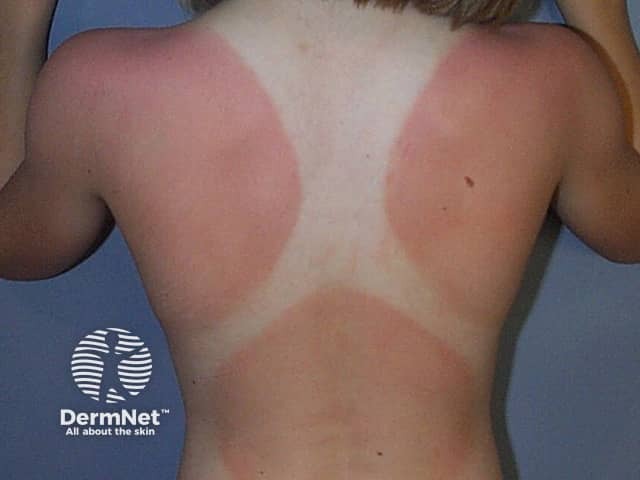
Sun protection involves shielding the skin from the damaging effects of solar ultraviolet (UV) radiation.

Hamartoma

A hamartoma is a non-cancerous overgrowth of a mature cell type normal to the site, tissue, or organ.

Relapsing polychondritis

Relapsing polychondritis is a rare autoimmune disorder characterised by recurrent episodes of inflammation and destruction of cartilaginous tissues.

Sunscreens

Sunscreens are topical agents that can be applied to the skin to protect against ultraviolet (UV) radiation.

Sun protective clothing

Sun protective clothing is an effective way to shield skin from ultraviolet (UV) radiation, sunburn, and sun damage.

PVL Staphylococcus aureus

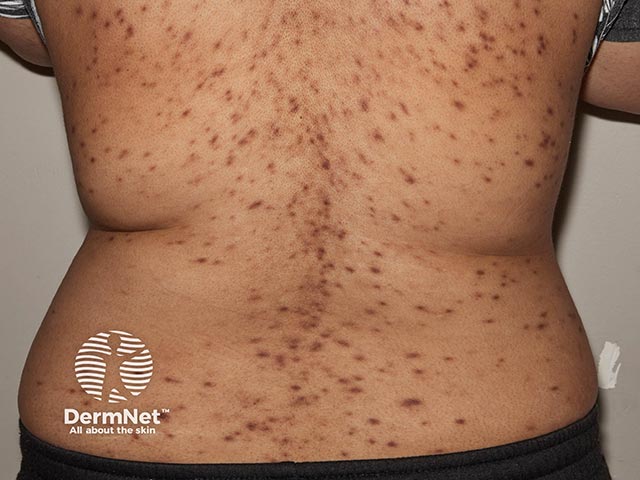
Panton-Valentine leukocidin Staphylococcus aureus (PVL-SA) is highly transmissible, lyses human neutrophils, and may cause recurrent skin and soft tissue infections...

Vitamin D

The functions of vitamin D, a fat-soluble vitamin, include immune protection, and regulation of mineral and skeletal homeostasis.

Granular cell tumour

Granular cell tumours are rare, generally benign, soft tissue neoplasms believed to originate from Schwann cells.

3D bioprinting

Three-dimensional bioprinting or 3D bioprinting is an emerging technology that uses 3D printing techniques to deposit biological material to create...

Steroid impregnated tape

Steroid impregnated tapes are self-adhesive plastic tapes that have a topical corticosteroid, often fludroxycortide, impregnated into the adhesive.

Paradoxical psoriasis

Paradoxical psoriasis is a drug side effect that results in the formation of red, scaly, psoriasiform plaques on the skin...

Childhood infections

Meningococcal disease

Meningococcal disease is an illness caused by the bacteria Neisseria meningitidis.

Measles

Measles is a highly contagious viral infection causing fever and a rash. Early symptoms are like the common cold, with...

Chickenpox

Chickenpox is a highly contagious viral infection that causes an acute fever and blistered rash, mainly in children.

Fifth disease

Erythema infectiosum is a common childhood infection causing a slapped cheek appearance and a rash.

Herald patch: pityriasis rosea
Pityriasis rosea

Pityriasis rosea is a viral rash which lasts about 6–12 weeks. It is characterised by a herald patch followed by...

Impetigo

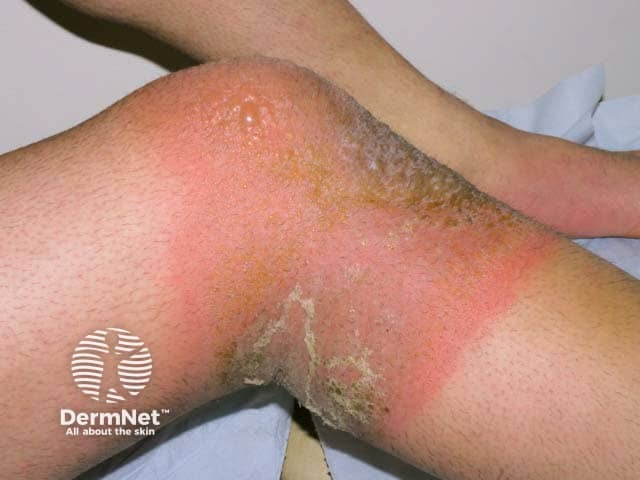
Impetigo is a common, superficial, highly contagious bacterial skin infection characterised by pustules and honey-coloured crusted erosions.

Boil

A boil (also called a furuncle) is a deep form of bacterial folliculitis (infection of a hair follicle).

Hand foot and mouth disease

Hand, foot, and mouth disease (HFMD or HFM) is a common, self-limiting, viral infection that causes blisters on the hands,...

Papular acrodermatitis

Papular acrodermatitis of childhood is a characteristic response of the skin to viral infection in which there is a papular...

Molluscum contagiosum

Molluscum contagiosum is a common viral skin infection of childhood that causes localised clusters of umbilicated epidermal papules.

VIral warts

A viral wart is a very common benign lesion caused by infection with human papillomavirus (HPV).

Head lice

Head lice are small, wingless insects that infest the human scalp.

Scabies

Scabies is a transmissible skin disease caused by the ectoparasitic mite Sarcoptes scabiei var.

Slider: Childhood infections

Support

Supported by and contributed to by New Zealand Dermatologists on behalf of the New Zealand Dermatological Society Incorporated.

Support us

Help us to grow and update the database

Subscribe to the DermNet newsletter

Get all website updates by email

SIGN UP

Sign up to the newsletter