Introduction
Demographics
Causes
Clinical features
Diagnosis
Differential diagnosis
Treatment
Outcome
Continuous glucose monitors are increasingly used by those with Type 1 and 2 diabetes for the monitoring of glucose levels without the need for finger prick blood testing.
The sensors are small devices usually composed of a plastic body and are replaced every 7-14 days. They are applied to the skin with an adhesive and record glucose levels in the interstitial fluid. The components of the device can cause allergic contact dermatitis (ACD).
In the UK, the National Institute for Health and Care Excellence (NICE) recommends that all adults and children with Type 1 diabetes mellitus (T1DM) should be offered continuous glucose monitoring (CGM) as part of a hybrid closed loop system (HCL). Those with Type 2 diabetes managed with insulin are also eligible for CGM.
With the increasing use of diabetes technology, clinicians are seeing an increasing number of skin-related complications, one of which is ACD.
Anyone could potentially become sensitised to the device. It is thought that having pre-existing inflamed skin at the site of diabetes device use can increase the likelihood of developing ACD.
Allergic contact dermatitis is a type 4 hypersensitivity reaction mediated by T lymphocytes. There is an increasing body of research identifying potential allergens that have been reported in association with diabetes technology.
The common offending allergens found in ACD to diabetes technology are the acrylates, however non-acrylate allergens have also been found to cause problems. The allergen is most likely to be in the plastic outer housing of the sensor or in the adhesive. Adjunct products such as liquid adhesives or adhesive removers may also be contributing sources, despite not being components of the device.
It is important to keep up to date with medical literature as manufacturing processings change and new allergens emerge. Allergens associated with diabetic devices at time of writing include:
(Also see: Allergy to Acrylates)
An eczematous rash at the site of the diabetes technology is seen. The rash can also spread beyond the margins of the device, unlike irritant contact dermatitis when it is more commonly confined to the device.
Cutaneous features on examination include inflammation, redness, scaling, fissuring and blistering can also be seen. The rash will occur each time the device is in contact with the skin—potentially increasing in severity on subsequent exposures.
See Allergic Contact Dermatitis for more information.
Patch testing is the gold standard investigation for ACD diagnosis. Successful patch testing requires knowledge of potential allergens. As manufacturers are not legally obliged to disclose the constituents of the device and manufacturing processes change, it is essential that dermatologists are aware of the latest literature to ensure all potential allergens are tested.
Testing of standard baseline series is recommended as well as additional allergens or series such as the acrylates. Diabetes device or medical device series may also be available for testing.
If an element of infection is suspected, a bacterial swab should also be performed.
Irritant contact dermatitis (ICD)
Infective dermatitis
Scarring and lipodystrophy
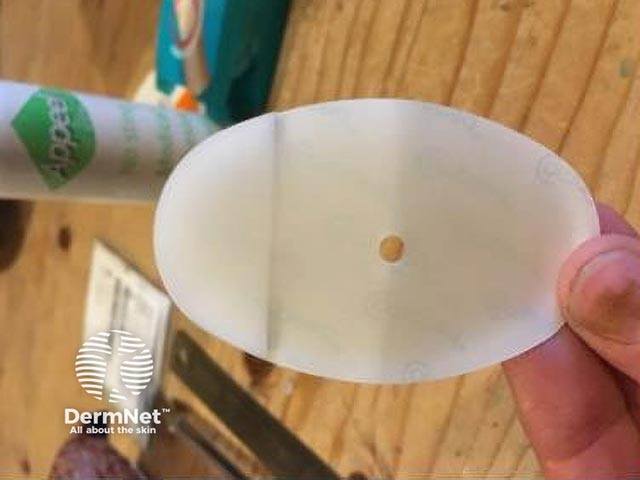
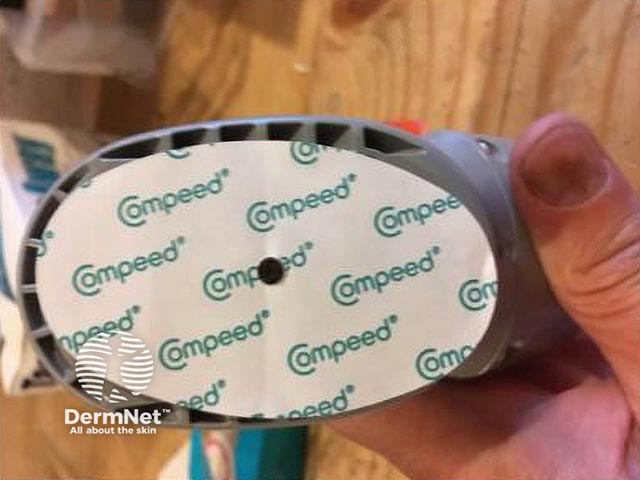
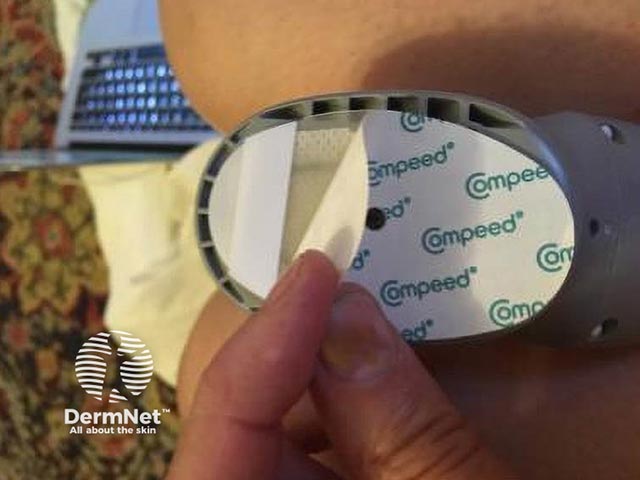
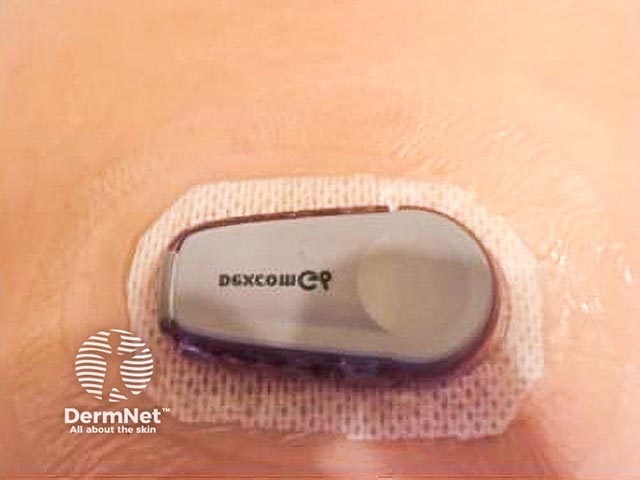
If allergic contact dermatitis to diabetes technology is diagnosed and exposure to the allergen cannot be limited by a physical barrier, an alternative device will need to be considered.
Alternative devices are often difficult to recommend as constituents of the devices are rarely listed by the manufacturer. This makes interpreting patch test results and recommending a safe alternative device a challenge.
On DermNet