Madelung disease, also known as Multiple symmetrical lipomatosis, is a rare metabolic disorder characterised by the progressive growth of painless, symmetrical, non-encapsulated fatty masses (lipomas) often localised to the neck and proximal upper limbs. Chronic alcohol consumption is a major risk factor for its development.
Although benign, the lipomas can potentially impair critical functions — such as swallowing, speaking, and breathing — secondary to compression.
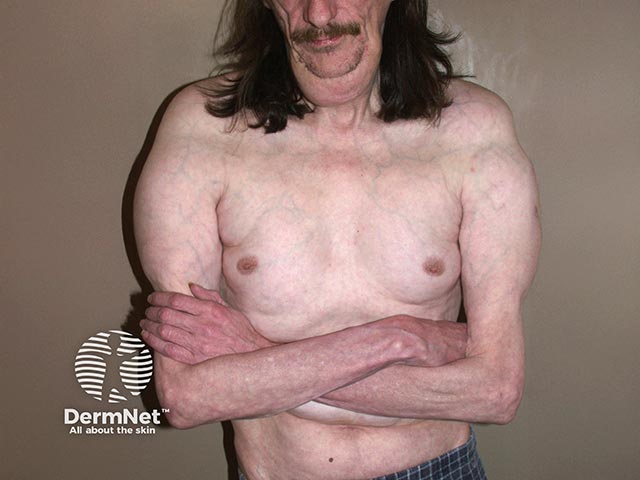
Madelung disease is rare, with an estimated prevalence of 1 in 25,000 people.
It predominantly affects men (15:1 male-to-female ratio) of Mediterranean or European descent between the ages of 30 and 60 years.
There is a strong association with chronic alcohol consumption (seen in 60-90% of cases), especially red wine.
Other common associations include metabolic and alcohol-related disorders, such as:
The pathogenesis of Madelung disease is not fully understood, though disturbances in adrenergic-stimulated lipolysis, mitochondrial function, and brown fat regulation have been implicated.
Long-term alcohol use can both damage mitochondrial DNA and impair adrenergic lipolytic pathways, possibly explaining its strong association with MSL.
Most cases of Madelung disease are sporadic. A minority are caused by biallelic (autosomal recessive) mutations in nuclear genes: MFN2 (mitofusin 2), which encodes mitochondrial proteins, and LIPE (hormone-sensitive lipase).
Cases associated with MFN2 or LIPE mutations notably exhibit concomitant lipodystrophy.
There have also been reports of matrilineal inheritance of mitochondrial DNA variants, such as the MTTK c.8344A>G mutation, which overlaps with MERRF (myoclonic epilepsy with ragged red fibres) syndrome.
Madelung disease presents with multiple slow-growing, symmetrical, diffuse, painless, non-encapsulated (poorly demarcated) lipomas.
Their distribution guides disease classification.
Type 1: Neck (‘Madelung collar’), upper back, upper arms, and shoulders
Type 2: Shoulders, upper arms, and thorax
Type 3: Lower body, especially the buttocks and upper thighs
Type 4: Abdomen
Non-cutaneous features may include:
It is unknown how the clinical features of Madelung disease vary across different skin types.
A diagnosis of Madelung disease is based on typical clinical features supported by imaging findings.
Clinical assessment
Imaging
Biopsy
There is no known cure for Madelung disease. The mainstay of treatment is surgical, which aims to reduce symptom burden and disfigurement.
Alcohol abstinence and weight loss are generally recommended and, in some cases, may slow disease progression. However, these measures do not reverse existing fat deposits.
Other treatments have been reported in the literature with limited evidence of efficacy. These include:
Currently, there are no established prevention strategies for Madelung disease, except for addressing modifiable risk factors like alcohol consumption.
Madelung disease is a slowly progressive disorder; the lipomatous deposits do not spontaneously regress, and recurrence is common after surgical removal. Despite being non-malignant, the condition carries significant morbidity from airway compromise, autonomic neuropathy, and other complications.
Prognosis is largely determined by the presence of associated comorbidities (eg, ongoing alcohol use, diabetes mellitus, liver disease, etc) and early recognition and treatment.