Introduction
Demographics
Causes
Clinical features
Variation in skin types
Complications
Diagnosis
Differential diagnoses
Treatment
Prevention
Outcome
Frictional lichenoid dermatitis (FLD) is a benign, self-limiting skin condition characterised by flesh-coloured or mildly erythematous, flat-topped papules found on extensor surfaces.
Owing to its uncertain aetiology, FLD has been referred to by several names in literature, including but not limited to:
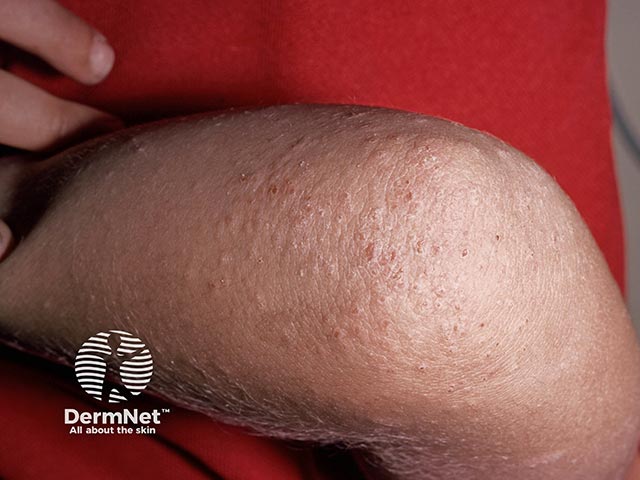

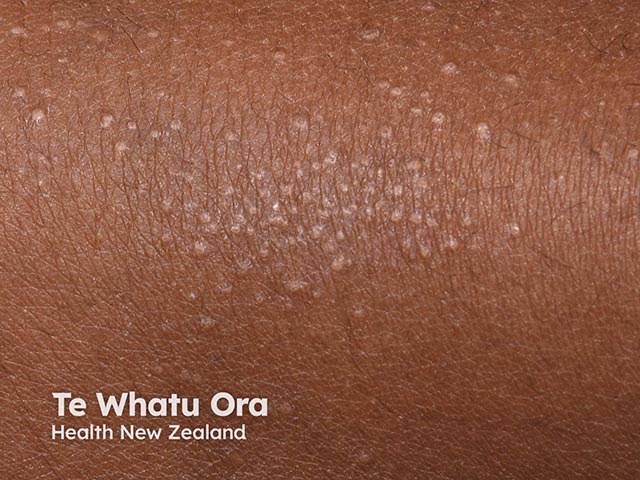

Frictional lichenoid dermatitis is an underrecognised condition, and its true prevalence is unknown. FLD occurs predominantly in school-aged children (4-12 years old), with a predilection for boys, and is uncommon in infants and adults.
The exact pathogenesis of frictional lichenoid dermatitis is unknown. However, FLD is known to recur in spring and summer, while tending to disappear during winter. It is not contagious.
Possible causative factors include:
On Fitzpatrick skin types V and VI, papules may appear hypopigmented and raised.
Diagnosis is entirely clinical, based on history and presentation. Key features include recurrence, seasonal flares, and absence of systemic symptoms.
Biopsy is rarely indicated, unless to exclude other diagnoses.
Histological examination reveals nonspecific changes, including hyperkeratosis, acanthosis, spongiosis, and a mild perivascular lymphocytic infiltrate.
Most cases resolve spontaneously within weeks to months. However, if lesions are itchy or bothersome, treatment options include:
Additionally, it can be helpful to avoid frictional activities and to wear loose clothing. The therapeutic role of photoprotection (eg, sunscreen, sun protective clothing, avoiding sun exposure) is uncertain.
Minimise skin exposure to frictional surfaces and consider protective clothing during warmer months.
The disease is benign and self-resolves in almost all patients. Recurrence can occur during spring and summer, but the condition is not known to progress into another condition.