Introduction
Demographics
Causes
Clinical features
Variation in skin types
Complications
Diagnosis
Differential diagnoses
Treatment
Prevention
Outcome
Naxos disease is a rare, autosomal recessive cardiocutaneous syndrome characterised by the triad of palmoplantar keratoderma (PPK), woolly hair, and arrhythmogenic right ventricular cardiomyopathy (ARVC).
Naxos disease is also known as Naxos syndrome.
Naxos disease was first reported in 1986 in patients originating from the Greek island of Naxos. The estimated prevalence in the Greek Cyclades islands may be as high as 1 in 1000 people. Cases have also been reported in Turkey, Israel, and Saudi Arabia.
Naxos disease is an autosomal recessive condition, meaning an individual must inherit the mutated gene from both parents to develop the disease. However, sporadic cases caused by somatic mutations have also been reported.
Naxos disease most commonly results from a homozygous 2-base-pair deletion in the JUP gene, which encodes plakoglobin. Plakoglobin is a key component of desmosomes and adherens junctions:
Research also implicates plakoglobin in intracellular signalling pathways involved in the development of the heart, skin, and hair.
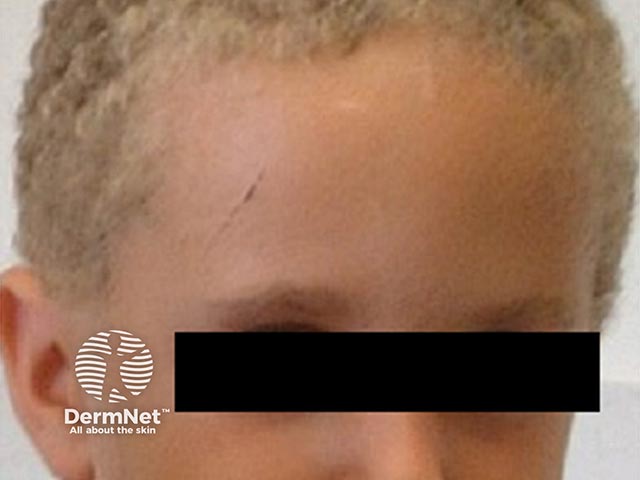
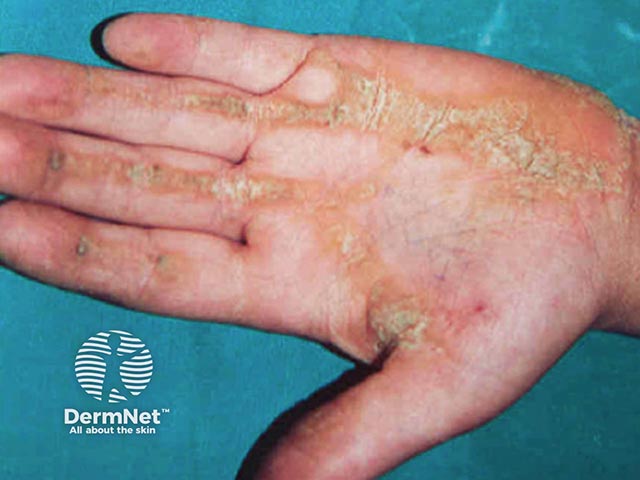
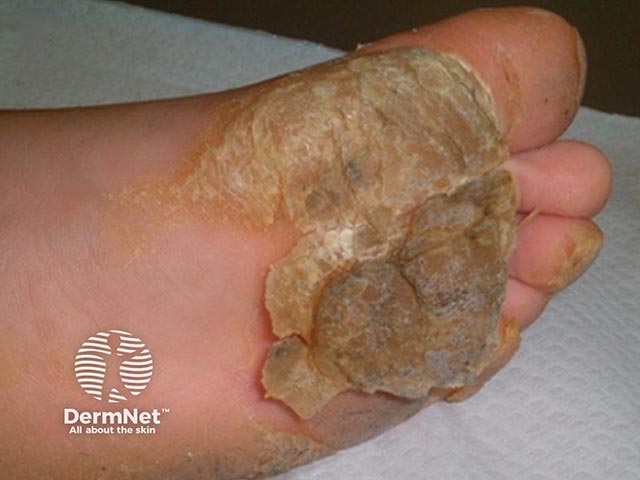
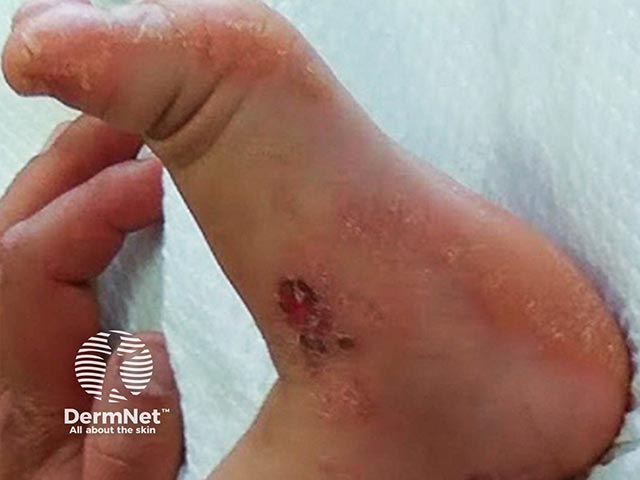
In all patients with Naxos disease, the clinical manifestations of arrhythmogenic right ventricular cardiomyopathy (ARVC) – also known as arrhythmogenic right ventricular dysplasia (ARVD) — become apparent by adolescence.
Patients may present with syncope or sustained ventricular tachycardia. Furthermore, over 90% of patients display abnormal findings on ECG (eg, T-wave inversion in leads V1-3) and echocardiogram (eg, right ventricular dilatation, hypokinesia, and aneurysms).
Cardiac histopathology reveals replacement of myocardium with fibro-fatty tissue. Immunohistochemistry studies show reduced plakoglobin expression in both cutaneous and cardiac tissues.
The clinical features of Naxos disease do not appear to differ according to skin type.
A diagnosis of Naxos disease is considered when a patient presents with PPK and woolly hair from early childhood, along with clinical and investigational findings consistent with ARVC during adolescence or early adulthood.
A definitive diagnosis is confirmed through genetic testing by identifying a homozygous pathogenic variant of the JUP gene.
There is currently no cure for Naxos disease, and the primary objective of treatment is to prevent sudden cardiac death. Emerging research into gene therapy for genetic cardiomyopathies may offer future therapeutic options.
Management of palmoplantar keratoderma focuses on symptom relief, typically through the use of emollients and keratolytic agents to soften and reduce thickened skin. For more information, see: palmoplantar keratoderma.
As with other forms of arrhythmogenic right ventricular cardiomyopathy (ARVC), the cardiac manifestations of Naxos disease require specialist cardiologist care.
Interventions include:
The prognosis for Naxos disease is broadly comparable to that of other genetic forms of arrhythmogenic right ventricular cardiomyopathy (ARVC).
With early identification and appropriate management, individuals with Naxos disease can lead relatively normal lives. However, the risk remains for serious cardiac events, including sustained ventricular tachycardia and sudden death.