Introduction
Demographics
Causes
Clinical features
Variation in skin types
Complications
Diagnosis
Differential diagnoses
Treatment
Outcome
Acute inflammatory oedema (AIO) is a non-infectious, inflammatory condition of the skin that presents with bilateral, erythematous swelling. It is a form of pseudocellulitis that primarily occurs in critically ill patients.
Acute inflammatory oedema usually affects the critically unwell.
Risk factors:
Acute inflammatory oedema is thought to occur when elevated hydrostatic pressure and/or reduced oncotic pressure in the capillaries causes rapid fluid extravasation into interstitial spaces, resulting in dermal and hypodermal oedema.
In critically ill patients, this state can arise from organ dysfunction, sepsis, low serum albumin, and impaired lymphatic system drainage (particularly relevant in overweight or immobilised individuals).
Acute dermal oedema can disrupt the extracellular matrix, causing connective tissue microtears and triggering an inflammatory cascade. Inflammation may be further exacerbated by impaired clearance of metabolic waste and inflammatory mediators due to lymphatic dysfunction, perpetuating a cycle of inflammation and oedema.

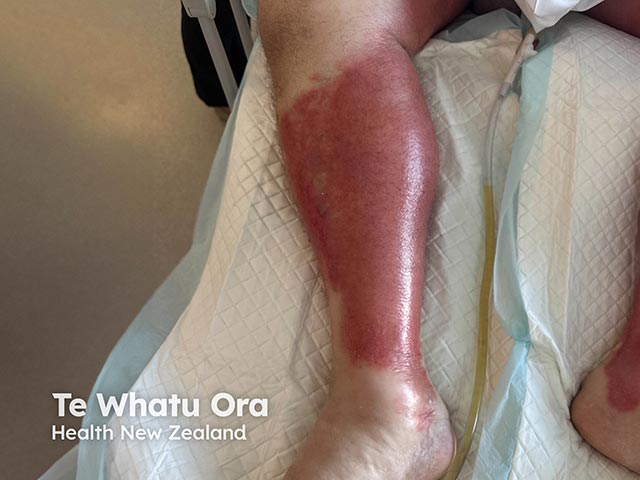
Erythema is less apparent in skin of colour.
The differential diagnosis for acute inflammatory oedema includes:
The mainstay of treatment for acute inflammatory oedema is supportive care, with a focus on reducing fluid overload — this may include diuresis, strict fluid balance, compression garments, and mobilisation. Treatment should also include discontinuation of unnecessary antibiotics if prescribed for misdiagnosed cellulitis.
Specific treatments for AIO are targeted at the underlying cause eg, transcatheter aortic valve implantation for heart failure caused by aortic regurgitation, dialysis for kidney failure.
Acute inflammatory oedema is a reactive phenomenon and resolves as fluid overload is corrected. Patient outcomes depend on the underlying condition and its treatment. Patients with AIO tend to have a guarded prognosis due to the severity of the underlying condition(s).