Introduction
Demographics
Causes
Clinical features
Complications
Diagnosis
Differential diagnosis
Treatment
Prevention
Outcome
BASCULE syndrome is a rare and benign paediatric vasomotor dermatosis first described in 2016. It presents intermittently with Bier anaemic spots, cyanosis, and an urticaria-like eruption, typically of the lower limbs.
BASCULE syndrome is rare and likely underdiagnosed, with only a few cases documented. This disorder affects the paediatric population, particularly adolescents, though an adult-onset case has been reported. It also displays a female predominance.
Associations reported in the literature include:
The exact pathophysiology of BASCULE syndrome is unclear. One hypothesis posits orthostatic venous stasis as the primary cause. This is supported by an association with autonomic disorders and by the observation that involvement is largely confined to the lower limbs and triggered by orthostatism.
Bier spots and cyanosis result from an exaggerated arteriolar vasoconstrictive reflex triggered by local hypoxia from the venous stasis. The mechanism behind the subsequent, paradoxical urticarial reaction, however, remains unknown.
BASCULE syndrome predominantly affects the lower extremities and presents with a triad of:
Associated pruritus is common. Other symptoms may include:
Symptoms are paroxysmal, lasting approximately 10–15 minutes, and can occur several times a day.
Episodes often occur with standing and can be relieved by lying down or walking.
Other reported triggers include:
There have been no cases described in patients with skin of colour.
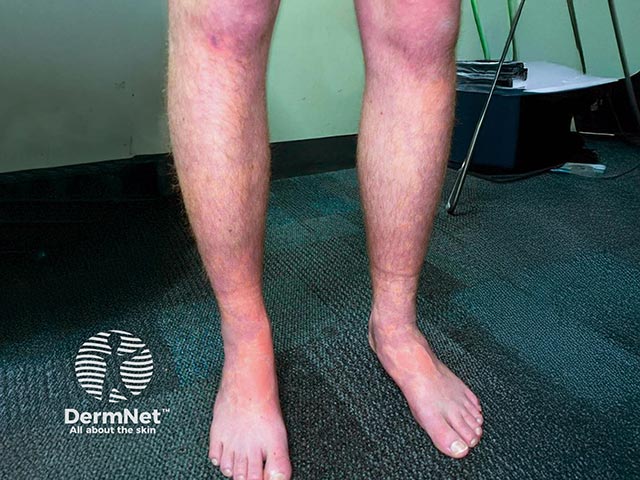
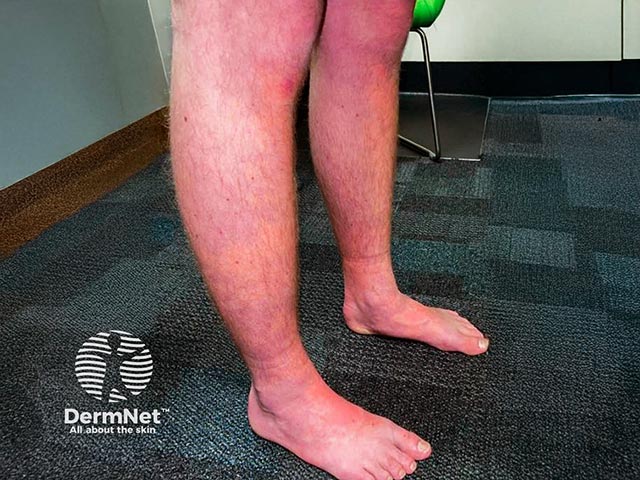
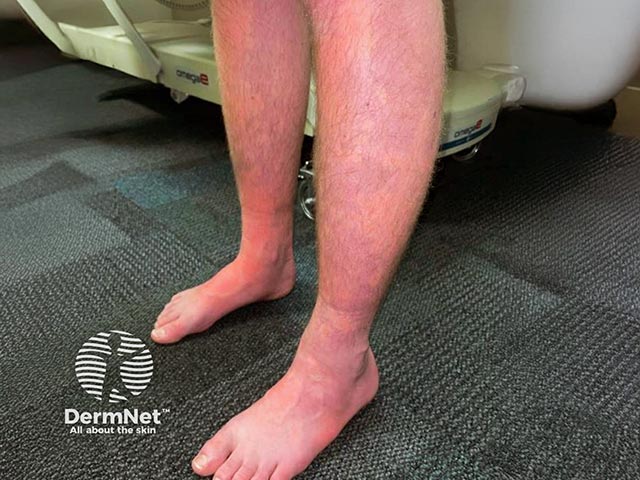
There are no known complications of BASCULE syndrome. However, it is unclear whether orthostatic intolerance precedes the diagnosis of BASCULE syndrome or the syndrome contributes to its development.
BASCULE syndrome is a clinical diagnosis that should be considered in paediatric patients who develop a paroxysmal rash consisting of lower-limb cyanosis, followed by anaemic macules that develop pruritic red-orange papules at their centres.
Screening tests may be requested to rule out a cutaneous vasculitis or venous insufficiency.
Skin biopsy is likely to demonstrate a non-specific mixed inflammatory infiltrate around the upper dermis vessels, consistent with urticaria.
Differential diagnoses for BASCULE syndrome include other acrosyndromes, such as:
The symptoms of BASCULE syndrome are benign and transient, and specific treatments are typically not required.
There are no specific measures to prevent BASCULE syndrome.
BASCULE syndrome is a benign and self-limiting condition. The natural history varies; complete resolution within a year is common for toddlers, but the condition may persist for longer in older patients.