Introduction
Demographics
Causes
Clinical features
Varying skin types
Complications
Diagnosis
Differential diagnosis
Treatment
Prevention
Outcome
PIK3CA-related overgrowth spectrum (PROS) is a group of rare genetic disorders caused by somatic mosaic mutations in the PIK3CA (phosphatidylinositol-4,5-bisphosphate 3-kinase catalytic subunit alpha) gene and characterised by tissue overgrowth and malformations.
PROS encompasses several conditions that can be classified as either syndromic (involving multiple body systems) or isolated (localised overgrowth).
Syndromic forms include:
Isolated forms include:
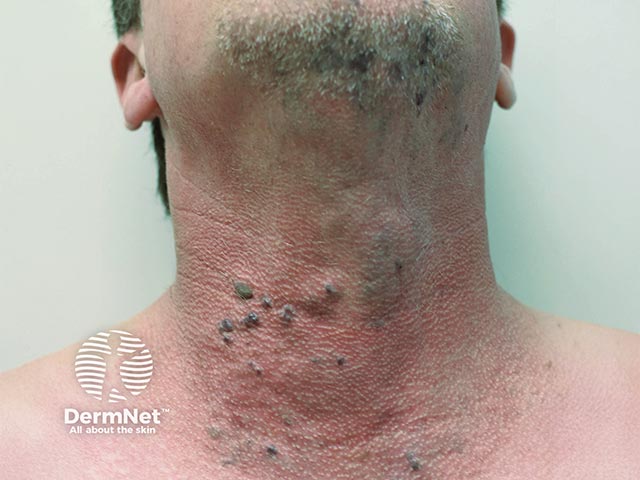
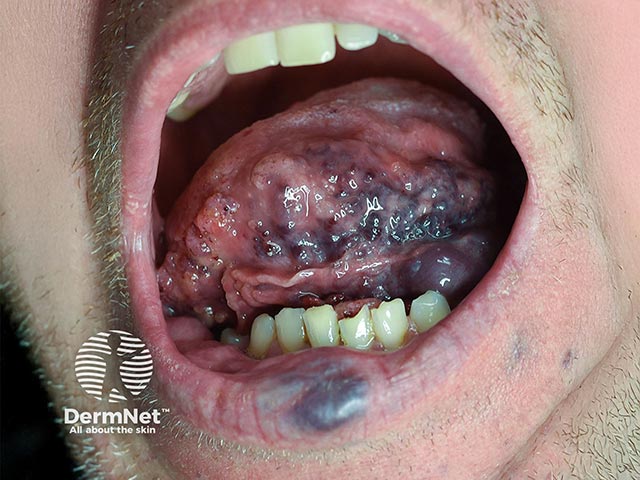
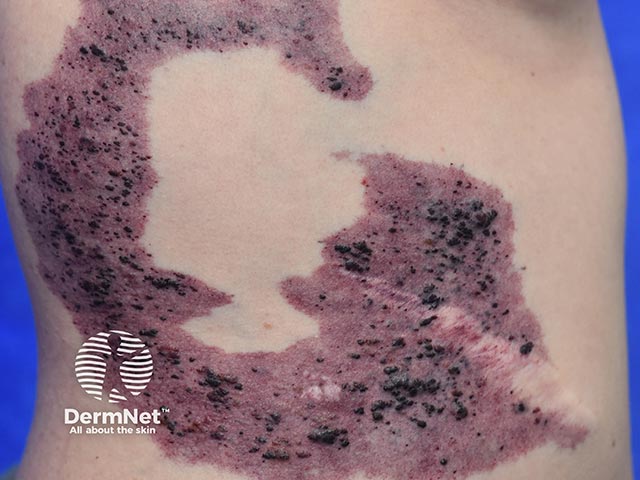

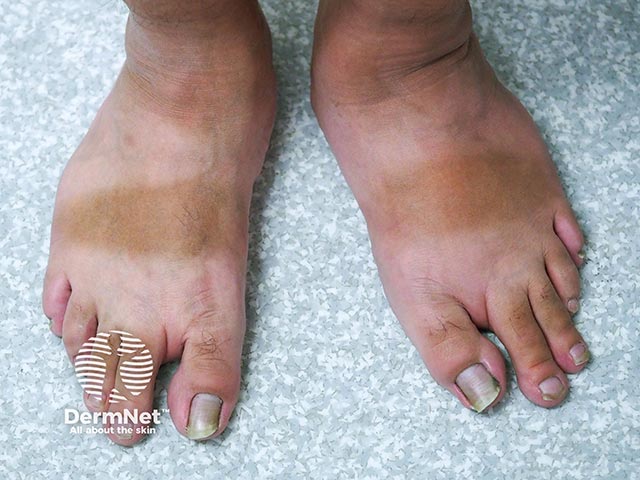
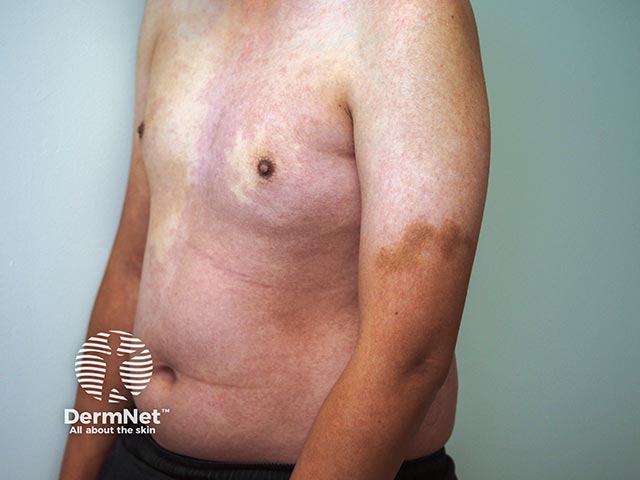
PIK3CA-related overgrowth spectrum is considered rare, though the global incidence and prevalence remain poorly defined. Cases are likely underreported due to the broad phenotypic variability.
PROS presents at birth or in early infancy and childhood, and it does not show any sex predilection. PROS is not known to be inherited since it is typically caused by somatic mutations. However, pathogenic germline variants in PIK3CA have been rarely reported.
PIK3CA-related overgrowth spectrum arises from gain-of-function variants in the PIK3CA gene, which encodes the catalytic subunit of phosphoinositide 3-kinase (PI3K). These variants lead to hyperactivation of the PI3K/AKT/mTOR signalling pathway, which regulates cell growth, proliferation, survival, metabolism, and protein synthesis.
The phenotypic heterogeneity of PROS is influenced by the specific PIK3CA variant, the cell lines affected, and the timing of mutagenesis during embryogenesis.
The clinical features of the PIK3CA-related overgrowth spectrum can vary widely depending on the affected tissues and organs.
PROS is defined by the asymmetric overgrowth of vascular, fibroadipose, musculoskeletal, and/or nerve tissue. The brain, limbs, trunk, or face are commonly involved, and features are usually present at birth or by early childhood.
Cutaneous features may include:
Non-cutaneous features may include:
The presentation of the PIK3CA-related overgrowth spectrum across different skin types has not been well characterised.
Complications will depend on the size and anatomical location of lesions and can include:
There may also be a small increased risk of developing Wilms tumour.
Diagnosis of the PIK3CA-related overgrowth spectrum is confirmed through identification of a somatic PIK3CA variant on genetic testing.
PROS should be suspected when the following are present:
Imaging studies (eg, Doppler ultrasound and magnetic resonance imaging) can support diagnosis by identifying overgrowth and malformations.
There is no definitive cure for PIK3CA-related overgrowth spectrum. Treatment centres on managing symptoms and preventing complications. Optimal management should involve a multidisciplinary team, particularly for complex presentations involving multiple organ systems.
General measures
Specific measures
Vascular malformations and epidermal naevi may be treated with:
Medications which target key pathways in PROS-related overgrowth include:
Other interventions may include:
There is no known way to prevent the PIK3CA-related overgrowth spectrum. Genetic reproductive counselling is not necessary as PROS is not an inherited condition.
The prognosis for individuals affected by the PIK3CA-related overgrowth spectrum is highly variable and depends on the type and severity of overgrowth.
While outcomes may be improved with appropriate interventions, severe cases involving vital structures may have a poorer prognosis. More rarely, life-threatening complications may occur. Long-term monitoring and management are often required.