Introduction
Demographics
Causes
Clinical features
Complications
Diagnosis
Differential diagnosis
Treatment
Prevention
Outcome
Idiopathic granulomatous mastitis (IGM) is a rare benign chronic inflammatory breast disease of unknown origin. This condition can clinically and radiologically mimic breast cancer and be challenging to diagnose.
It is also known as non-puerperal mastitis, granulomatous lobular mastitis, or simply granulomatous mastitis.

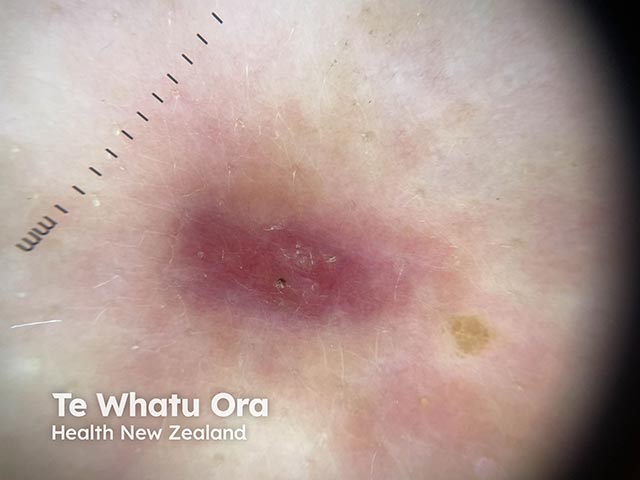


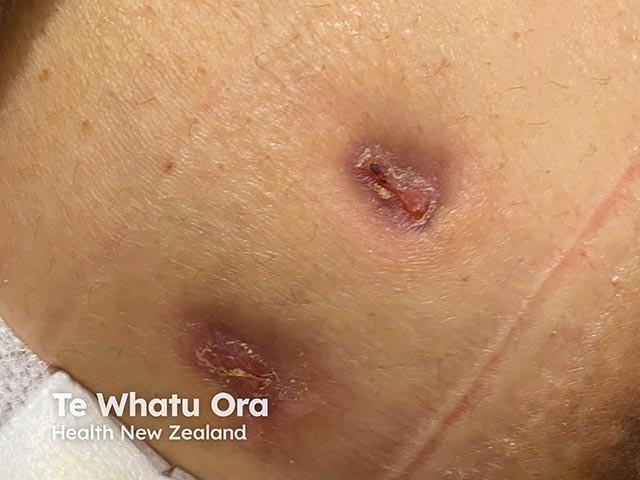
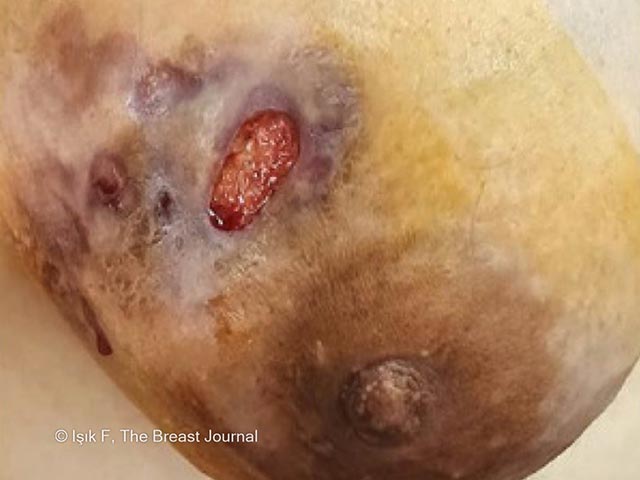
Idiopathic granulomatous mastitis is rare and typically affects women of childbearing age (median age 35 years). It occurs most commonly in women who have experienced childbirth or breastfeeding within the previous 5 years, though it rarely occurs during pregnancy or lactation. There have also been reports of IGM in nulliparous and postmenopausal women, as well as men.
It is reportedly more common among those of Hispanic, Middle Eastern, or Southeast Asian descent compared to other ethnicities.
The exact cause of idiopathic granulomatous mastitis is unknown. A proposed pathophysiological mechanism involves ductal epithelial damage causing extravasation of ductal contents (eg, milk protein) into the breast interstitium, triggering a local granulomatous inflammatory response.
Ductal epithelial injury may be induced by microtrauma, such as from breastfeeding or milk stasis, or an autoimmune process.
Risk factors include:
Corynebacterium species, particularly C. kroppenstedtii, are isolated in a proportion of cases and may be linked to the condition. However, causality is not proven, and the response to antibiotic treatment is variable.
Idiopathic granulomatous mastitis typically presents unilaterally as a large, firm, tender lump (0.5–10 cm) in the breast that develops over weeks to months. There is often associated erythema, swelling, induration, ulceration, and abscess formation.
The most commonly involved site is the upper outer breast quadrant, and there may be multiple masses affecting one or more breast quadrants. The central breast, however, is rarely affected. Bilateral breast involvement has also been reported.
Other features may include:
Rare associations:
Fever is typically absent, and the mass may be painless in the initial stages.
Further research is needed to describe how features of idiopathic granulomatous mastitis vary across different skin types.
The diagnostic approach to idiopathic granulomatous mastitis involves a detailed history and examination, followed by imaging and biopsy.
It is a diagnosis of exclusion, and other important differentials (eg, malignancy, infection, autoimmune/inflammatory disease) must be ruled out.
Imaging:
Biopsy:
There are no standardised guidelines for managing idiopathic granulomatous mastitis. Treatment depends on severity and whether complications are present.
A conservative approach with reassurance, observation, and mild analgesia may be appropriate for some, as this condition often (50% of cases) self-resolves over time.
Medical interventions
Surgical interventions
Recurrence may occur upon reduction or cessation of medication. It can also recur after surgical intervention.
There are no specific measures to prevent idiopathic granulomatous mastitis.
Idiopathic granulomatous mastitis is a benign condition with a generally good prognosis. In approximately half of cases, it spontaneously resolves without intervention within two years, typically healing with scarring. However, recurrence is common and associated with greater initial disease severity.
There is no known association between granulomatous mastitis and future breast cancer risk. Early diagnosis and the exclusion of malignancy are crucial aspects of management.